
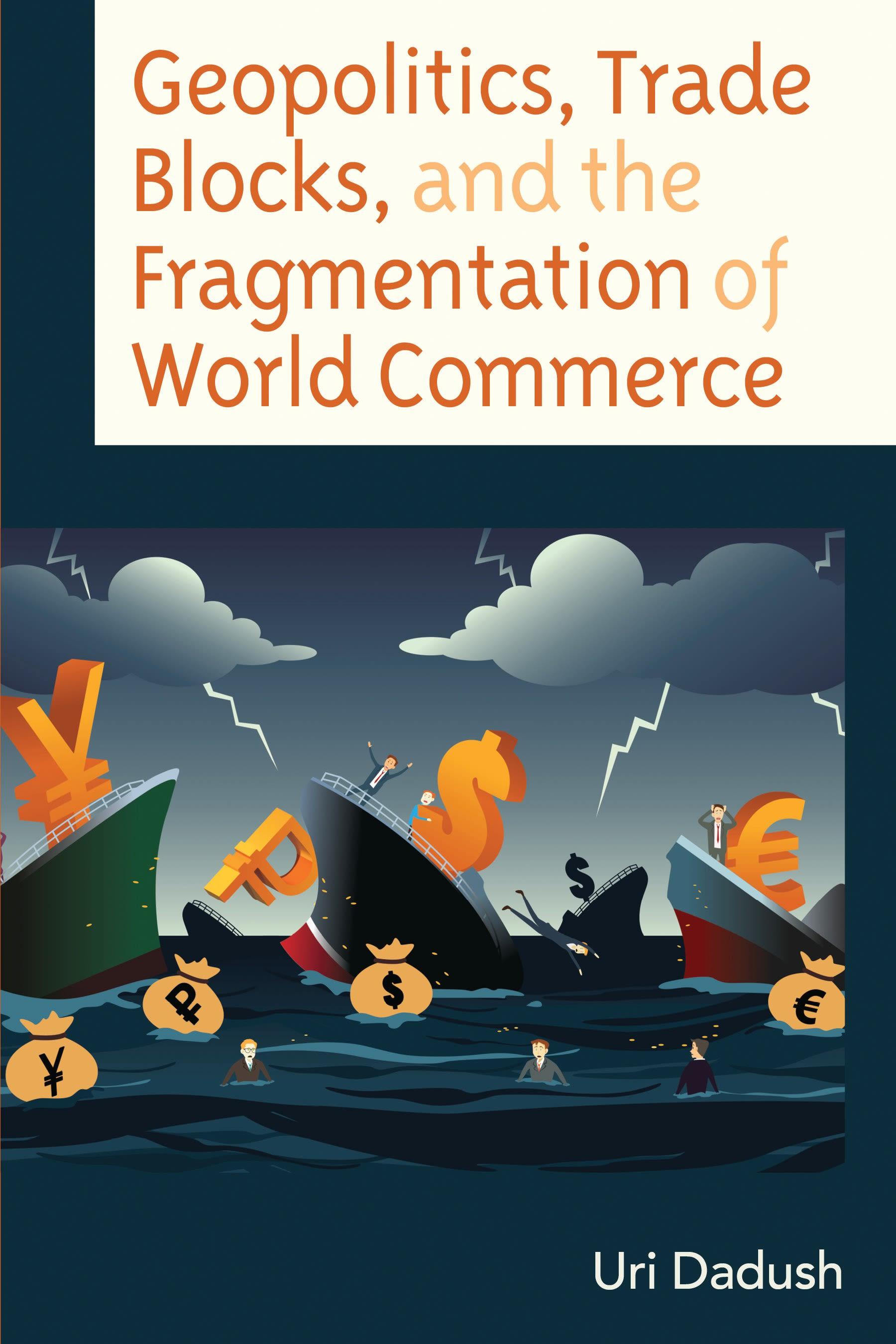
The global economic edifice built after World War II is a source of unprecedented prosperity. It cannot function without open and predictable international trade, and the peaceful international relations that are its foundation. The rules that enable trade are under attack. Social divisions and great power rivalry have eroded the political support for open trade. The consequence is fragmentation of world trade, its separation into blocks that advance domestic producers or favored nations nearby. These blocs are themselves often pulled apart by competing agendas. The prospects are for vastly reduced economic efficiency and - most ominously - heightened geopolitical tensions. The questions about why this is happening, how economic fragmentation will evolve, and how to respond to it, are uppermost in the minds of policymakers and businesses across the world. These are the questions that Uri Dadush seeks to answer. Since the uncertainty cannot be dispelled, it must be better managed.
Payez facilement par carte, Klarna, Apple Pay ou Google Pay. Pas satisfait ? Vous avez toujours une garantie de remboursement de 14 jours. En savoir plus dans nos conditions. Si vous avez des questions, envoyez-nous un e-mail à hello@memmo.org.
Memmo facilite tes études, où que tu sois dans le monde. On rassemble tes manuels de cours et des outils d'étude intelligents au même endroit : résumés, quiz, podcasts et flashcards. Et il y a Ted, ton compagnon d'étude qui répond à toutes tes questions. Plus de 50 000 étudiants étudient déjà ici – conçu pour t'aider à apprendre plus vite et à moins stresser.