
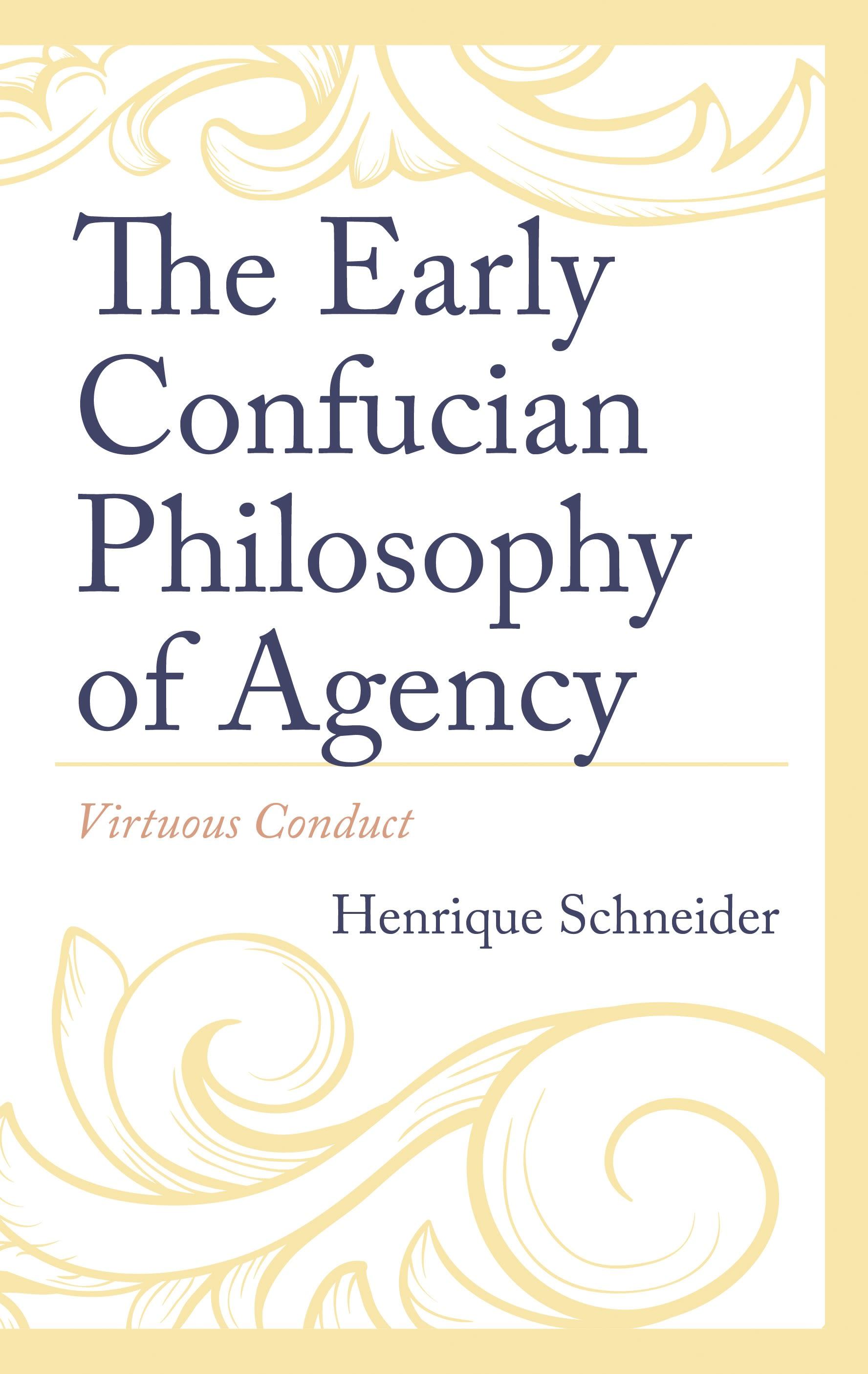
Henrique Schneider argues that understanding the three Early Confucian thinkers—Confucius, Mencius, and Xunzi—as virtue-ethicists, political philosophers, or social conservatives proves too narrow. Championing a broader and more philosophical reading, The Early Confucian Philosophy of Agency: Virtuous Conduct sheds new light on a well-established topic. Virtuous conduct—aligning actions and motivations with virtues, social roles, and rituals—is the philosophy of agency of Early Confucianism. Confucius, Mencius, and Xunzi share a common philosophy of agency, which does more than describe agents and acts: it also represents a progressive social and political program. Schneider characterizes Early Confucianism as a progressive philosophy due to its human-centered program for social reform, its process view of self-cultivation, and its development. Agents who cultivate themselves can produce virtuous conduct, flourish, and become Junzi. This lets them lead each other in self-cultivation, social environment, and polity. As such, virtuous conduct integrates ethics, social and political philosophy in a theory of action.
Payez facilement par carte, Klarna, Apple Pay ou Google Pay. Pas satisfait ? Vous avez toujours une garantie de remboursement de 14 jours. En savoir plus dans nos conditions. Si vous avez des questions, envoyez-nous un e-mail à hello@memmo.org.
Memmo facilite tes études, où que tu sois dans le monde. On rassemble tes manuels de cours et des outils d'étude intelligents au même endroit : résumés, quiz, podcasts et flashcards. Et il y a Ted, ton compagnon d'étude qui répond à toutes tes questions. Plus de 50 000 étudiants étudient déjà ici – conçu pour t'aider à apprendre plus vite et à moins stresser.