
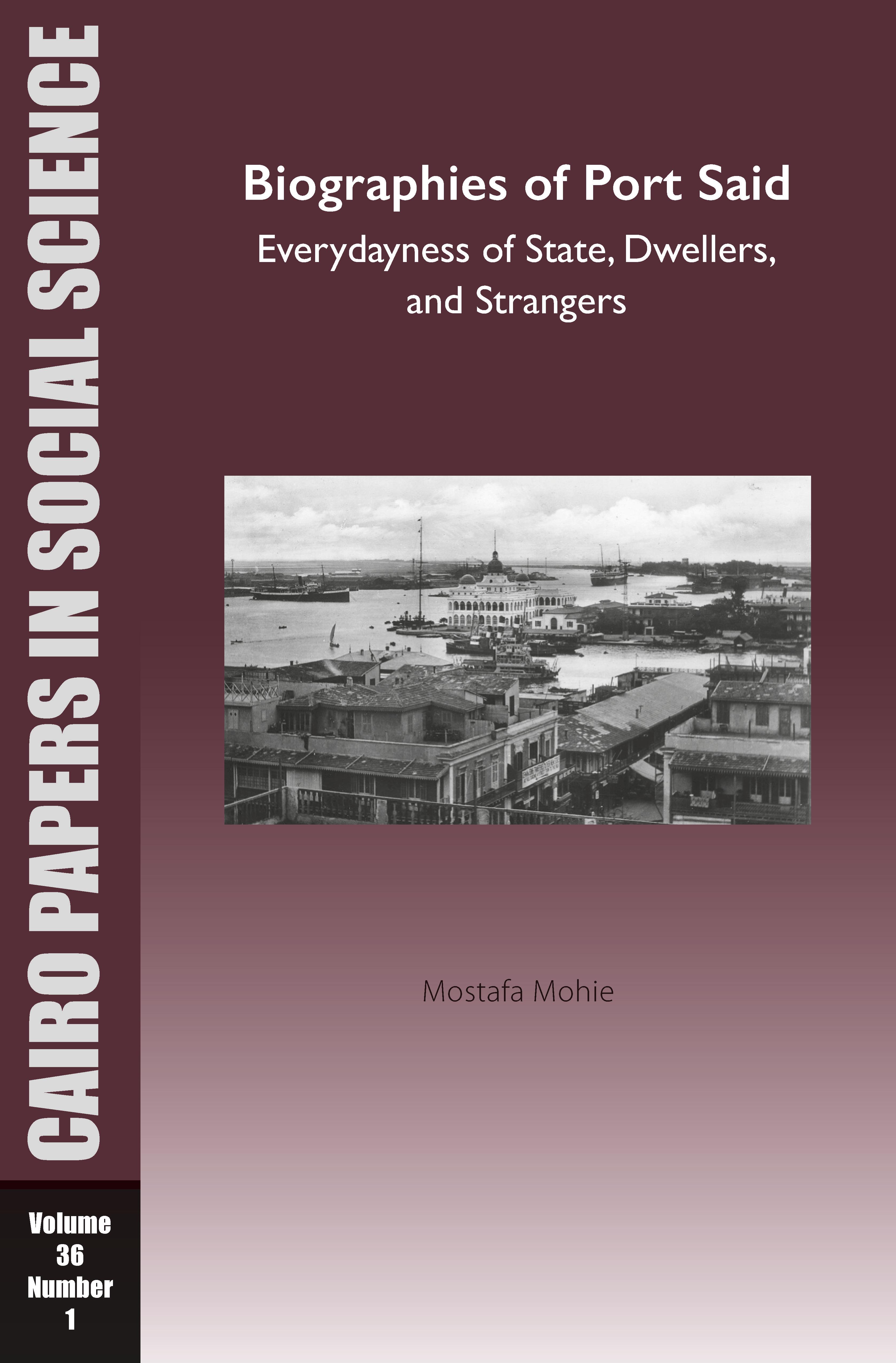
A study of how the city of Port Said was created, and its spaces mutually produced and transformed through the practices of both dwellers and the state
Founded in 1859, as part of the Suez Canal project and named after Khedive Said, the city of Port Said has always stood at the juncture of global, national, and local networks of forces, the city itself a reflection of many layers of Egypt’s modern history, from its colonial past through to the eras of national liberation and neoliberalism.
Drawing on Bruno Latour’s and Henri Lefebvre’s conceptual works, this study examines how the ‘social’ (encompassing all aspects of human life—the political, the economic, and the social) of the city of Port Said was created, and how its spaces were mutually produced and transformed through the practices of both dwellers and the state. Looking also at the temporality of these processes, Mostafa Mohie examines three key moments: al-tahgir (the forced migration that followed the outbreak of the 1967 war and remained until 1974, when Port Saidians were permitted to return to their homes following the 1973 October War); the declaration of the free trade zone in the mid-1970s; and the Port Said Stadium massacre in 2012.
Payez facilement par carte, Klarna, Apple Pay ou Google Pay. Pas satisfait ? Vous avez toujours une garantie de remboursement de 14 jours. En savoir plus dans nos conditions. Si vous avez des questions, envoyez-nous un e-mail à hello@memmo.org.
Memmo facilite tes études, où que tu sois dans le monde. On rassemble tes manuels de cours et des outils d'étude intelligents au même endroit : résumés, quiz, podcasts et flashcards. Et il y a Ted, ton compagnon d'étude qui répond à toutes tes questions. Plus de 50 000 étudiants étudient déjà ici – conçu pour t'aider à apprendre plus vite et à moins stresser.