
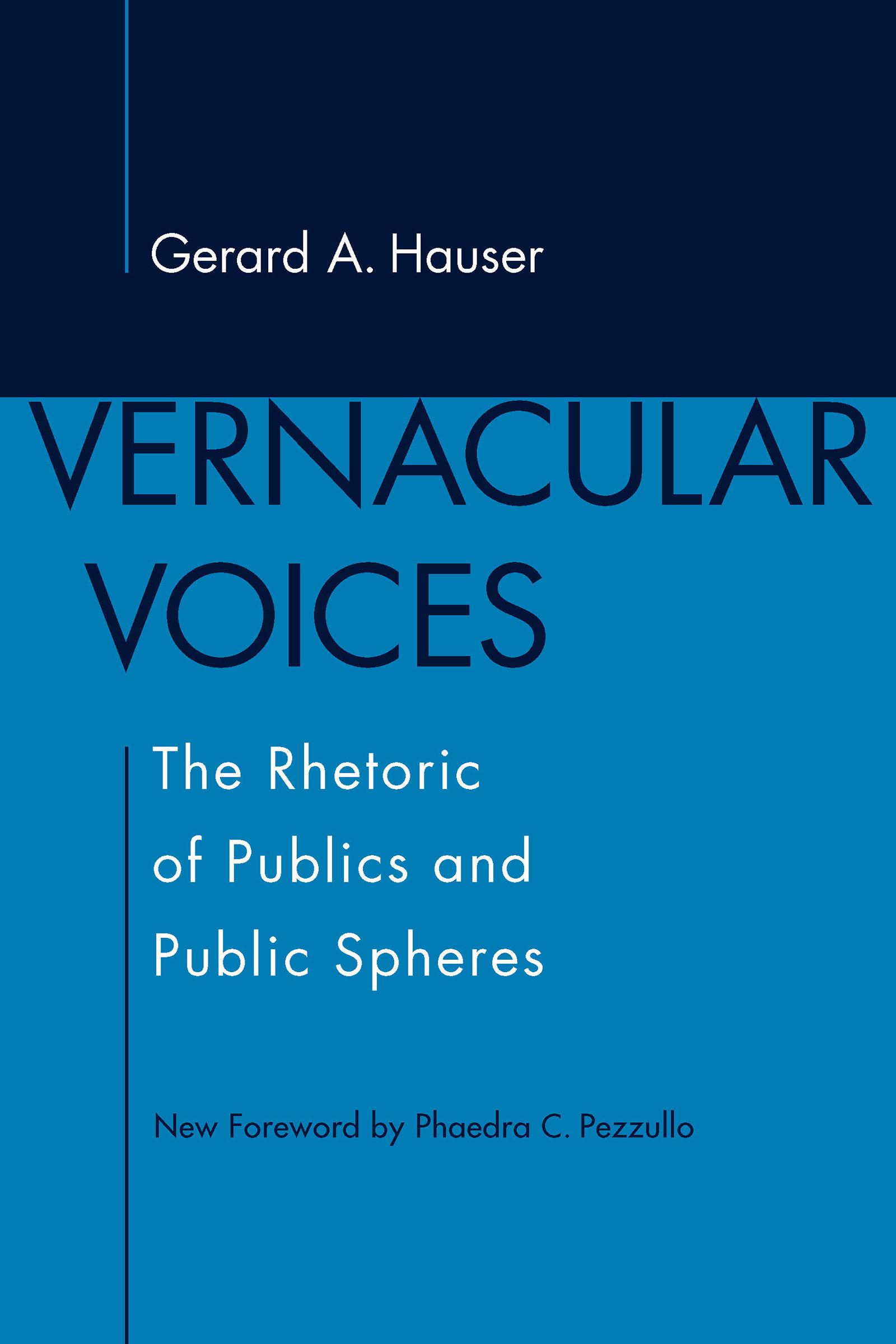
An award-winning study of how formal and informal public discourse shapes opinions
A foundational text of twenty-first-century rhetorical studies, Vernacular Voices addresses the role of citizen voices in steering a democracy through an examination of the rhetoric of publics. Gerard A. Hauser maintains that the interaction between everyday and official discourse discloses how active members of a complex society discover and clarify their shared interests and engage in exchanges that shape their opinions on issues of common interest.
In the two decades since Vernacular Voices was first published, much has changed: in the aftermath of the 9/11 terrorist attacks, US presidents have increasingly taken unilateral power to act; the internet and new media have blossomed; and globalization has raised challenges to the autonomy of nation states. In a new preface, Hauser shows how, in an era of shared, global crises, we understand publics, how public spheres form and function, and the possibilities for vernacular expressions of public opinion lie at the core of lived democracy.
A foreword is provided by Phaedra C. Pezzullo, associate professor of communication at the University of Colorado Boulder.
Payez facilement par carte, Klarna, Apple Pay ou Google Pay. Pas satisfait ? Vous avez toujours une garantie de remboursement de 14 jours. En savoir plus dans nos conditions. Si vous avez des questions, envoyez-nous un e-mail à hello@memmo.org.
Memmo facilite tes études, où que tu sois dans le monde. On rassemble tes manuels de cours et des outils d'étude intelligents au même endroit : résumés, quiz, podcasts et flashcards. Et il y a Ted, ton compagnon d'étude qui répond à toutes tes questions. Plus de 50 000 étudiants étudient déjà ici – conçu pour t'aider à apprendre plus vite et à moins stresser.