
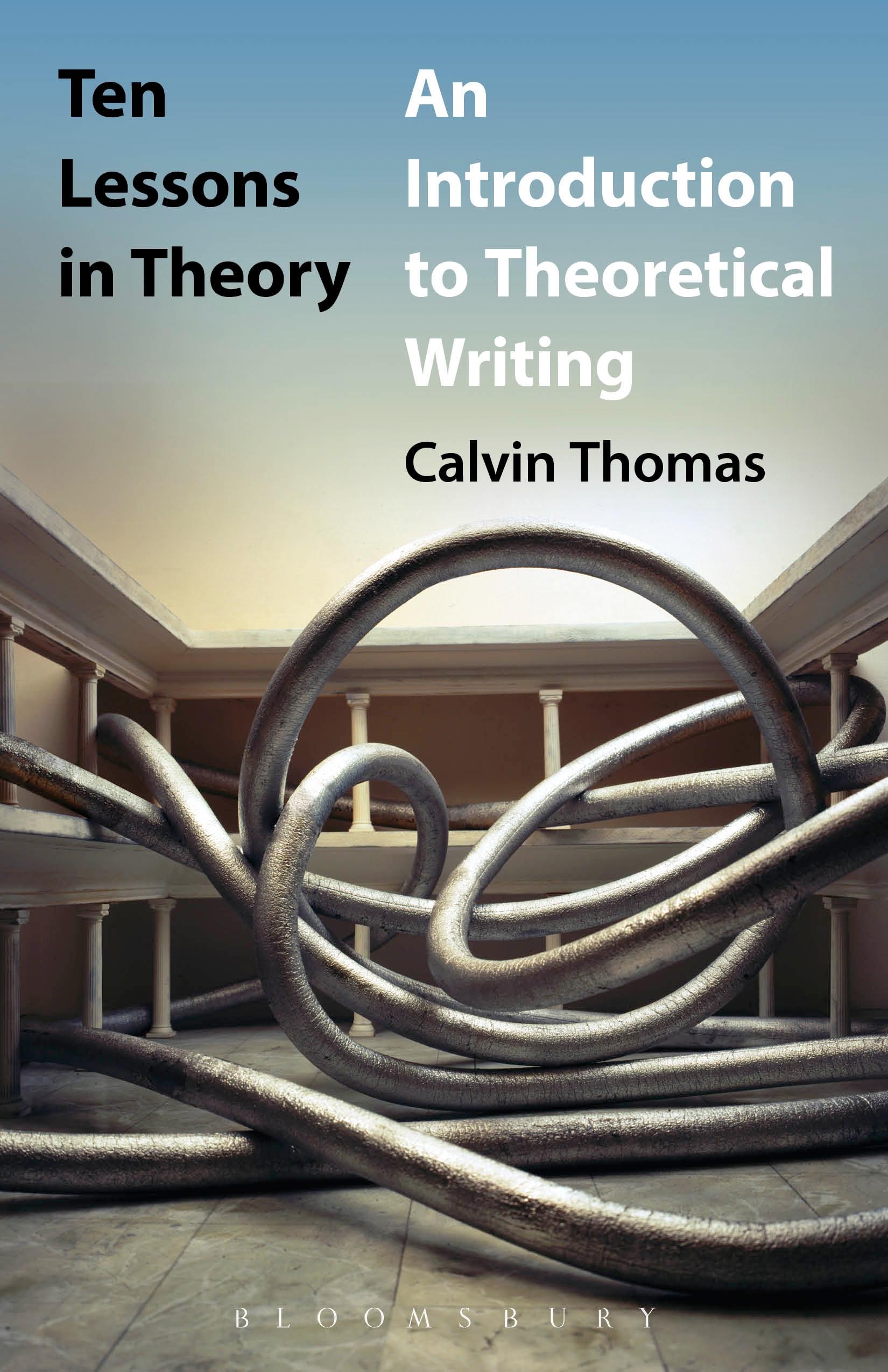
An introduction to literary theory unlike any other, Ten Lessons in Theory engages its readers with three fundamental premises. The first premise is that a genuinely productive understanding of theory depends upon a considerably more sustained encounter with the foundational writings of Hegel, Marx, Nietzsche, and Freud than any reader is likely to get from the introductions to theory that are currently available. The second premise involves what Fredric Jameson describes as "the conviction that of all the writing called theoretical, Lacan's is the richest." Entertaining this conviction, the book pays more (and more careful) attention to the richness of Lacan's writing than does any other introduction to literary theory. The third and most distinctive premise of the book is that literary theory isn't simply theory "about" literature, but that theory fundamentally is literature, after all.
Ten Lessons in Theory argues, and even demonstrates, that "theoretical writing" is nothing if not a specific genre of "creative writing," a particular way of engaging in the art of the sentence, the art of making sentences that make trouble-sentences that make, or desire to make, radical changes in the very fabric of social reality.
As its title indicates, the book proceeds in the form of ten "lessons," each based on an axiomatic sentence selected from the canon of theoretical writing. Each lesson works by creatively unpacking its featured sentence and exploring the sentence's conditions of possibility and most radical implications. In the course of exploring the conditions and consequences of these troubling sentences, the ten lessons work and play together to articulate the most basic assumptions and motivations supporting theoretical writing, from its earliest stirrings to its most current turbulences.
Provided in each lesson is a working glossary: specific critical keywords are boldfaced on their first appearance and defined either in the text or in a footnote. But while each lesson constitutes a precise explication of the working terms and core tenets of theoretical writing, each also attempts to exemplify theory as a "practice of creativity" (Foucault) in itself.
Ten Lessons in Theory argues, and even demonstrates, that "theoretical writing" is nothing if not a specific genre of "creative writing," a particular way of engaging in the art of the sentence, the art of making sentences that make trouble-sentences that make, or desire to make, radical changes in the very fabric of social reality.
As its title indicates, the book proceeds in the form of ten "lessons," each based on an axiomatic sentence selected from the canon of theoretical writing. Each lesson works by creatively unpacking its featured sentence and exploring the sentence's conditions of possibility and most radical implications. In the course of exploring the conditions and consequences of these troubling sentences, the ten lessons work and play together to articulate the most basic assumptions and motivations supporting theoretical writing, from its earliest stirrings to its most current turbulences.
Provided in each lesson is a working glossary: specific critical keywords are boldfaced on their first appearance and defined either in the text or in a footnote. But while each lesson constitutes a precise explication of the working terms and core tenets of theoretical writing, each also attempts to exemplify theory as a "practice of creativity" (Foucault) in itself.
Pages: 240
Catégorie: Litteraturvetenskap & Teori
e-ISBN: 9781623563042
Poids d'expédition: 1.2 kg
Expédié sous: 1-2 jours
Payez facilement par carte, Klarna, Apple Pay ou Google Pay. Pas satisfait ? Vous avez toujours une garantie de remboursement de 14 jours. En savoir plus dans nos conditions. Si vous avez des questions, envoyez-nous un e-mail à hello@memmo.org.
Memmo facilite tes études, où que tu sois dans le monde. On rassemble tes manuels de cours et des outils d'étude intelligents au même endroit : résumés, quiz, podcasts et flashcards. Et il y a Ted, ton compagnon d'étude qui répond à toutes tes questions. Plus de 50 000 étudiants étudient déjà ici – conçu pour t'aider à apprendre plus vite et à moins stresser.