
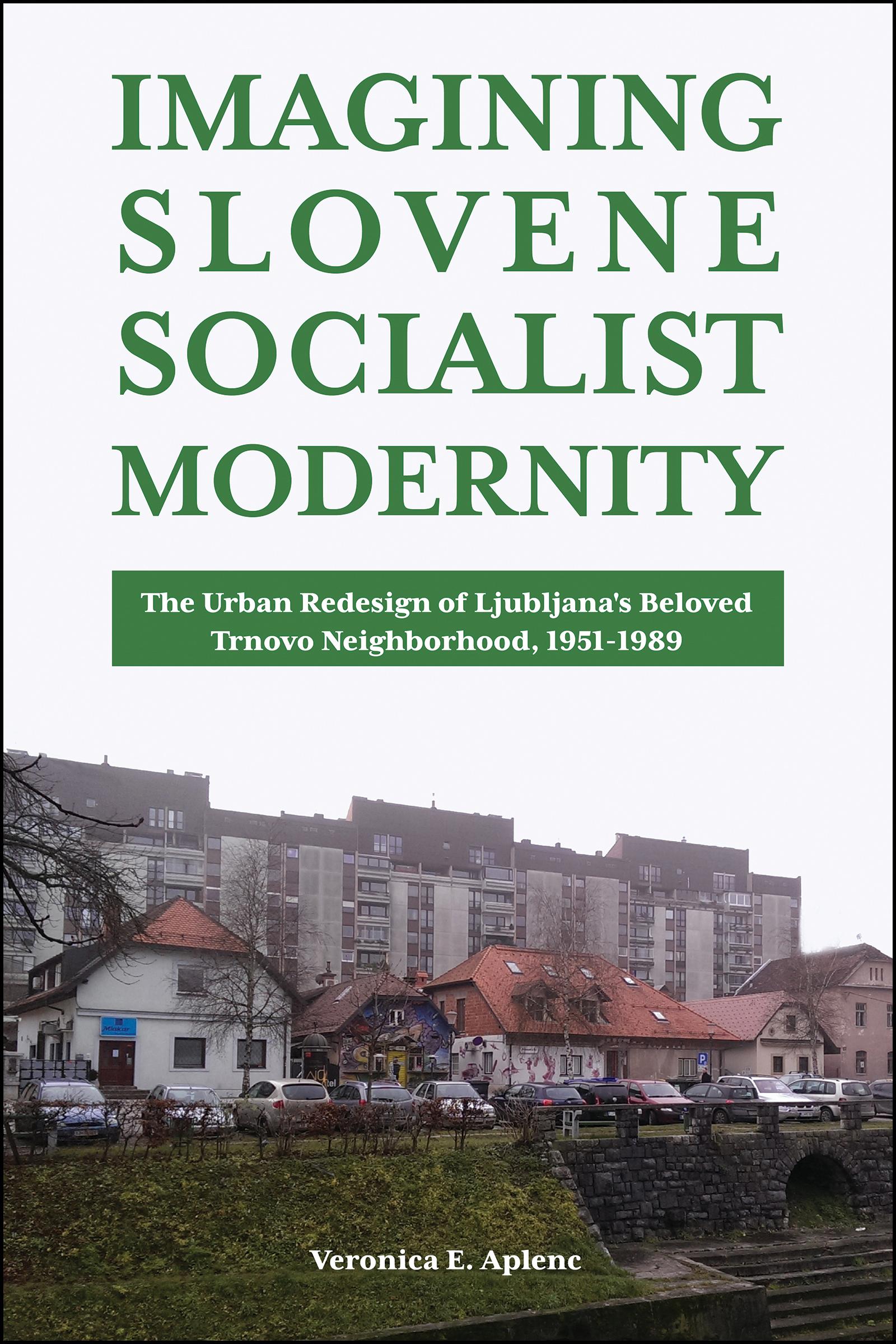
After the Second World War, Yugoslavia’s small regional cities represented a challenge for the new socialist state. These cities’ older buildings, local historic sites, and low-quality housing clashed with socialism’s promises and ideals. How would the state transform these cities’ everyday neighborhoods? In the Slovene republic’s capital city of Ljubljana, the Trnovo neighborhood embodied this challenge through its modest housing, small medieval section, vast gardens, acclaimed interwar architecture, and iconic local reputation. Imagining Slovene Socialist Modernity explores how urban planners, architects, historic preservationists, neighborhood residents, and even folklorists transformed this beloved neighborhood into a Slovene socialist city district. Aplenc demonstrates that this urban redesign centered on republic-level interpretations of a Yugoslav socialist built environment, versus a re-envisioned Slovene national past or design style. This interdisciplinary study sheds light on how Yugoslav state socialism operated at the republic level, within a decentralized system, and on the diverse forces behind success or failure. With its focus on vernacular architecture, small-scale historic sites, single-family homes, and illegal housing, this book expands our understanding of the everyday built environment in socialist cities.
Payez facilement par carte, Klarna, Apple Pay ou Google Pay. Pas satisfait ? Vous avez toujours une garantie de remboursement de 14 jours. En savoir plus dans nos conditions. Si vous avez des questions, envoyez-nous un e-mail à hello@memmo.org.
Memmo facilite tes études, où que tu sois dans le monde. On rassemble tes manuels de cours et des outils d'étude intelligents au même endroit : résumés, quiz, podcasts et flashcards. Et il y a Ted, ton compagnon d'étude qui répond à toutes tes questions. Plus de 50 000 étudiants étudient déjà ici – conçu pour t'aider à apprendre plus vite et à moins stresser.
Tu pourrais aussi aimer
Acheter le livre0