
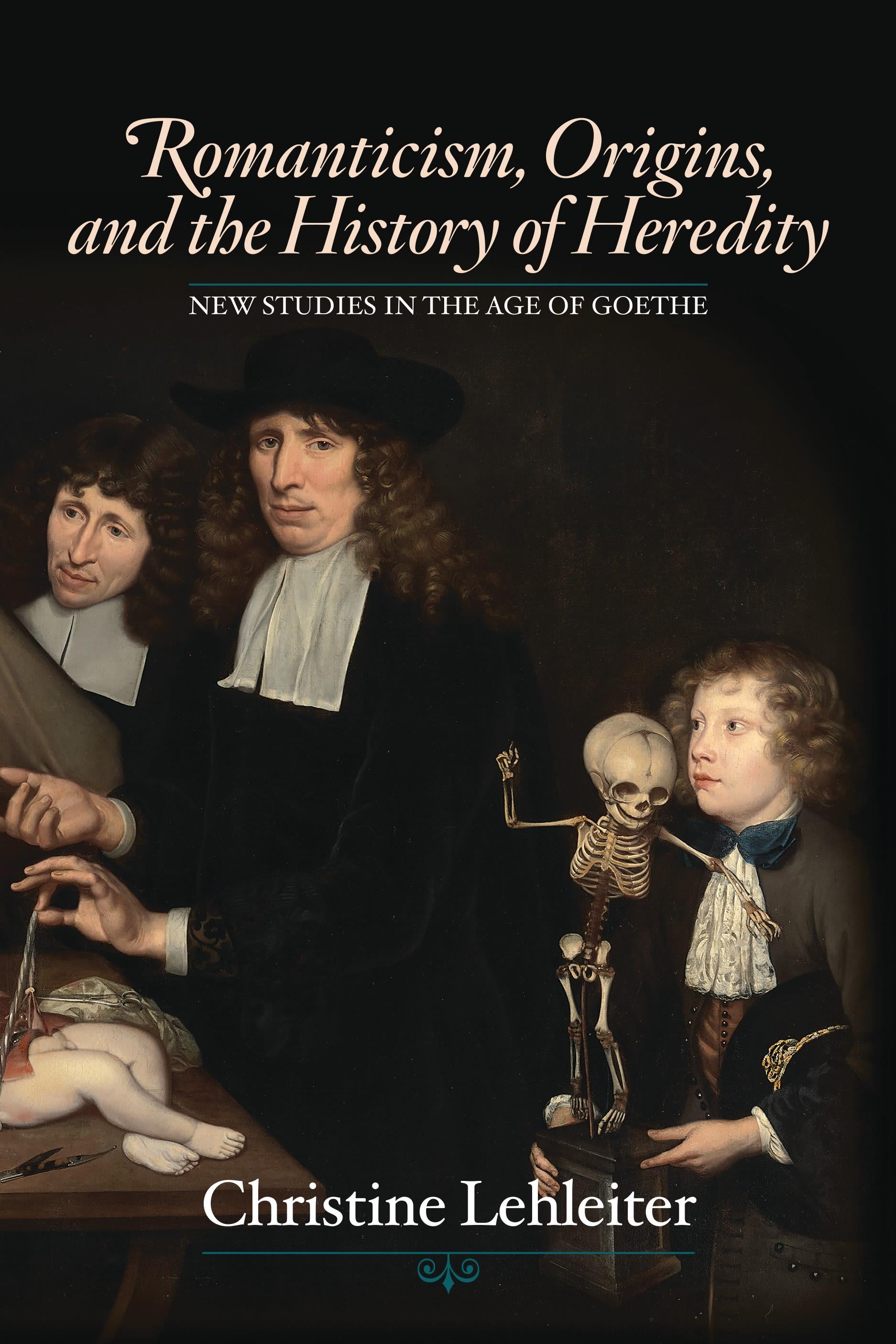
At the turn of the eighteenth century, selfhood was understood as a “tabularasa” to be imprinted in the course of an individual’s life. By the middle of the nineteenth-century, however, the individual had become defined as determined by heredity already from birth. Examining novels by Goethe, Jean Paul, and E.T.A. Hoffmann, studies on plant hybridization, treatises on animal breeding, and anatomical collections, Romanticism, Origins, and the History of Heredity delineates how romantic authors imagined the ramifications of emerging notions of heredity for the conceptualization of selfhood. Focusing on three fields of inquiry—inbreeding and incest, cross-breeding and bastardization, evolution and autopoiesis—Christine Lehleiter proposes that the notion of selfhood for which Romanticism has become known was not threatened by considerations of determinism and evolution, but was in fact already a result of these very considerations. Romanticism, Origins and the History of Heredity will be of interest for literary scholars, historians of science, and all readers fascinated by the long durée of subjectivity and evolutionary thought.
Payez facilement par carte, Klarna, Apple Pay ou Google Pay. Pas satisfait ? Vous avez toujours une garantie de remboursement de 14 jours. En savoir plus dans nos conditions. Si vous avez des questions, envoyez-nous un e-mail à hello@memmo.org.
Memmo facilite tes études, où que tu sois dans le monde. On rassemble tes manuels de cours et des outils d'étude intelligents au même endroit : résumés, quiz, podcasts et flashcards. Et il y a Ted, ton compagnon d'étude qui répond à toutes tes questions. Plus de 50 000 étudiants étudient déjà ici – conçu pour t'aider à apprendre plus vite et à moins stresser.