
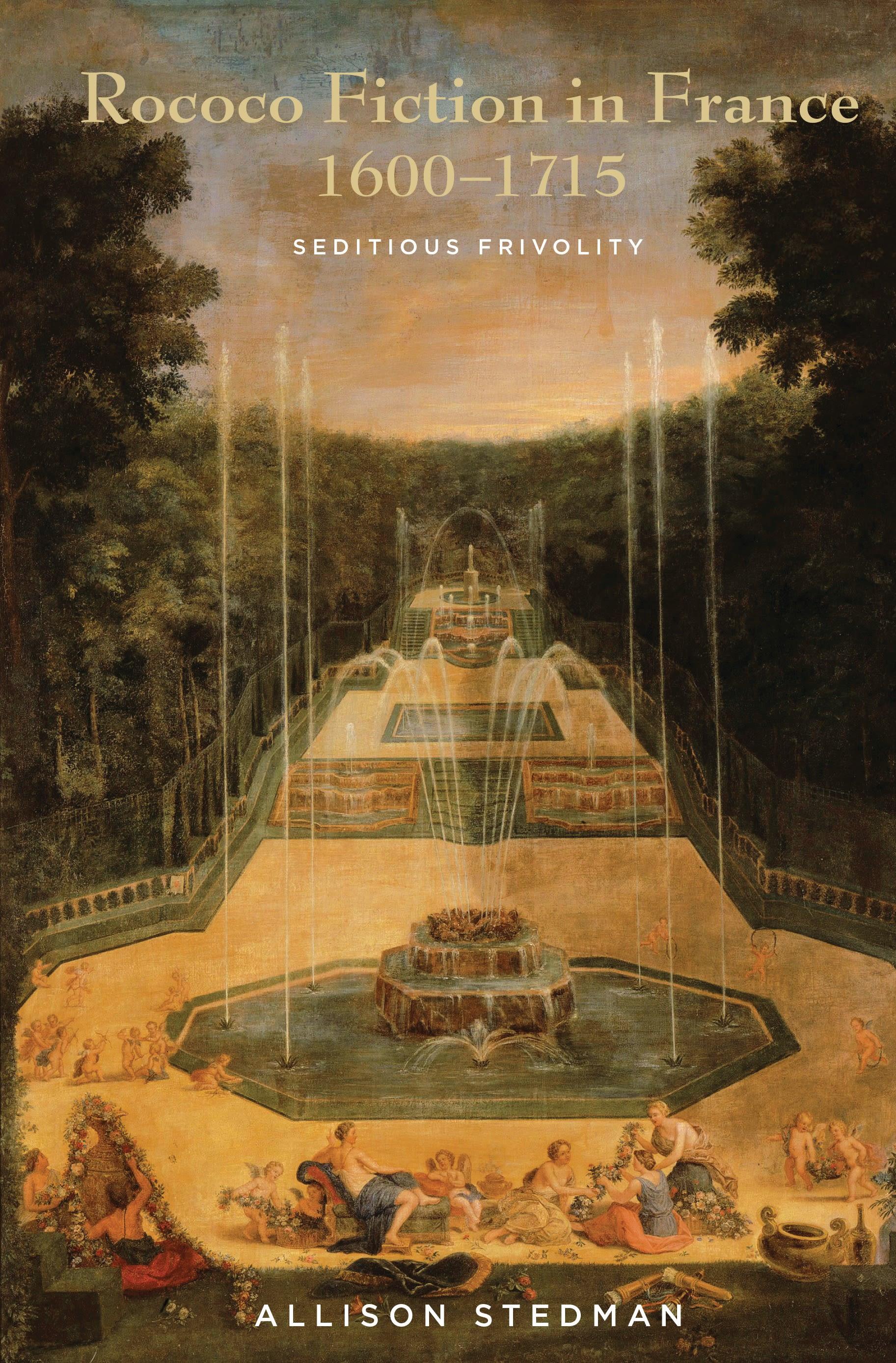
Rococo Fiction in France reconfigures the history of the “long eighteenth century” by revealing the rococo as a literary phenomenon that characterized a range of experimental texts from the end of the French Renaissance to the eve of the French Revolution. Tracing the literary rococo’s evolution from the late 1500s to the early 1700s, and exploring its radicalization during the 1670s, '80s, and '90s, Allison Stedman unearths the seventeenth century rococo’s counter-vision for the trajectory of the French monarchy and the dawn of the French Enlightenment.
The first part of the study investigates the relationship between Montaigne’s philosophy of literary production and those of early seventeenth-century “table-talk” novelists, libertine writers, and playwrights involved in the quarrel over Corneille’s play Le Cid. She thus establishes the existence of a rococo philosophy of literary production whose goal was to innovate, to bring pleasure, and to create communities. The second part of the study explores the impact that the Duchess de Montpensier’s literary portrait galleries, Jean Donneau de Visé’s periodical the Mercure Galant, and other forms of rococo literary production—by such authors as Charles Sorel, Alcide de Saint-Maurice, J.N. de Parvial and Jean de Préchac—had in the creation of a textually mediated social sphere that served as the foundation of the publicly critical culture of the French Enlightenment. The study concludes with an investigation of the influx of salon sociability into the textually mediated social sphere during the 1690s. Stedman examines the role of interpolated literary fairy tales, proverb plays and other rococo publication strategies—in such late seventeenth-century women writers as d’Aulnoy, Lhéritier, Murat, and Durand—in transfiguring the salon from an exclusive social circle mediated by physical presence to an inclusive social diaspora mediated by texts. Rococo Fiction in France challenges established views of early modern French literary history and discusses a range of little known works in a generous and engaging manner.
The first part of the study investigates the relationship between Montaigne’s philosophy of literary production and those of early seventeenth-century “table-talk” novelists, libertine writers, and playwrights involved in the quarrel over Corneille’s play Le Cid. She thus establishes the existence of a rococo philosophy of literary production whose goal was to innovate, to bring pleasure, and to create communities. The second part of the study explores the impact that the Duchess de Montpensier’s literary portrait galleries, Jean Donneau de Visé’s periodical the Mercure Galant, and other forms of rococo literary production—by such authors as Charles Sorel, Alcide de Saint-Maurice, J.N. de Parvial and Jean de Préchac—had in the creation of a textually mediated social sphere that served as the foundation of the publicly critical culture of the French Enlightenment. The study concludes with an investigation of the influx of salon sociability into the textually mediated social sphere during the 1690s. Stedman examines the role of interpolated literary fairy tales, proverb plays and other rococo publication strategies—in such late seventeenth-century women writers as d’Aulnoy, Lhéritier, Murat, and Durand—in transfiguring the salon from an exclusive social circle mediated by physical presence to an inclusive social diaspora mediated by texts. Rococo Fiction in France challenges established views of early modern French literary history and discusses a range of little known works in a generous and engaging manner.
Payez facilement par carte, Klarna, Apple Pay ou Google Pay. Pas satisfait ? Vous avez toujours une garantie de remboursement de 14 jours. En savoir plus dans nos conditions. Si vous avez des questions, envoyez-nous un e-mail à hello@memmo.org.
Memmo facilite tes études, où que tu sois dans le monde. On rassemble tes manuels de cours et des outils d'étude intelligents au même endroit : résumés, quiz, podcasts et flashcards. Et il y a Ted, ton compagnon d'étude qui répond à toutes tes questions. Plus de 50 000 étudiants étudient déjà ici – conçu pour t'aider à apprendre plus vite et à moins stresser.