
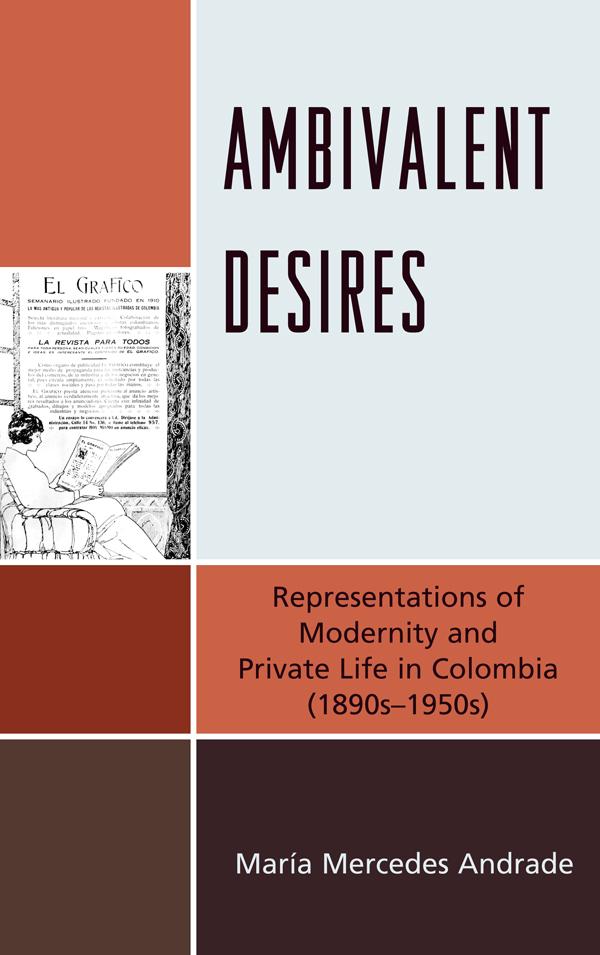
Ambivalent Desires: Representations of Modernity and Private Life in Colombia (1890s-1950s) is a literary and cultural study of the reception of modernity in Colombia. Unlike previous studies of Latin American modernization, which have usually focused on the public aspect of the process, this book discusses the intersection between modernity and the private sphere. It analyzes canonical and noncanonical works that reflect the existing ambivalence toward the modernizing project being implemented in the country at the time, and it discusses how the texts in question reinterpret, adapt, and even reject the ideology of modernity. The focus of the study is how the understanding of the relationship between modernity and private life relates to the project of constructing a modern nation, and the discontinuities and contradictions that appear in the process.
The question of what modernity is, its implications for everyday life, and its desirability or undesirability as a new cultural paradigm were central issues in Colombian texts from the end of the nineteenth century through the first half of the twentieth. At stake was the definition of the nation's identity and the project of breaking away from the cultural patterns of the colonial past. Considering that the apparently peaceful process of modernization in Colombia was interrupted in the 1950s by the eruption of political violence across the country, this study situates itself on the eve of a crisis and asks how representations of modernity in texts from the period evidence the social fragmentation that may have led to it.
The question of what modernity is, its implications for everyday life, and its desirability or undesirability as a new cultural paradigm were central issues in Colombian texts from the end of the nineteenth century through the first half of the twentieth. At stake was the definition of the nation's identity and the project of breaking away from the cultural patterns of the colonial past. Considering that the apparently peaceful process of modernization in Colombia was interrupted in the 1950s by the eruption of political violence across the country, this study situates itself on the eve of a crisis and asks how representations of modernity in texts from the period evidence the social fragmentation that may have led to it.
Payez facilement par carte, Klarna, Apple Pay ou Google Pay. Pas satisfait ? Vous avez toujours une garantie de remboursement de 14 jours. En savoir plus dans nos conditions. Si vous avez des questions, envoyez-nous un e-mail à hello@memmo.org.
Memmo facilite tes études, où que tu sois dans le monde. On rassemble tes manuels de cours et des outils d'étude intelligents au même endroit : résumés, quiz, podcasts et flashcards. Et il y a Ted, ton compagnon d'étude qui répond à toutes tes questions. Plus de 50 000 étudiants étudient déjà ici – conçu pour t'aider à apprendre plus vite et à moins stresser.