
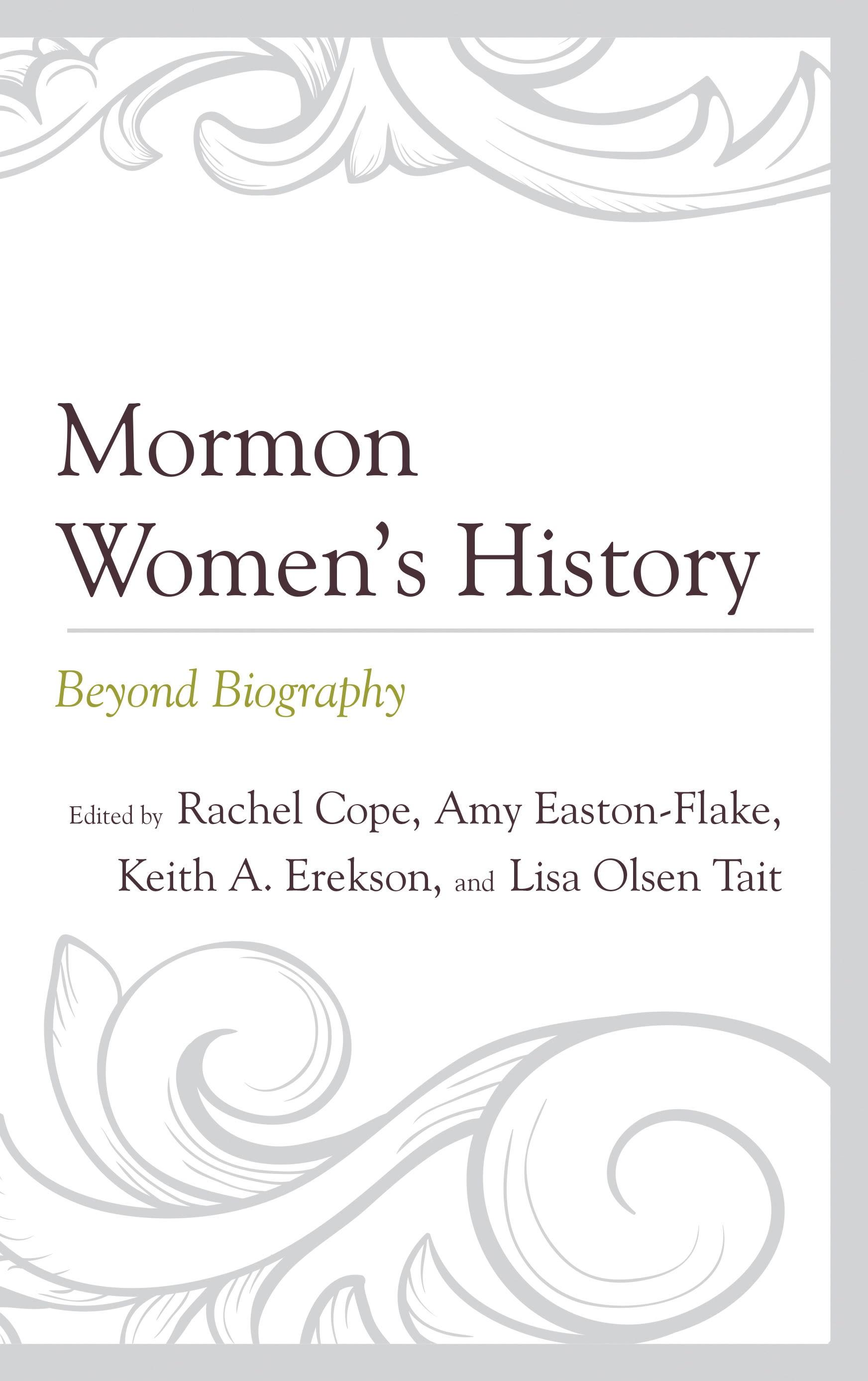
Mormon Women’s History: Beyond Biography demonstrates that the history and experience of Mormon women is central to the history of Mormonism and to histories of American religion, politics, and culture. Yet the study of Mormon women has mostly been confined to biographies, family histories, and women’s periodicals. The contributors to Mormon Women’s History engage the vast breadth of sources left by Mormon women—journals, diaries, letters, family histories, and periodicals as well as art, poetry, material culture, theological treatises, and genealogical records—to read between the lines, reconstruct connections, recover voices, reveal meanings, and recast stories.
Mormon Women’s History presents women as incredibly inter-connected. Familial ties of kinship are multiplied and stretched through the practice and memory of polygamy, social ties of community are overlaid with ancestral ethnic connections and local congregational assignments, fictive ties are woven through shared interests and collective memories of violence and trauma. Conversion to a new faith community unites and exposes the differences among Native Americans, Yankees, and Scandinavians. Lived experiences of marriage, motherhood, death, mourning, and widowhood are played out within contexts of expulsion and exile, rape and violence, transnational immigration, establishing “civilization” in a wilderness, and missionizing both to new neighbors and far away peoples. Gender defines, limits, and opens opportunities for private expression, public discourse, and popular culture. Cultural prejudices collide with doctrinal imperatives against backdrops of changing social norms, emerging professional identities, and developing ritualization and sacralization of lived religion.
The stories, experiences, and examples explored in Mormon Women’s History are neither comprehensive nor conclusive, but rather suggestive of the ways that Mormon women’s history can move beyond individual lives to enhance and inform larger historical narratives.
Mormon Women’s History presents women as incredibly inter-connected. Familial ties of kinship are multiplied and stretched through the practice and memory of polygamy, social ties of community are overlaid with ancestral ethnic connections and local congregational assignments, fictive ties are woven through shared interests and collective memories of violence and trauma. Conversion to a new faith community unites and exposes the differences among Native Americans, Yankees, and Scandinavians. Lived experiences of marriage, motherhood, death, mourning, and widowhood are played out within contexts of expulsion and exile, rape and violence, transnational immigration, establishing “civilization” in a wilderness, and missionizing both to new neighbors and far away peoples. Gender defines, limits, and opens opportunities for private expression, public discourse, and popular culture. Cultural prejudices collide with doctrinal imperatives against backdrops of changing social norms, emerging professional identities, and developing ritualization and sacralization of lived religion.
The stories, experiences, and examples explored in Mormon Women’s History are neither comprehensive nor conclusive, but rather suggestive of the ways that Mormon women’s history can move beyond individual lives to enhance and inform larger historical narratives.
Payez facilement par carte, Klarna, Apple Pay ou Google Pay. Pas satisfait ? Vous avez toujours une garantie de remboursement de 14 jours. En savoir plus dans nos conditions. Si vous avez des questions, envoyez-nous un e-mail à hello@memmo.org.
Memmo facilite tes études, où que tu sois dans le monde. On rassemble tes manuels de cours et des outils d'étude intelligents au même endroit : résumés, quiz, podcasts et flashcards. Et il y a Ted, ton compagnon d'étude qui répond à toutes tes questions. Plus de 50 000 étudiants étudient déjà ici – conçu pour t'aider à apprendre plus vite et à moins stresser.