
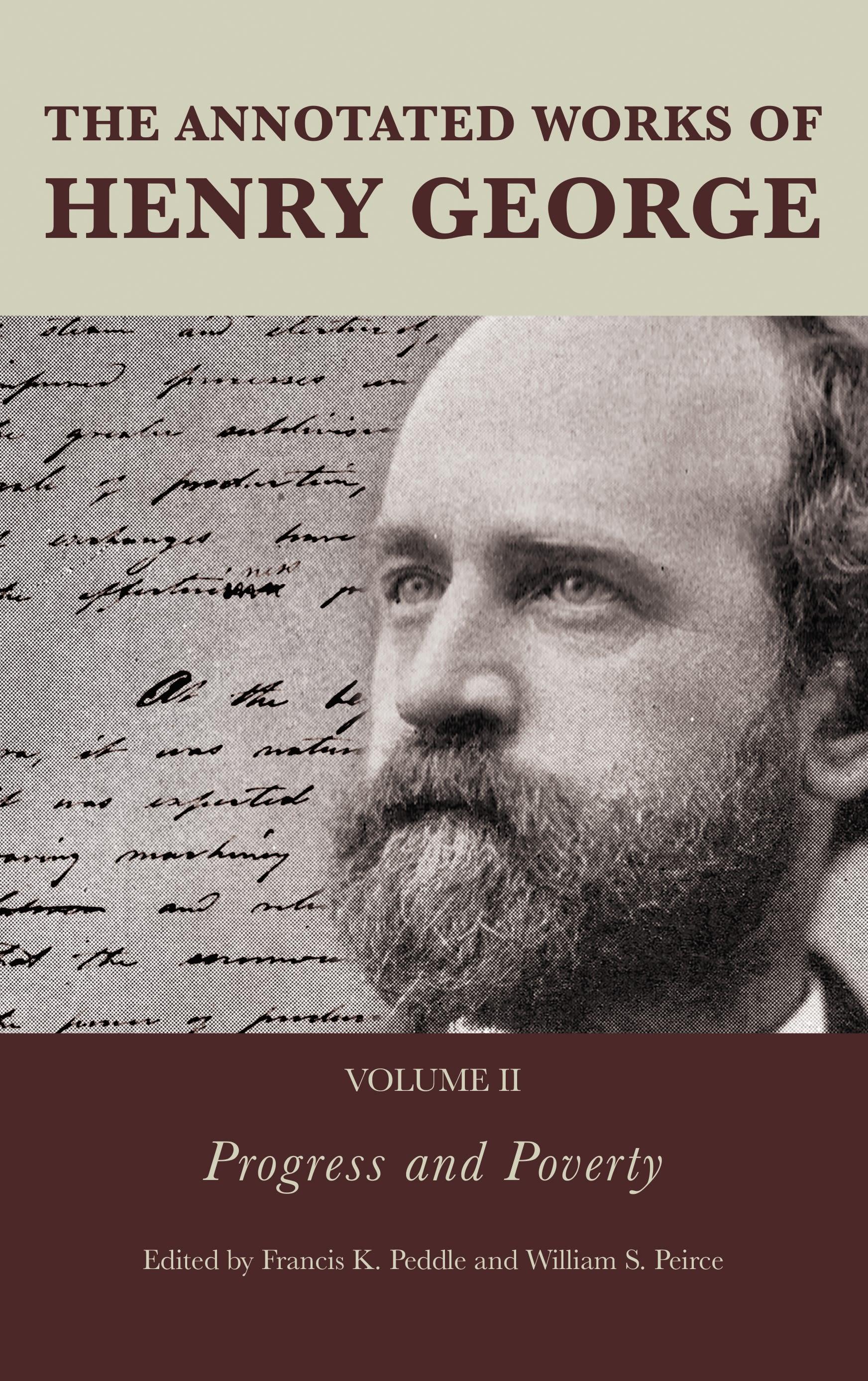
Henry George (1839–1897) rose to fame as a social reformer and economist amid the industrial and intellectual turbulence of the late nineteenth century. His best-selling Progress and Poverty (1879) captures the ravages of privileged monopolies and the woes of industrialization in a language of eloquent indignation. His reform agenda resonates as powerfully today as it did in the Gilded Age, and his impassioned prose and compelling thought inspired such diverse figures as Leo Tolstoy, John Dewey, Sun Yat-Sen, Winston Churchill, and Albert Einstein. This six-volume edition of The Annotated Works of Henry George assembles all his major works for the first time with new introductions, critical annotations, extensive bibliographical material, and comprehensive indexing to provide a wealth of resources for scholars and reformers.
Volume II of this series presents the unabridged text of Progress and Poverty, arguably the most influential work of Henry George. The original text is supplemented by notes which explain the changes George made during his lifetime and the many references he made to history, literature, economics, and public policy. A new index augments accessibility to the text and key terms. The introductory essay, “The Rhetoric and the Remedy,” by series co-editor William S. Peirce, provides an overview of the historical context for George’s philosophy of economics and summarizes the argument of Progress and Poverty within the framework of the economic theories of his day. It then looks at some of the early reactions by leading economists and opinion makers to George’s fervent and eloquent call for economic justice.
Henry George wrote Progress and Poverty in order to identify and resolve the great paradox of modern industrial life. How was it possible for abject poverty, financial instability, and extreme economic inequality to co-exist with rising productivity and technological progress? He analyzed and rejected the widely held beliefs that poverty inevitably followed from the laws of economics or from a Darwinian struggle for survival of the fittest. George concluded that at the heart of this dilemma was how society treated natural resources, especially urban land. He did not succumb to the panacea of arbitrarily confiscating property or taking from the rich to give to the poor. George argued that taxes on productive labor and capital should be drastically reduced. His “sovereign remedy” declared that public goods could be adequately funded from the returns to land and other natural resources. The activities of society as a whole give land its value. It is therefore both equitable and efficient for the community to tax or recapture land values to support the activities of government.
Volume II of this series presents the unabridged text of Progress and Poverty, arguably the most influential work of Henry George. The original text is supplemented by notes which explain the changes George made during his lifetime and the many references he made to history, literature, economics, and public policy. A new index augments accessibility to the text and key terms. The introductory essay, “The Rhetoric and the Remedy,” by series co-editor William S. Peirce, provides an overview of the historical context for George’s philosophy of economics and summarizes the argument of Progress and Poverty within the framework of the economic theories of his day. It then looks at some of the early reactions by leading economists and opinion makers to George’s fervent and eloquent call for economic justice.
Henry George wrote Progress and Poverty in order to identify and resolve the great paradox of modern industrial life. How was it possible for abject poverty, financial instability, and extreme economic inequality to co-exist with rising productivity and technological progress? He analyzed and rejected the widely held beliefs that poverty inevitably followed from the laws of economics or from a Darwinian struggle for survival of the fittest. George concluded that at the heart of this dilemma was how society treated natural resources, especially urban land. He did not succumb to the panacea of arbitrarily confiscating property or taking from the rich to give to the poor. George argued that taxes on productive labor and capital should be drastically reduced. His “sovereign remedy” declared that public goods could be adequately funded from the returns to land and other natural resources. The activities of society as a whole give land its value. It is therefore both equitable and efficient for the community to tax or recapture land values to support the activities of government.
Pages: 506
Catégorie: Ekonomi & Utveckling
e-ISBN: 9781611479423
Poids d'expédition: 1.2 kg
Expédié sous: 1-2 jours
Payez facilement par carte, Klarna, Apple Pay ou Google Pay. Pas satisfait ? Vous avez toujours une garantie de remboursement de 14 jours. En savoir plus dans nos conditions. Si vous avez des questions, envoyez-nous un e-mail à hello@memmo.org.
Memmo facilite tes études, où que tu sois dans le monde. On rassemble tes manuels de cours et des outils d'étude intelligents au même endroit : résumés, quiz, podcasts et flashcards. Et il y a Ted, ton compagnon d'étude qui répond à toutes tes questions. Plus de 50 000 étudiants étudient déjà ici – conçu pour t'aider à apprendre plus vite et à moins stresser.