
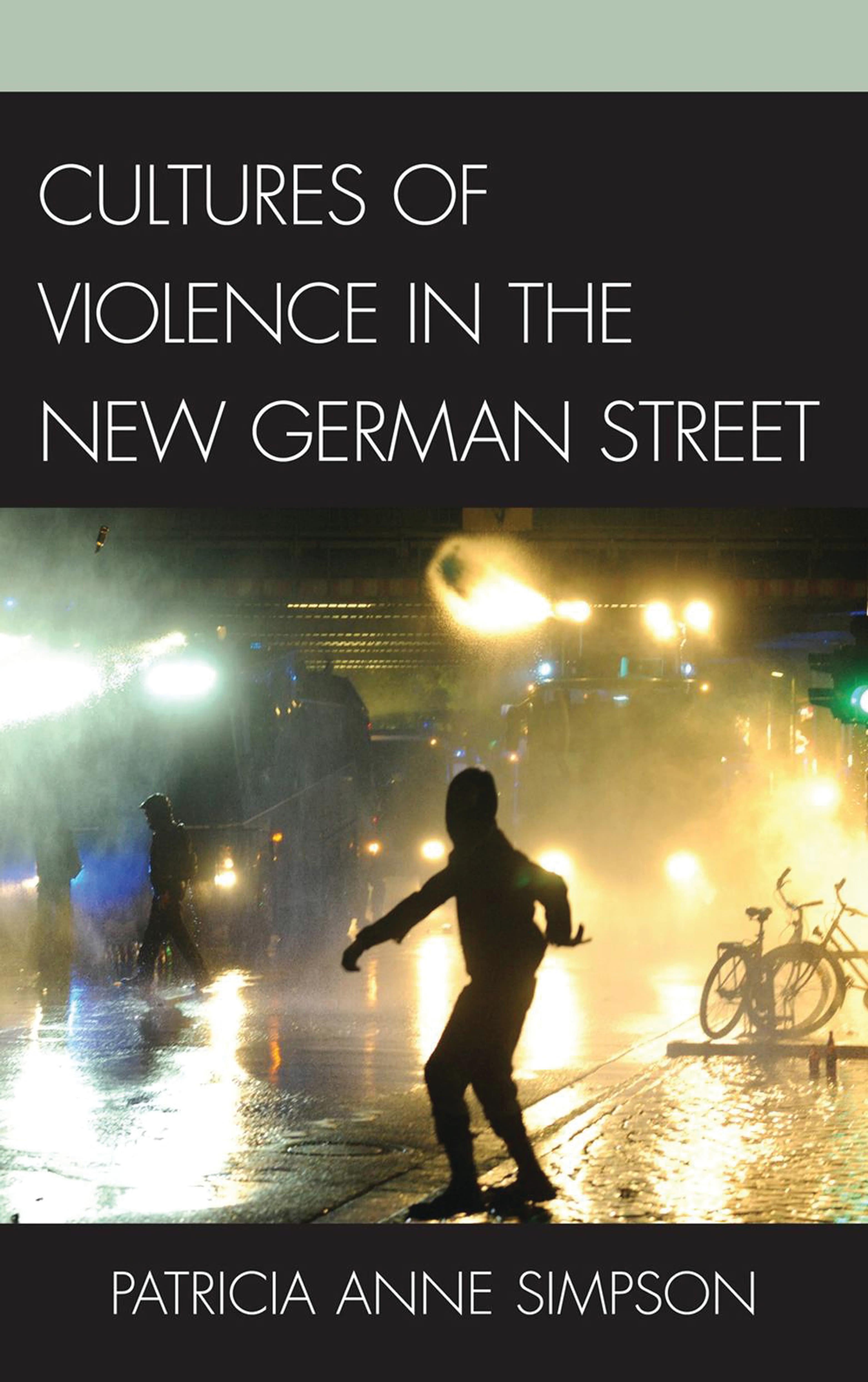
In post-Wall Germany, violence—both real and imagined—is increasingly determining the formation of new cultural identities. Patricia Anne Simpson’s book focuses on the representation of violence in three youth subcultures often characterized by aggression as they enact a rivalry for supremacy on the new German “street”—the author’s operative metaphor to situate the cultural discourse about violence. The selected literary texts, films, and music exemplify the urgent need for a sustained debate about violence as an aspect of both social reality and the national imaginary. Simpson’s study discloses the relationship between narratives of violence and issues of immigration, ethnic difference, and poverty. Her lucid readings examine the ways in which violence is grounded in the asphalt of Germany’s new street.
This interdisciplinary study identifies the motivations, decisions, and consequences of violent acts and the stories that convey them. Simpson draws examples from popular genres and subcultures, including punk, hip hop, and skinhead sounds, styles, and politics. With theoretical sophistication and analytical clarity, the author locates the contested territory of the street within larger European contexts of violence while paying careful attention to the particularities of German history. She reveals new insights into the construction of citizenship, masculinity, and contemporary ethics. In addition, Simpson demonstrates the importance of concepts embedded in the representation of violence, including revised definitions of heroism, community, and evolving ideas of fraternity, family, and home.
This interdisciplinary study identifies the motivations, decisions, and consequences of violent acts and the stories that convey them. Simpson draws examples from popular genres and subcultures, including punk, hip hop, and skinhead sounds, styles, and politics. With theoretical sophistication and analytical clarity, the author locates the contested territory of the street within larger European contexts of violence while paying careful attention to the particularities of German history. She reveals new insights into the construction of citizenship, masculinity, and contemporary ethics. In addition, Simpson demonstrates the importance of concepts embedded in the representation of violence, including revised definitions of heroism, community, and evolving ideas of fraternity, family, and home.
Pages: 268
Catégorie: Sociologi
e-ISBN: 9781611474565
Poids d'expédition: 1.2 kg
Expédié sous: 1-2 jours
Payez facilement par carte, Klarna, Apple Pay ou Google Pay. Pas satisfait ? Vous avez toujours une garantie de remboursement de 14 jours. En savoir plus dans nos conditions. Si vous avez des questions, envoyez-nous un e-mail à hello@memmo.org.
Memmo facilite tes études, où que tu sois dans le monde. On rassemble tes manuels de cours et des outils d'étude intelligents au même endroit : résumés, quiz, podcasts et flashcards. Et il y a Ted, ton compagnon d'étude qui répond à toutes tes questions. Plus de 50 000 étudiants étudient déjà ici – conçu pour t'aider à apprendre plus vite et à moins stresser.