
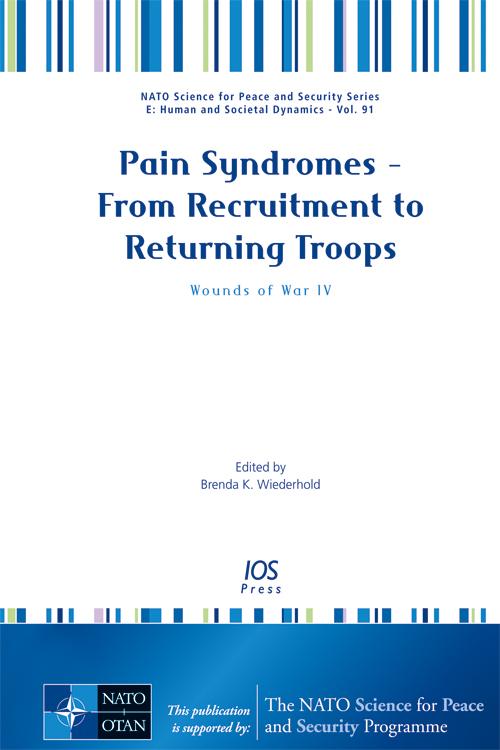
It has been shown that those who have served in both combat missions and peacekeeping operations are at increased risk for pain syndromes. Research suggests that this may result from their “wounds of war.” Some wounds may be “invisible,” such as depression, stress, and chronic pain, while others, such as physical disabilities, are more obvious.
In October 2011, twenty-seven scientists and representatives from NATO and partner countries met in Südkärnten, Austria for a three-day NATO Advanced Research Workshop entitled “Wounds of War: Pain Syndromes – From Recruitment to Returning Troops.”
The aim of this publication, which presents papers from that workshop, is to critically assess the existing knowledge and to identify directions for future actions.
The book addresses four key questions:
1. Vulnerability to Pain syndromes: Are certain types of people at a higher risk for pain syndromes (background, ethnicity, childhood trauma, etc.)?
2. Diagnosis and Assessment Issues of Pain Syndromes: Which methods are used to diagnose and assess pain?
3. Treatment of Pain Syndromes: What are the latest treatment and therapy opportunities for soldiers who experience pain syndromes?
4. Clinical Updates on Pain Syndromes: What can we learn from recent clinical updates on pain syndromes?
Payez facilement par carte, Klarna, Apple Pay ou Google Pay. Pas satisfait ? Vous avez toujours une garantie de remboursement de 14 jours. En savoir plus dans nos conditions. Si vous avez des questions, envoyez-nous un e-mail à hello@memmo.org.
Memmo facilite tes études, où que tu sois dans le monde. On rassemble tes manuels de cours et des outils d'étude intelligents au même endroit : résumés, quiz, podcasts et flashcards. Et il y a Ted, ton compagnon d'étude qui répond à toutes tes questions. Plus de 50 000 étudiants étudient déjà ici – conçu pour t'aider à apprendre plus vite et à moins stresser.