
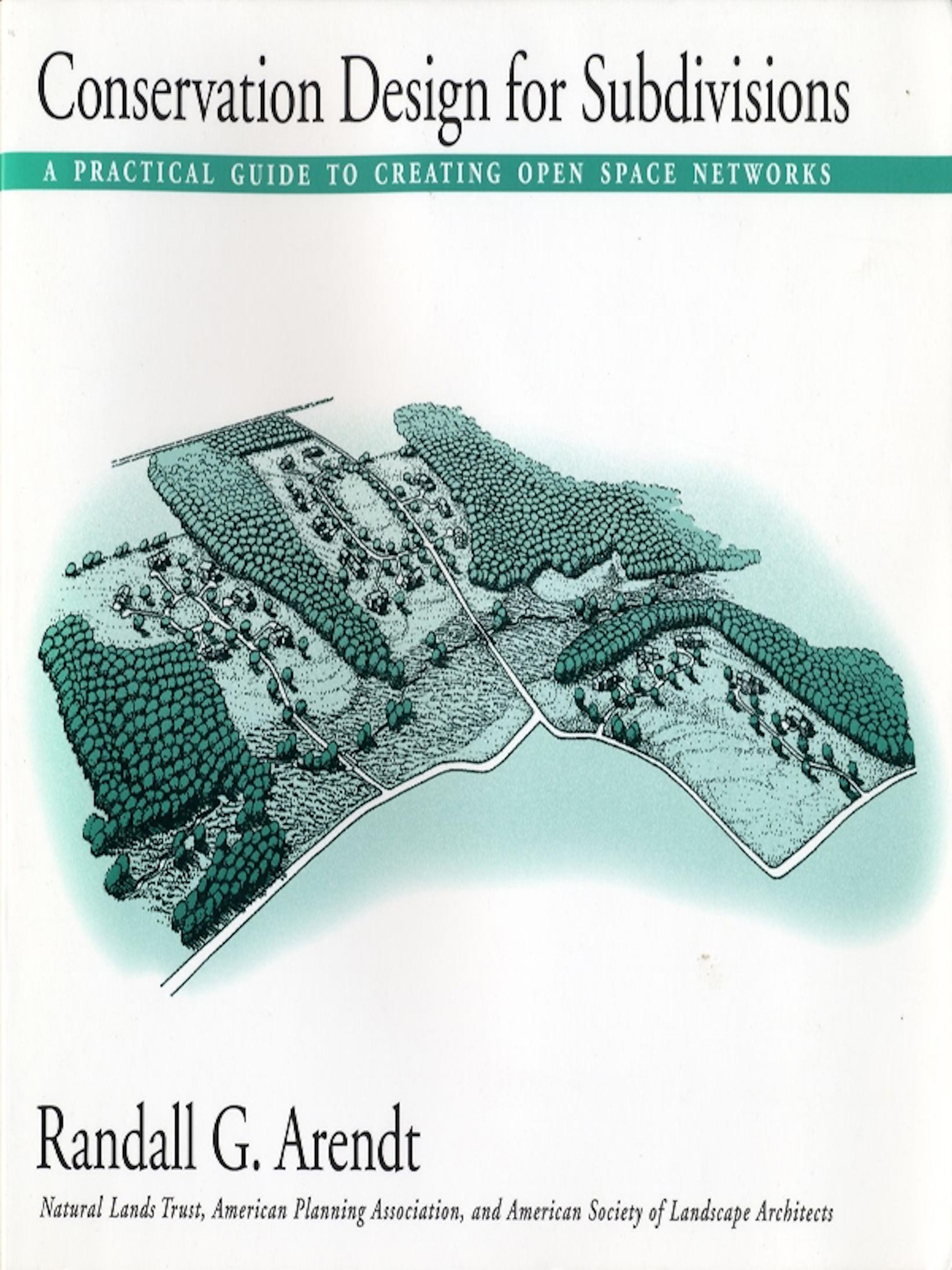
In most communities, land use regulations are based on a limited model that allows for only one end result: the production of more and more suburbia, composed of endless subdivisions and shopping centers, that ultimately covers every bit of countryside with "improvements." Fortunately, sensible alternatives to this approach do exist, and methods of developing land while at the same time conserving natural areas are available.
In Conservation Design for Subdivisions, Randall G. Arendt explores better ways of designing new residential developments than we have typically seen in our communities. He presents a practical handbook for residential developers, site designers, local officials, and landowners that explains how to implement new ideas about land-use planning and environmental protection. Abundantly illustrated with site plans (many of them in color), floor plans, photographs, and renditions of houses and landscapes, it describes a series of simple and straightforward techniques that allows for land-conserving development.
The author proposes a step-by-step approach to conserving natural areas by rearranging density on each development parcel as it is being planned so that only half (or less) of the buildable land is turned into houselots and streets. Homes are built in a less land-consumptive manner that allows the balance of property to be permanently protected and added to an interconnected network of green spaces and green corridors. Included in the volume are model zoning and subdivision ordinance provisions that can help citizens and local officials implement these innovative design ideas.
Payez facilement par carte, Klarna, Apple Pay ou Google Pay. Pas satisfait ? Vous avez toujours une garantie de remboursement de 14 jours. En savoir plus dans nos conditions. Si vous avez des questions, envoyez-nous un e-mail à hello@memmo.org.
Memmo facilite tes études, où que tu sois dans le monde. On rassemble tes manuels de cours et des outils d'étude intelligents au même endroit : résumés, quiz, podcasts et flashcards. Et il y a Ted, ton compagnon d'étude qui répond à toutes tes questions. Plus de 50 000 étudiants étudient déjà ici – conçu pour t'aider à apprendre plus vite et à moins stresser.