
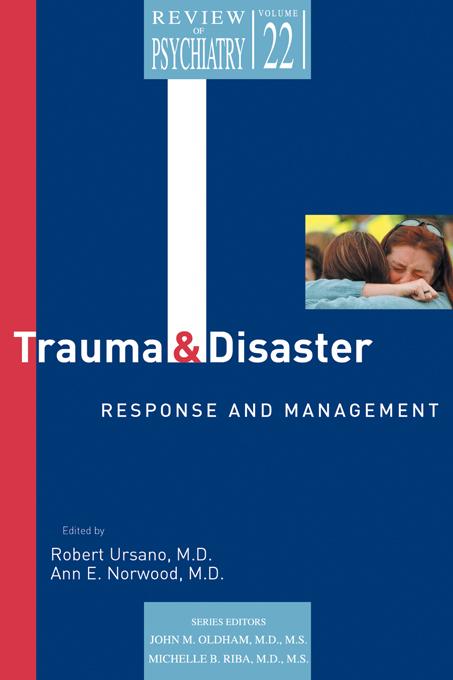
In our increasingly dangerous world -- brought into urgent focus by the September 11, 2001, attacks -- the need to manage the psychiatric consequences of traumatic events and disasters has never been greater. The editors of this powerful reference summarize our current understanding of the complex psychological, behavioral, and social responses to disaster, and present a compelling case for intensifying our focus on delivery and intervention efforts.
In just five chapters, 16 distinguished contributors examine the impact of trauma from the personal to the community level. This critical book reviews the neurobiologic and neuroanatomic responses to severe traumatic events, focusing on posttraumatic stress disorder to show how an initially adaptive response becomes maladaptive by producing long-term adverse consequences. discusses the psychiatric epidemiology of disaster, presenting a guide for clinicians in identifying and following groups at high risk for developing psychiatric disorders and an empirical blueprint for developing community interventions. details the impact of traumatic stressors on children, using the 9/11 terrorist attacks to illustrate many points and debunking the myth that children are more resilient than adults -- thus reinforcing their assertion that we need to improve the delivery of mental health services to traumatized children. presents material from an international consensus conference on the psychological interventions following mass violence, reviewing the psychological impact of disasters (including risk and protective factors) and acute interventions for trauma (e.g., psychological debriefing, treatment of traumatic grief, pharmacotherapy, cognitive-behavioral therapy, and interventions for children). concludes with the special dilemmas posed by weapons of mass destruction, including chemical, biological, nuclear, radiological, and high-yield explosives, discussing the attributes that make these weapons especially effective as instruments of terror and offering recommendations on how nations can enhance preparedness against these weapons.
This volume is a must-read for educators, students, residents, clinicians, and social workers -- in short, anyone interested in helping to heal the psychological fallout from traumatic events and disasters.
Payez facilement par carte, Klarna, Apple Pay ou Google Pay. Pas satisfait ? Vous avez toujours une garantie de remboursement de 14 jours. En savoir plus dans nos conditions. Si vous avez des questions, envoyez-nous un e-mail à hello@memmo.org.
Memmo facilite tes études, où que tu sois dans le monde. On rassemble tes manuels de cours et des outils d'étude intelligents au même endroit : résumés, quiz, podcasts et flashcards. Et il y a Ted, ton compagnon d'étude qui répond à toutes tes questions. Plus de 50 000 étudiants étudient déjà ici – conçu pour t'aider à apprendre plus vite et à moins stresser.