
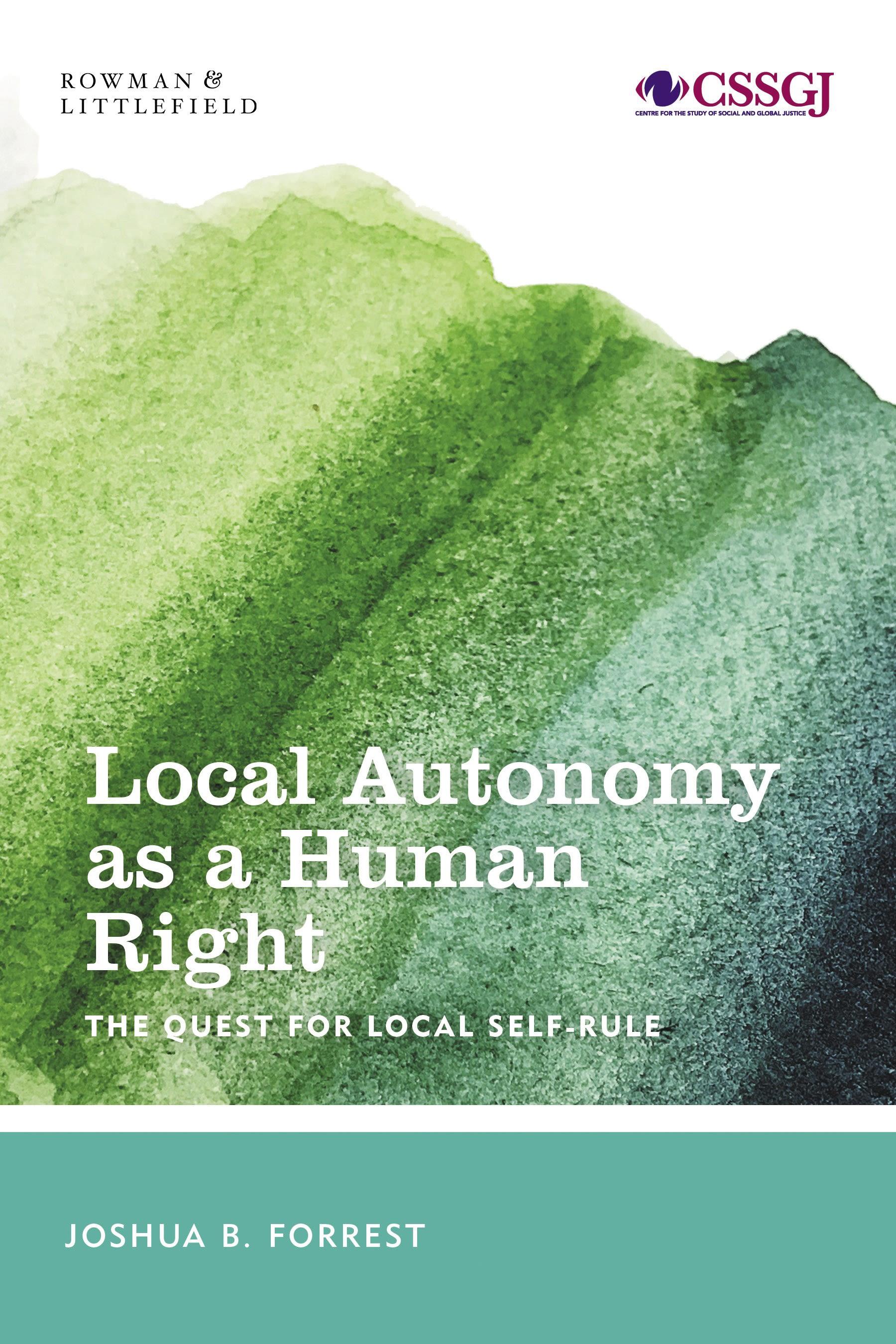
Local Autonomy as a Human Right contends that local communities struggle to preserve their territorial autonomy over time despite changes to the broader political and geographic contexts within which they are embedded. Forrest argues that this both reflects and is evidence of a worldwide embrace of local control as a key political and social value, indeed, of such importance that it should be embraced and codified as a human right.
This study weaves together evidence grounded in a variety of disciplines - history, geography, comparative politics, sociology, public policy, anthropology, international jurisprudence, rural studies, urban studies -- to make clear that a presumed, inherent moral right to local self-determination has been manifested in many different historical and social contexts.
This book constructs a compelling argument favoring a human right to local autonomy. It identifies practical factors that help to account for the relative success of communities that are able to assert local control over time. Here, particular attention is paid to whether localities are able to generate policy and organizational capacity. Forrest suggests that a focus on local policy and organizational capacity can help to explain why some communities attempting to assert greater local control are more successful than others.
Local Autonomy as a Human Right contributes to scholarly debates regarding the varied impacts of globalization, with the place-based perspective and moral emphasis on territorial-centered rights put forth herein offering a necessary counter-narrative to the often-presumed predominance of global forces.
This study weaves together evidence grounded in a variety of disciplines - history, geography, comparative politics, sociology, public policy, anthropology, international jurisprudence, rural studies, urban studies -- to make clear that a presumed, inherent moral right to local self-determination has been manifested in many different historical and social contexts.
This book constructs a compelling argument favoring a human right to local autonomy. It identifies practical factors that help to account for the relative success of communities that are able to assert local control over time. Here, particular attention is paid to whether localities are able to generate policy and organizational capacity. Forrest suggests that a focus on local policy and organizational capacity can help to explain why some communities attempting to assert greater local control are more successful than others.
Local Autonomy as a Human Right contributes to scholarly debates regarding the varied impacts of globalization, with the place-based perspective and moral emphasis on territorial-centered rights put forth herein offering a necessary counter-narrative to the often-presumed predominance of global forces.
Payez facilement par carte, Klarna, Apple Pay ou Google Pay. Pas satisfait ? Vous avez toujours une garantie de remboursement de 14 jours. En savoir plus dans nos conditions. Si vous avez des questions, envoyez-nous un e-mail à hello@memmo.org.
Memmo facilite tes études, où que tu sois dans le monde. On rassemble tes manuels de cours et des outils d'étude intelligents au même endroit : résumés, quiz, podcasts et flashcards. Et il y a Ted, ton compagnon d'étude qui répond à toutes tes questions. Plus de 50 000 étudiants étudient déjà ici – conçu pour t'aider à apprendre plus vite et à moins stresser.