
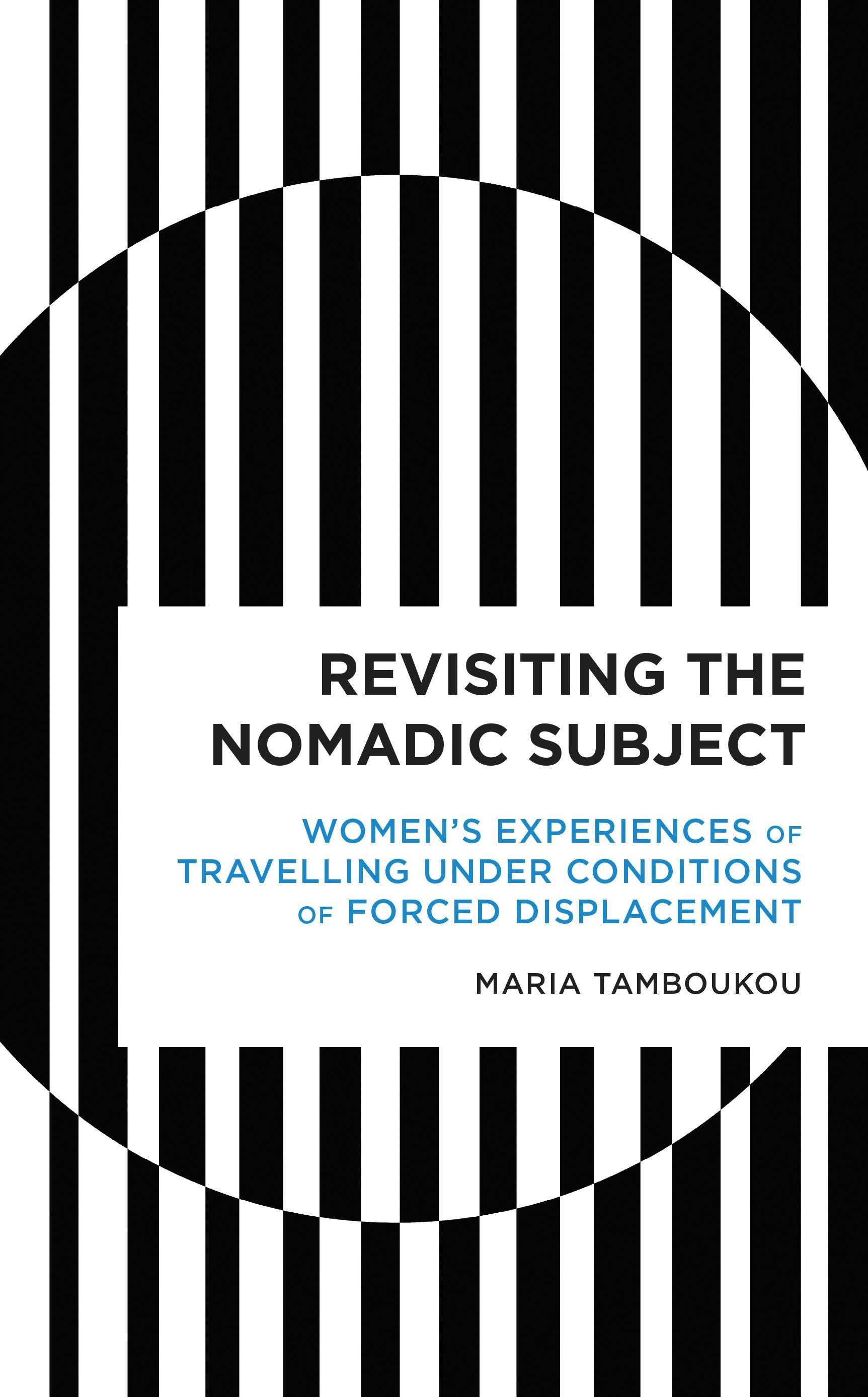
This book follows the stories of forcefully displaced women and raises the question of whether we can still use the figuration of the nomadic subject in feminist theories and politics. This question is examined in the light of the ongoing global crises of mobility and severe border practices. In recounting their stories migrant and refugee women appear in the world as ‘who they are’ — unique and unrepeatable human beings —and not as ‘what they are’ —objectified ‘refugees’, ‘victims’ or ‘stateless subjects’.
Women’s stories leave traces of their will to rewrite their exclusion from oppressive regimes, defend their choice of civil and patriarchal disobedience, grasp their passage, claim their right to have rights and affirm their determination for new beginnings. What emerges from the encounter between theoretical abstractions and women’s lived experiences is the need to decolonize feminist theories and make cartographies of mobility assemblages, wherein nomadism is a component of entangled relations and not a category or a figuration of a subject position.
These stories that have now been collected, transcribed and analysed; they have created a rich archive of uprooted women’s experiences and have brought forward a wide range of new ideas that will be presented and discussed in the book:
Decolonizing feminist theoryMobility assemblages and geographies of nomadism The art of listening to fragmented narratives and the labour of translationCrossing borders and inhabiting borderlandsRadical solitude and radical hopeFeminist genealogies of labour under conditions of forced displacementThe force of political narratives through the figure of Antigone?Education for hope Imagining the non-nomad
4 narrated stories will also be presented in full interwoven in the theoretical discussions of the book, thus opening up a dialogic space between theoretical reflections and diffractions, and narratives of lived experiences.
Women’s stories leave traces of their will to rewrite their exclusion from oppressive regimes, defend their choice of civil and patriarchal disobedience, grasp their passage, claim their right to have rights and affirm their determination for new beginnings. What emerges from the encounter between theoretical abstractions and women’s lived experiences is the need to decolonize feminist theories and make cartographies of mobility assemblages, wherein nomadism is a component of entangled relations and not a category or a figuration of a subject position.
These stories that have now been collected, transcribed and analysed; they have created a rich archive of uprooted women’s experiences and have brought forward a wide range of new ideas that will be presented and discussed in the book:
Decolonizing feminist theoryMobility assemblages and geographies of nomadism The art of listening to fragmented narratives and the labour of translationCrossing borders and inhabiting borderlandsRadical solitude and radical hopeFeminist genealogies of labour under conditions of forced displacementThe force of political narratives through the figure of Antigone?Education for hope Imagining the non-nomad
4 narrated stories will also be presented in full interwoven in the theoretical discussions of the book, thus opening up a dialogic space between theoretical reflections and diffractions, and narratives of lived experiences.
Payez facilement par carte, Klarna, Apple Pay ou Google Pay. Pas satisfait ? Vous avez toujours une garantie de remboursement de 14 jours. En savoir plus dans nos conditions. Si vous avez des questions, envoyez-nous un e-mail à hello@memmo.org.
Memmo facilite tes études, où que tu sois dans le monde. On rassemble tes manuels de cours et des outils d'étude intelligents au même endroit : résumés, quiz, podcasts et flashcards. Et il y a Ted, ton compagnon d'étude qui répond à toutes tes questions. Plus de 50 000 étudiants étudient déjà ici – conçu pour t'aider à apprendre plus vite et à moins stresser.