
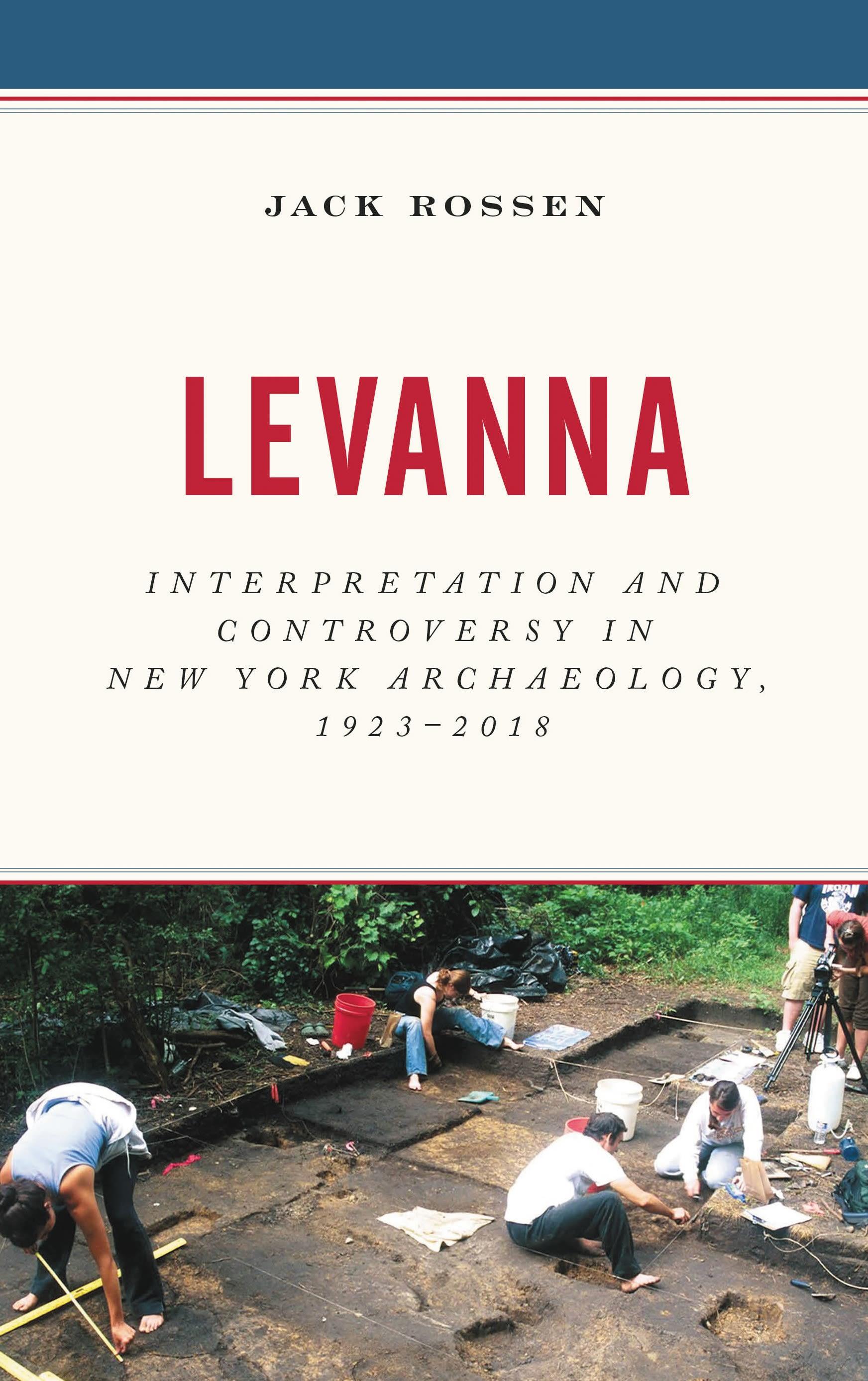
Levanna was a famous and well-visited archaeological site in central New York, along the eastern side of Cayuga Lake, during the Great Depression. It was primarily known for its spectacular animal effigies. But were they real or forgeries? Jack Rossen takes us on a journey through the 1920s and 1930s, the era of an outdoor museum, and professional attempts by the Society for American Archaeology (SAA) to suppress it.
Larger than life characters include Arthur C. Parker, future President of the SAA, William A. Ritchie, future State Archaeologist of New York, and Harrison C. Follett, the entrepreneurial archaeologist. The book also takes us through the 2007-2009 re-excavation of Levanna and the related 2011-2014 excavations at the Myers Farm site. Along the way, Cayuga history is reinterpreted as more peaceful than previously believed, and the case is made for a Haudenosaunee (Iroquois) Confederacy more than one thousand years old. An older confederacy is more in line with oral traditions than previous archaeological ideas of a brief confederacy that began either just before or after European contact.
The work was conducted through the framework of indigenous collaborative archaeology with leaders of the Cayuga and Haudenosaunee Confederacy. The narrative approach includes stories of the contemporary people, both Native and non-Native, who protected the site, supported the research, and provided ideas, wisdom, inspiration, and friendship.
Larger than life characters include Arthur C. Parker, future President of the SAA, William A. Ritchie, future State Archaeologist of New York, and Harrison C. Follett, the entrepreneurial archaeologist. The book also takes us through the 2007-2009 re-excavation of Levanna and the related 2011-2014 excavations at the Myers Farm site. Along the way, Cayuga history is reinterpreted as more peaceful than previously believed, and the case is made for a Haudenosaunee (Iroquois) Confederacy more than one thousand years old. An older confederacy is more in line with oral traditions than previous archaeological ideas of a brief confederacy that began either just before or after European contact.
The work was conducted through the framework of indigenous collaborative archaeology with leaders of the Cayuga and Haudenosaunee Confederacy. The narrative approach includes stories of the contemporary people, both Native and non-Native, who protected the site, supported the research, and provided ideas, wisdom, inspiration, and friendship.
Payez facilement par carte, Klarna, Apple Pay ou Google Pay. Pas satisfait ? Vous avez toujours une garantie de remboursement de 14 jours. En savoir plus dans nos conditions. Si vous avez des questions, envoyez-nous un e-mail à hello@memmo.org.
Memmo facilite tes études, où que tu sois dans le monde. On rassemble tes manuels de cours et des outils d'étude intelligents au même endroit : résumés, quiz, podcasts et flashcards. Et il y a Ted, ton compagnon d'étude qui répond à toutes tes questions. Plus de 50 000 étudiants étudient déjà ici – conçu pour t'aider à apprendre plus vite et à moins stresser.