
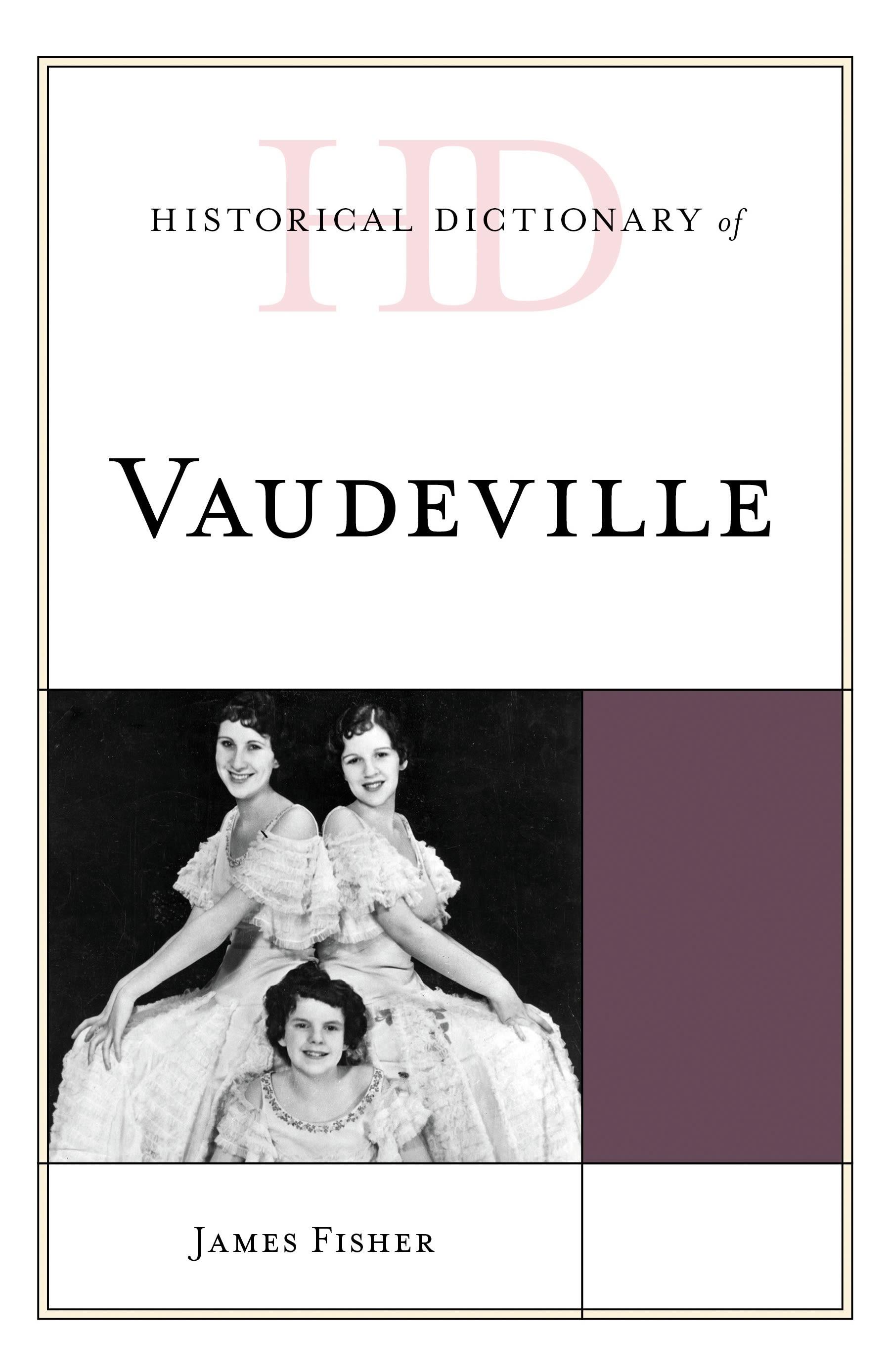
Vaudeville, as it is commonly known today, began as a response to scandalous variety performances appealing mostly to adult, male patrons. When former minstrel performer and balladeer Tony Pastor opened the Fourteenth Street Theatre in New York in 1881, he was guided by a mission to provide family-friendly variety shows in hopes of drawing in that portion of the audience – women and children – otherwise inherently excluded from variety bills prior to 1881. There he perfected a framework for family-oriented amusements of the highest obtainable quality and style.
Historical Dictionary of Vaudeville contains a chronology, an introduction, an extensive bibliography, and the dictionary section has more than 1,000 cross-referenced entries on performing artists, managers and agents, theatre facilities, and the terminology central to the history of vaudeville. This book is an excellent resource for students, researchers, and anyone wanting to know more about vaudeville.
Historical Dictionary of Vaudeville contains a chronology, an introduction, an extensive bibliography, and the dictionary section has more than 1,000 cross-referenced entries on performing artists, managers and agents, theatre facilities, and the terminology central to the history of vaudeville. This book is an excellent resource for students, researchers, and anyone wanting to know more about vaudeville.
Payez facilement par carte, Klarna, Apple Pay ou Google Pay. Pas satisfait ? Vous avez toujours une garantie de remboursement de 14 jours. En savoir plus dans nos conditions. Si vous avez des questions, envoyez-nous un e-mail à hello@memmo.org.
Memmo facilite tes études, où que tu sois dans le monde. On rassemble tes manuels de cours et des outils d'étude intelligents au même endroit : résumés, quiz, podcasts et flashcards. Et il y a Ted, ton compagnon d'étude qui répond à toutes tes questions. Plus de 50 000 étudiants étudient déjà ici – conçu pour t'aider à apprendre plus vite et à moins stresser.