
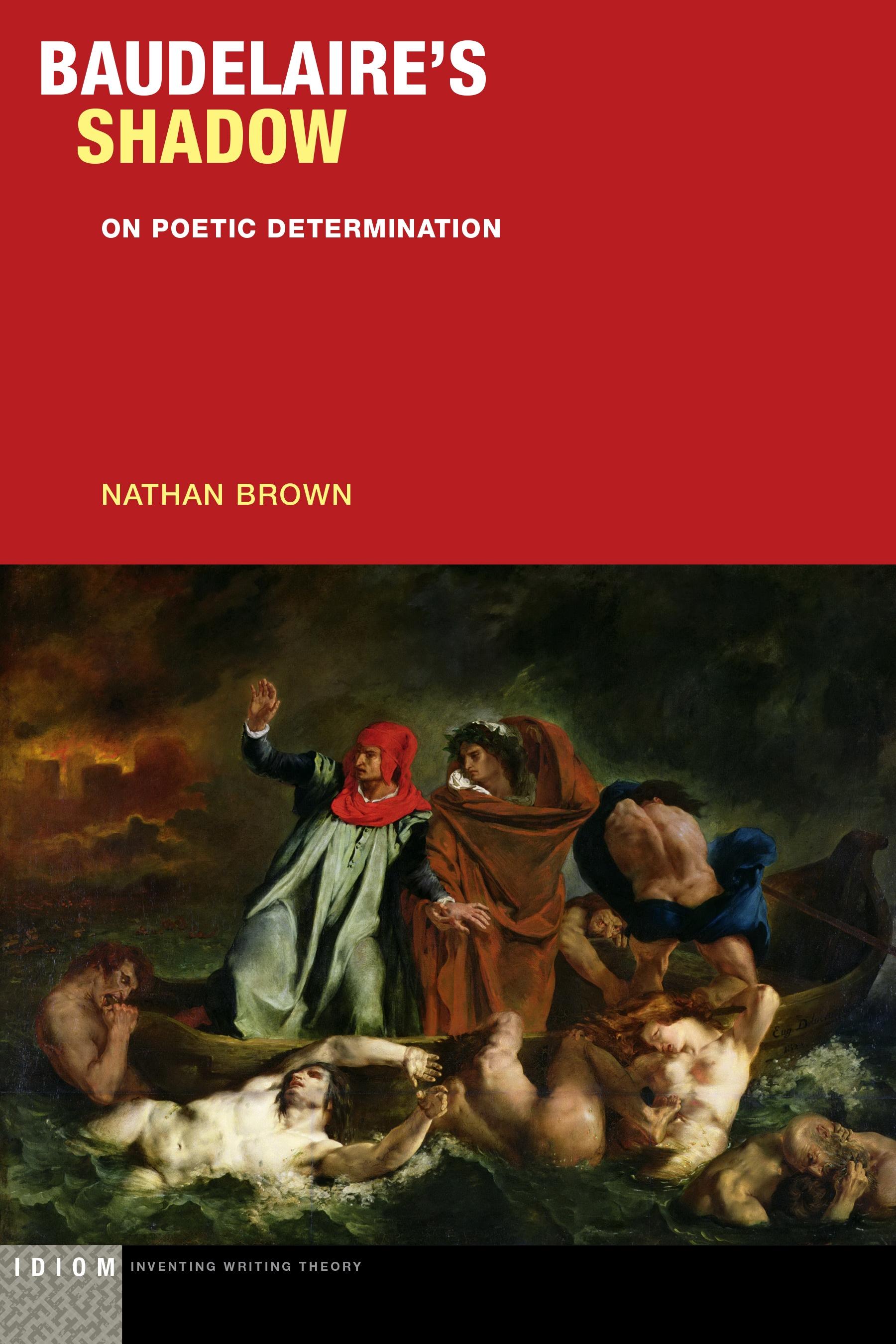
Baudelaire’s fame and notoriety have been established by the reduction of his complex work to simplified profiles: the poet of the modern city, of erotic obsession, of Satanic revolt, of colonial fantasies, of mystical correspondences, of corporeal decay . . . But what is it that holds these facets of the work together? Is there a logic underpinning the proliferation of themes, styles, and personae in The Flowers of Evil, while suturing content and form?
Baudelaire’s Shadow argues that what is most fundamentally at stake across the manifold layers of Baudelaire’s poetic project is the problem of determination: a contradiction between determining and being determined, a dialectic of agency bound up with its negation. This approach enables a new understanding of conceptual, formal, and figural cruxes traversing The Flowers of Evil, including the relationship between writing and reading, the anticipation of death, the negativity of the void, the representation of race, the poetics of ekphrasis, the singularity of the aesthetic, the actuality of the social, the indeterminacy of sense, and the materiality of the signifier.
With philosophical precision and poetic élan, one of Baudelaire’s finest translators reconstructs what we thought we knew about The Flowers of Evil from the ground up, revealing the dialectical logic at the heart of this major work of modern literature.
Payez facilement par carte, Klarna, Apple Pay ou Google Pay. Pas satisfait ? Vous avez toujours une garantie de remboursement de 14 jours. En savoir plus dans nos conditions. Si vous avez des questions, envoyez-nous un e-mail à hello@memmo.org.
Memmo facilite tes études, où que tu sois dans le monde. On rassemble tes manuels de cours et des outils d'étude intelligents au même endroit : résumés, quiz, podcasts et flashcards. Et il y a Ted, ton compagnon d'étude qui répond à toutes tes questions. Plus de 50 000 étudiants étudient déjà ici – conçu pour t'aider à apprendre plus vite et à moins stresser.