
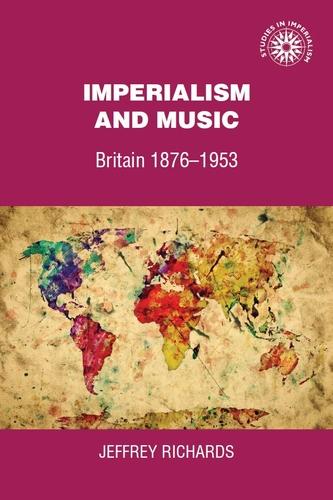
Music played a major role in the life of a global ideological phenomenon like the British Empire. This book demonstrates that music has to be recognised as one of the central characteristics of the cultural imperialism of the late nineteenth and early twentieth centuries. It begins with an account of the imperial music of Sir Edward Elgar and Sir Arthur Sullivan and the establishing of an imperial musical idiom. The book discusses the music composed for or utilized by official occasions: coronations, jubilees, exhibitions, tattoos, Armistice Day and Empire Day. Community singing was also introduced at the Aldershot Military Tattoo in 1927, sponsored by the Daily Express. The book examines the imperial content of a range of musical forms: operetta and ballet, films, music hall songs, ballads, hymns and marches. In one of the scenes depicting ballet, Indian dancing girls are ordered to reveal the riches of the land and the Ballet of Jewels. There were two staples of song in the second half of the nineteenth century: the drawing-room ballad and the music-hall song. Sir Henry Coward was Britain's leading chorus-master, and his 1911 musical world tour with Sheffield choir was the high point of his career. The book concludes with a discussion of practitioners of imperial music: the divas Emma Albani, Nellie Melba and Clara Butt, and the baritone Peter Dawson.
Payez facilement par carte, Klarna, Apple Pay ou Google Pay. Pas satisfait ? Vous avez toujours une garantie de remboursement de 14 jours. En savoir plus dans nos conditions. Si vous avez des questions, envoyez-nous un e-mail à hello@memmo.org.
Memmo facilite tes études, où que tu sois dans le monde. On rassemble tes manuels de cours et des outils d'étude intelligents au même endroit : résumés, quiz, podcasts et flashcards. Et il y a Ted, ton compagnon d'étude qui répond à toutes tes questions. Plus de 50 000 étudiants étudient déjà ici – conçu pour t'aider à apprendre plus vite et à moins stresser.
Tu pourrais aussi aimer
Acheter le livre0