
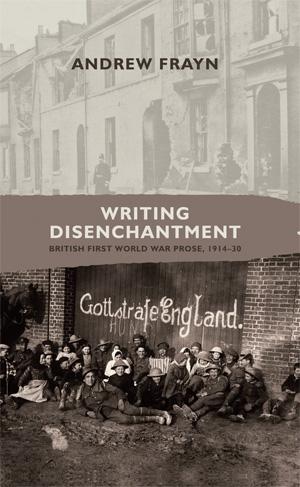
It has become axiomatic that First World War literature was disenchanted, or disillusioned, and returning combatants were unable to process or communicate that experience. In Writing disenchantment, Andrew Frayn argues that this was not just about the war: non-combatants were just as disenchanted as those who fought, and writers such as D. H. Lawrence and Virginia Woolf produced some of the sharpest criticisms. Its language already existed in contemporary sociological and historical accounts of the problems of mass culture and the modern city, whose structures contained the conflict and were strengthened during it.
Archival material, sales data and reviews are used to chart disenchantment in a wide range of early twentieth-century war literature from novels about fears of invasion and pacifism, through the modernist novels of the 1920s to its dominance in the War Books Boom of 1928–30. This book will appeal to scholars and students of English literature, social and cultural history, and gender studies.
Payez facilement par carte, Klarna, Apple Pay ou Google Pay. Pas satisfait ? Vous avez toujours une garantie de remboursement de 14 jours. En savoir plus dans nos conditions. Si vous avez des questions, envoyez-nous un e-mail à hello@memmo.org.
Memmo facilite tes études, où que tu sois dans le monde. On rassemble tes manuels de cours et des outils d'étude intelligents au même endroit : résumés, quiz, podcasts et flashcards. Et il y a Ted, ton compagnon d'étude qui répond à toutes tes questions. Plus de 50 000 étudiants étudient déjà ici – conçu pour t'aider à apprendre plus vite et à moins stresser.