
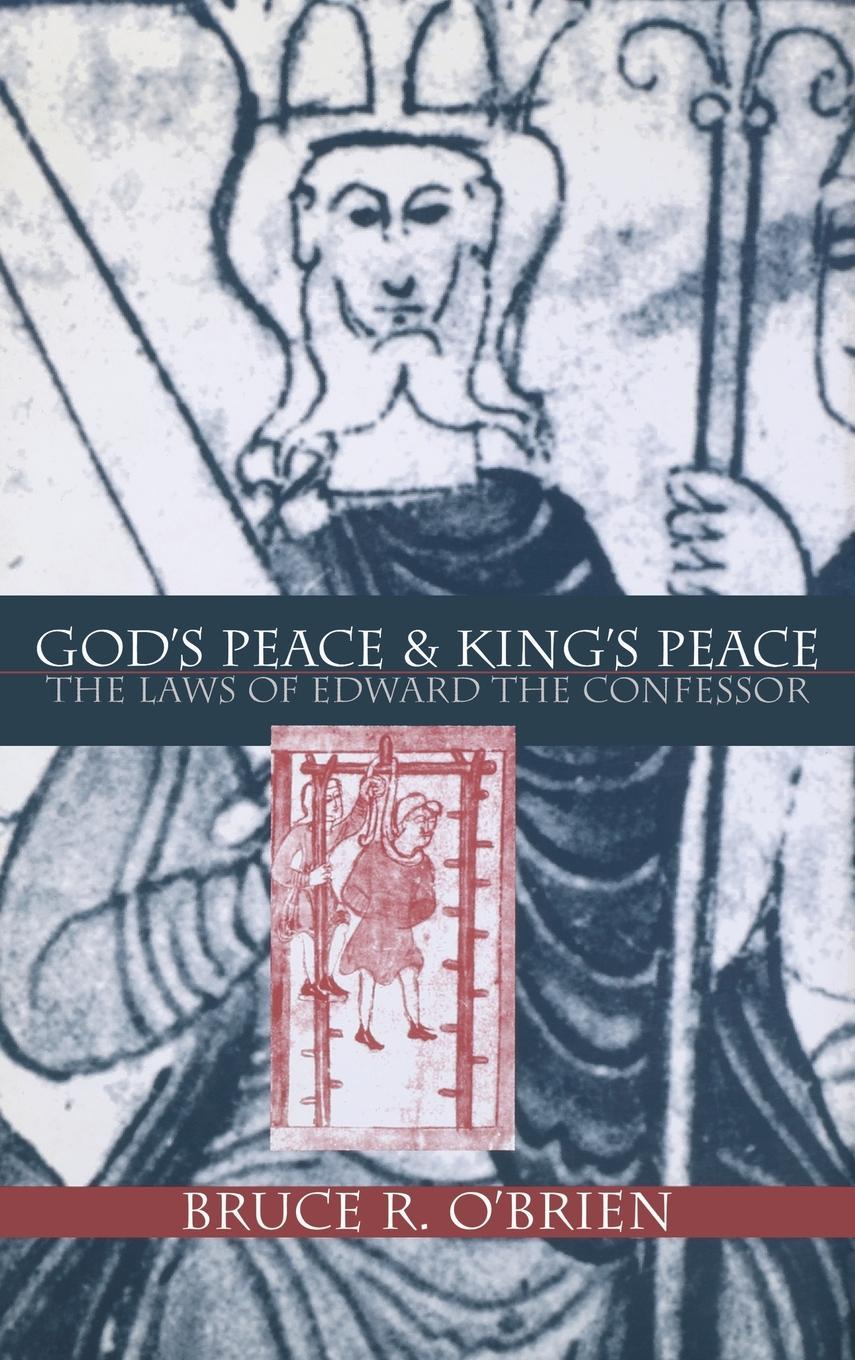
Sometime before the middle of the twelfth century, an anonymous English writer composed the Leges Edwardi, a treatise purporting to contain the laws that had been in force under the Anglo-Saxon King Edward the Confessor (1042-1066), cousin of William the Conqueror. The laws were said to have been spoken to William shortly after the Conquest by "English nobles who were wise men and learned in their law," recounting "the rules of their laws and customs" for the invading Norman king. When they had finished, the king wondered whether it might not be better for all of them to live under the law of his Viking ancestors; the English, however, protested that they preferred to live by their own preconquest laws. The king acquiesced, and thus, goes the story, were the laws of King Edward the Confessor authorized.
Looking through the lens of this important—if spurious—treatise, God's Peace and King's Peace offers the first ground-level view of English law during the century in which the common law was born. Bruce R. O'Brien compares the Leges Edwardi to other memorials of legal policy and practice from before and after 1066, in both Normandy and England, and advances conclusions about the treatises' reliability on specific points of law. He also shows how the Laws of Edward the Confessor, taken as a record of English law at the conquest, came to be used as authoritative evidence behind the Magna Carta that the king was under the law, and how it was eventually declared a notorious forgery by seventeenth-century antiquaries and Enlightenment historians.
Payez facilement par carte, Klarna, Apple Pay ou Google Pay. Pas satisfait ? Vous avez toujours une garantie de remboursement de 14 jours. En savoir plus dans nos conditions. Si vous avez des questions, envoyez-nous un e-mail à hello@memmo.org.
Memmo facilite tes études, où que tu sois dans le monde. On rassemble tes manuels de cours et des outils d'étude intelligents au même endroit : résumés, quiz, podcasts et flashcards. Et il y a Ted, ton compagnon d'étude qui répond à toutes tes questions. Plus de 50 000 étudiants étudient déjà ici – conçu pour t'aider à apprendre plus vite et à moins stresser.