
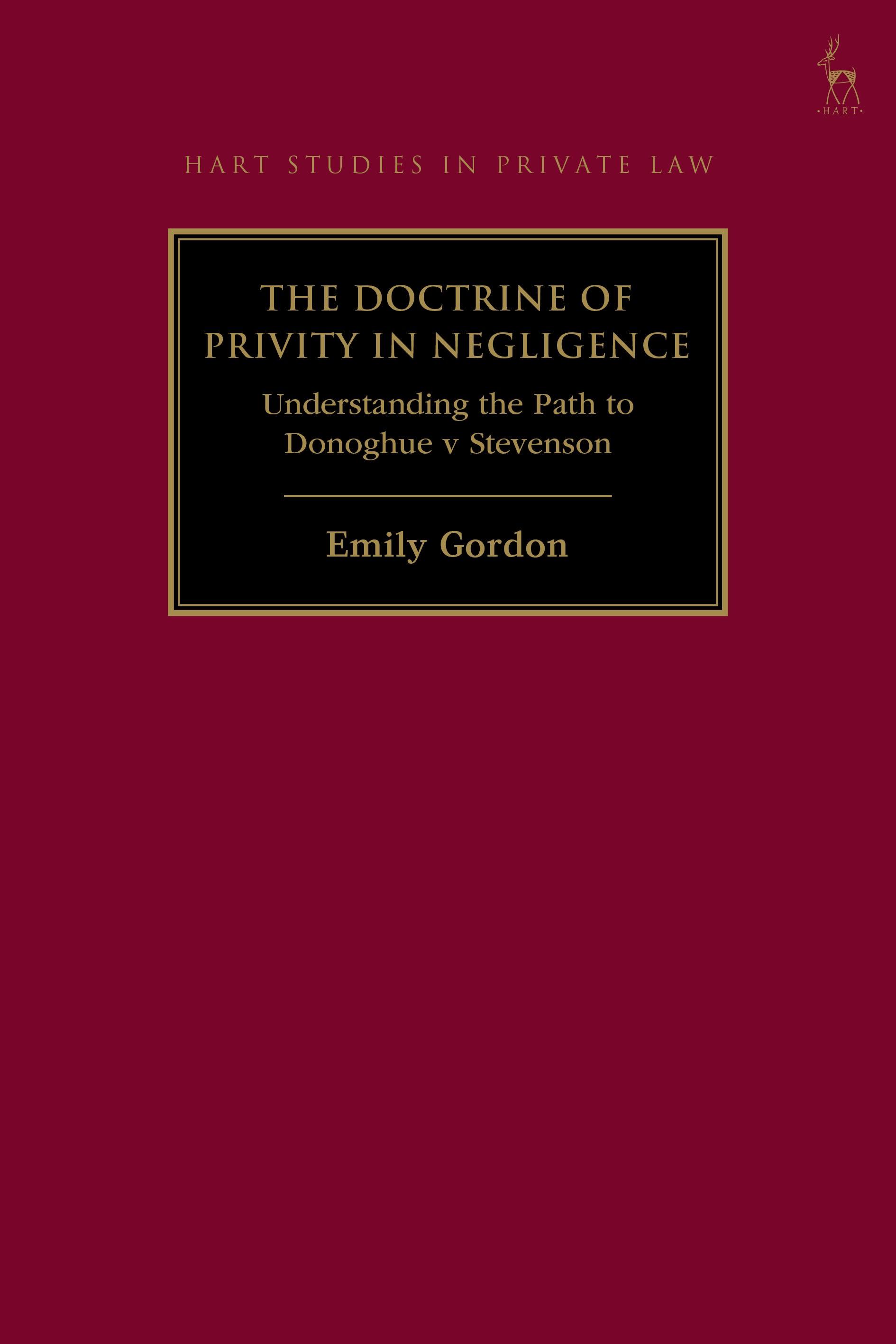
This book traces the path of the doctrine of privity in negligence, from inception to its famous ousting in Donoghue v Stevenson in 1932.
It begins with the origins of negligence's privity rule in the Industrial Revolution, before considering pressure points for change in the early twentieth century, including rising consumerism and the array of issues faced by married women when suing on a contract. This book challenges the orthodox story that products-based claims in tort were a rarity in English law prior to Donoghue because of the privity bar. Viewed within this narrative, Mrs Donoghue's claim is a tipping point rather than a revolution.
It begins with the origins of negligence's privity rule in the Industrial Revolution, before considering pressure points for change in the early twentieth century, including rising consumerism and the array of issues faced by married women when suing on a contract. This book challenges the orthodox story that products-based claims in tort were a rarity in English law prior to Donoghue because of the privity bar. Viewed within this narrative, Mrs Donoghue's claim is a tipping point rather than a revolution.
Payez facilement par carte, Klarna, Apple Pay ou Google Pay. Pas satisfait ? Vous avez toujours une garantie de remboursement de 14 jours. En savoir plus dans nos conditions. Si vous avez des questions, envoyez-nous un e-mail à hello@memmo.org.
Memmo facilite tes études, où que tu sois dans le monde. On rassemble tes manuels de cours et des outils d'étude intelligents au même endroit : résumés, quiz, podcasts et flashcards. Et il y a Ted, ton compagnon d'étude qui répond à toutes tes questions. Plus de 50 000 étudiants étudient déjà ici – conçu pour t'aider à apprendre plus vite et à moins stresser.