
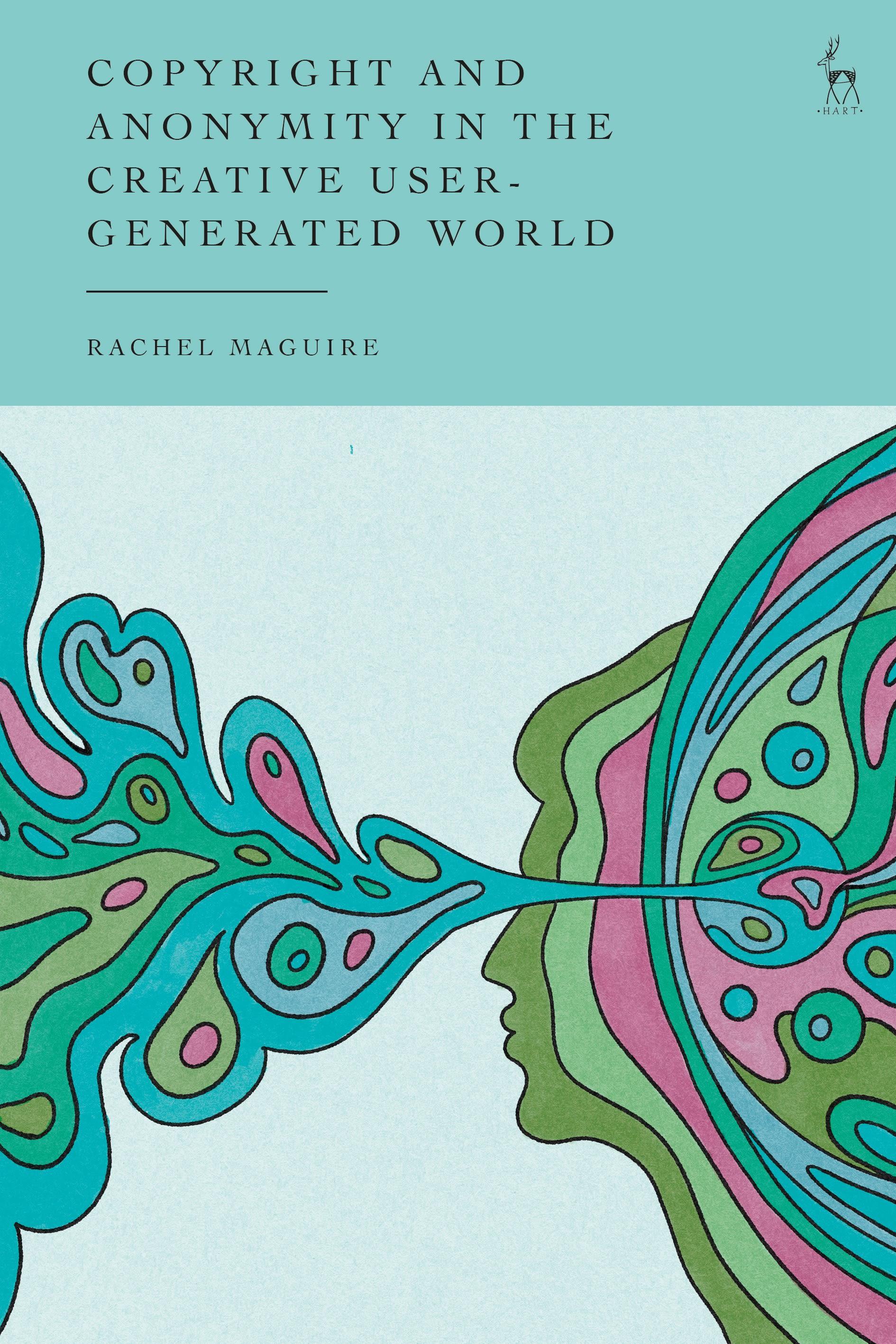
This book explores the relationship between copyright law, online anonymity, and creative user-generated content (CUGC).
Presenting original empirical findings, the book evaluates the co-existence of copyright law and normative systems regulating a CUGC landscape made up of artists, photographers, and writers, and makes novel recommendations for copyright reform. It takes a multi-jurisdictional approach across Anglo-American and EU legal systems, using the UK, USA, and Germany as representative jurisdictions for legal analysis. Qualitative findings are drawn from creators and communities on Reddit and 4chan.
Copyright subsists in much CUGC, but pervasive anonymity makes it difficult for the law to regulate it effectively. Simultaneously, anonymity offers creative benefits in a way that highlights flaws in traditional justifications of copyright. Comparisons between community norms and copyright law identify practical differences but also fundamental compatibilities in terms of ownership expectations. However, the simultaneous existence of legal and normative enforcement mechanisms complicates matters for creators and potential users, with negative implications for creativity and copyright law. While existing reform efforts have made suggestions to create a UGC exception, these overlook and undermine the role of CUGC creators as copyright holders. This can be addressed through the consideration of a framework of supplementary CUGC guidelines when developing such reforms.
This valuable resource for researchers and students provides a distinct perspective in framing CUGC creators as copyright holders, examining online anonymity as a pivotal factor influencing regulation.
Presenting original empirical findings, the book evaluates the co-existence of copyright law and normative systems regulating a CUGC landscape made up of artists, photographers, and writers, and makes novel recommendations for copyright reform. It takes a multi-jurisdictional approach across Anglo-American and EU legal systems, using the UK, USA, and Germany as representative jurisdictions for legal analysis. Qualitative findings are drawn from creators and communities on Reddit and 4chan.
Copyright subsists in much CUGC, but pervasive anonymity makes it difficult for the law to regulate it effectively. Simultaneously, anonymity offers creative benefits in a way that highlights flaws in traditional justifications of copyright. Comparisons between community norms and copyright law identify practical differences but also fundamental compatibilities in terms of ownership expectations. However, the simultaneous existence of legal and normative enforcement mechanisms complicates matters for creators and potential users, with negative implications for creativity and copyright law. While existing reform efforts have made suggestions to create a UGC exception, these overlook and undermine the role of CUGC creators as copyright holders. This can be addressed through the consideration of a framework of supplementary CUGC guidelines when developing such reforms.
This valuable resource for researchers and students provides a distinct perspective in framing CUGC creators as copyright holders, examining online anonymity as a pivotal factor influencing regulation.
Payez facilement par carte, Klarna, Apple Pay ou Google Pay. Pas satisfait ? Vous avez toujours une garantie de remboursement de 14 jours. En savoir plus dans nos conditions. Si vous avez des questions, envoyez-nous un e-mail à hello@memmo.org.
Memmo facilite tes études, où que tu sois dans le monde. On rassemble tes manuels de cours et des outils d'étude intelligents au même endroit : résumés, quiz, podcasts et flashcards. Et il y a Ted, ton compagnon d'étude qui répond à toutes tes questions. Plus de 50 000 étudiants étudient déjà ici – conçu pour t'aider à apprendre plus vite et à moins stresser.