
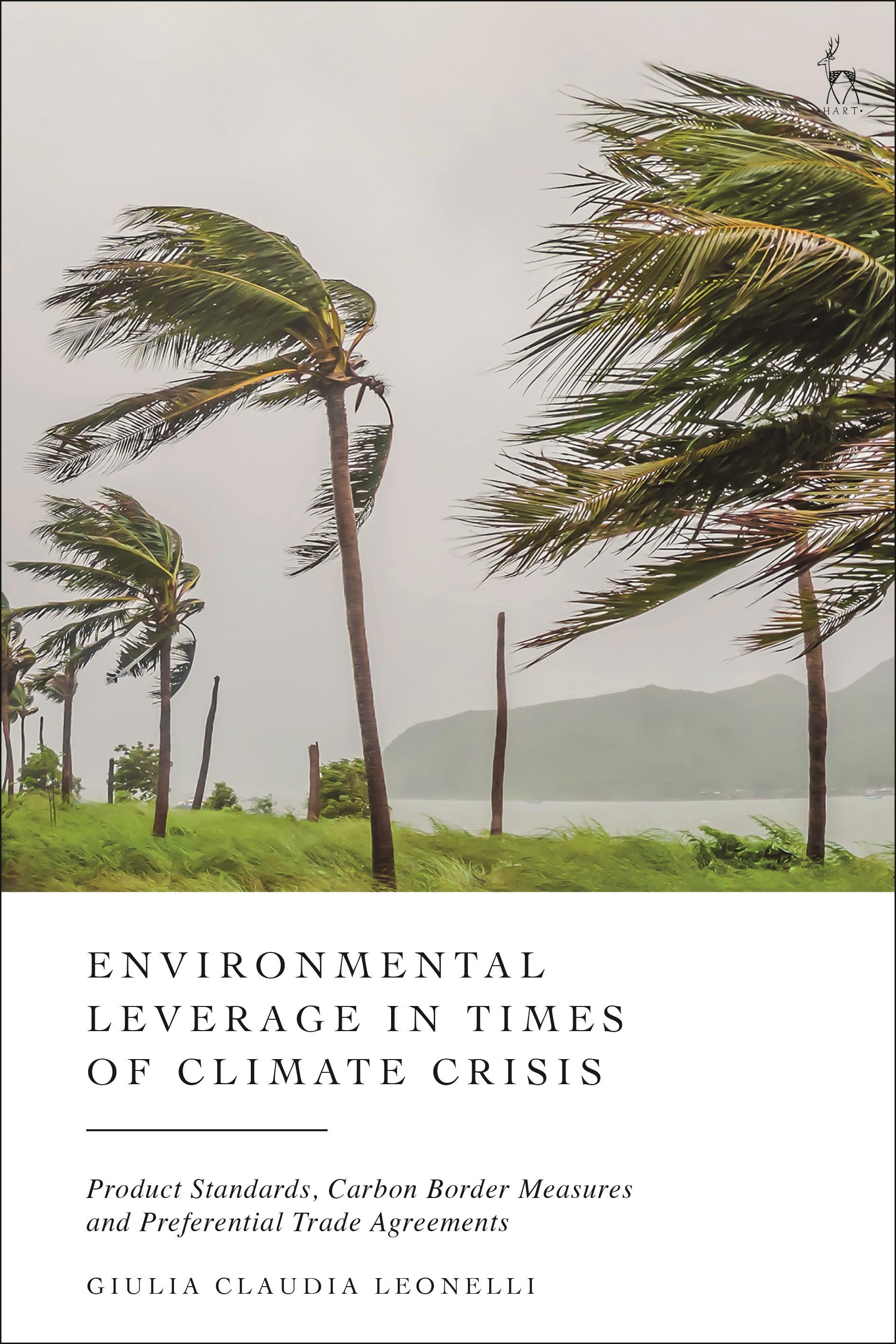
This book offers a conceptually informed insight into the rise of 'environmental leverage' in times of climate crisis.
The world is fast approaching a two degree Celsius increase in average global temperatures. Against this troubling background, trade-related environmental leverage aims to promote the uptake of more ambitious environmental standards by third countries and market actors involved in transnational supply chains.
Trade-related environmental leverage can help to remedy the failures of environmental multilateralism, reshape the trade agenda to cater to the demands of our time, and entrench greener forms of development and more sustainable production and consumption patterns. Nonetheless, its boundaries must be appropriately circumscribed.
The book assesses different forms of environmental leverage against the normative yardsticks of 'environmental integrity' and 'environmental legitimacy'. Environmental integrity targets 'green protectionism' and 'green discrimination', drawing a line between the promotion of environmental values and the protection of economic interests. Environmental legitimacy captures 'eco-imperialism', addressing the question of the treatment of differently situated countries and developing and least developed countries in particular. The book employs an in-depth analysis of three case studies to operationalise this conceptual framework, articulating the limits to environmental leverage in legal terms.
Combining a close focus on environmental regulations with a rigorous assessment of trade law questions, the book is relevant to anybody working in the fields of environmental law and policy, climate change law, and international trade law.
The world is fast approaching a two degree Celsius increase in average global temperatures. Against this troubling background, trade-related environmental leverage aims to promote the uptake of more ambitious environmental standards by third countries and market actors involved in transnational supply chains.
Trade-related environmental leverage can help to remedy the failures of environmental multilateralism, reshape the trade agenda to cater to the demands of our time, and entrench greener forms of development and more sustainable production and consumption patterns. Nonetheless, its boundaries must be appropriately circumscribed.
The book assesses different forms of environmental leverage against the normative yardsticks of 'environmental integrity' and 'environmental legitimacy'. Environmental integrity targets 'green protectionism' and 'green discrimination', drawing a line between the promotion of environmental values and the protection of economic interests. Environmental legitimacy captures 'eco-imperialism', addressing the question of the treatment of differently situated countries and developing and least developed countries in particular. The book employs an in-depth analysis of three case studies to operationalise this conceptual framework, articulating the limits to environmental leverage in legal terms.
Combining a close focus on environmental regulations with a rigorous assessment of trade law questions, the book is relevant to anybody working in the fields of environmental law and policy, climate change law, and international trade law.
Payez facilement par carte, Klarna, Apple Pay ou Google Pay. Pas satisfait ? Vous avez toujours une garantie de remboursement de 14 jours. En savoir plus dans nos conditions. Si vous avez des questions, envoyez-nous un e-mail à hello@memmo.org.
Memmo facilite tes études, où que tu sois dans le monde. On rassemble tes manuels de cours et des outils d'étude intelligents au même endroit : résumés, quiz, podcasts et flashcards. Et il y a Ted, ton compagnon d'étude qui répond à toutes tes questions. Plus de 50 000 étudiants étudient déjà ici – conçu pour t'aider à apprendre plus vite et à moins stresser.