
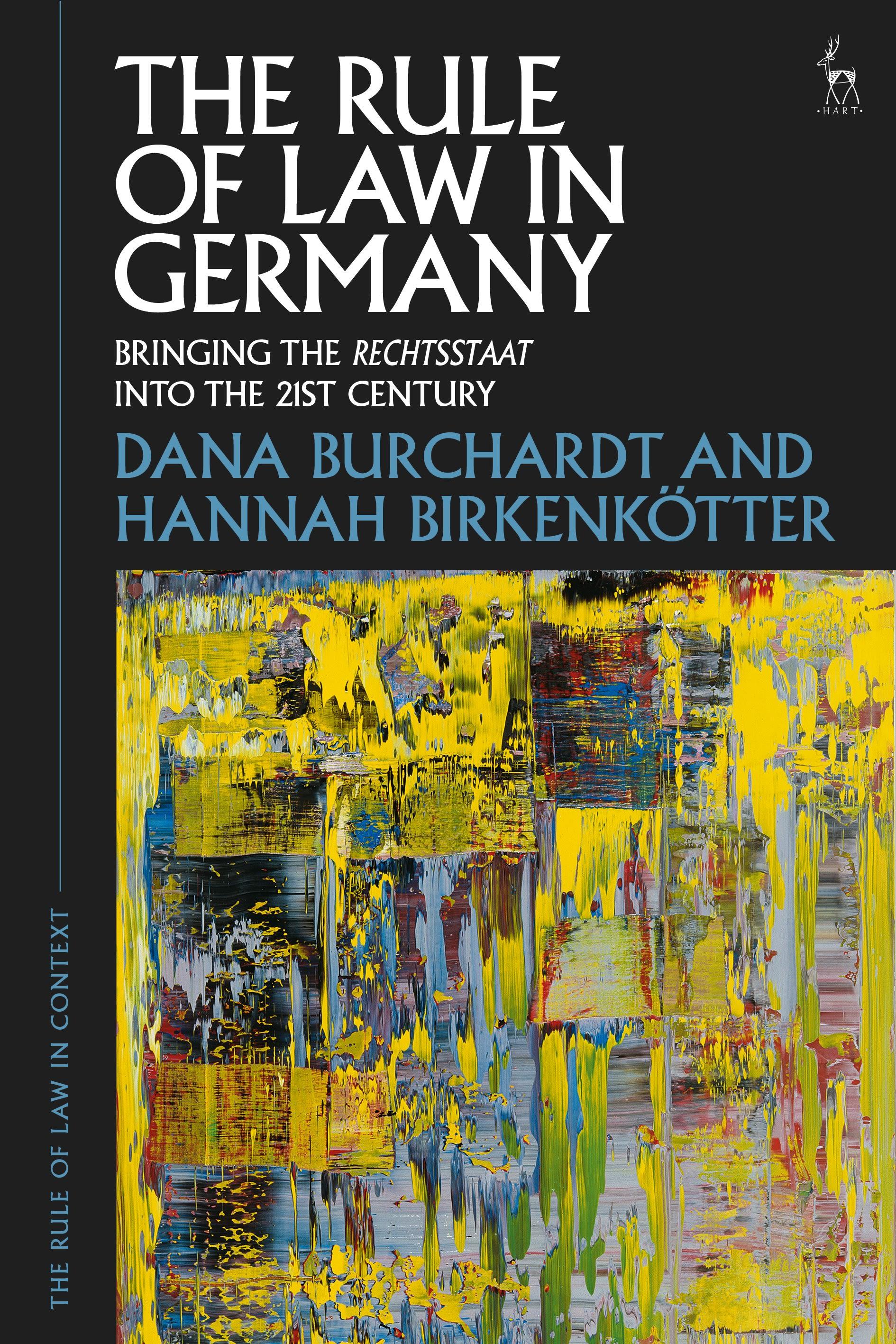
The rule of law, or Rechtsstaatsprinzip, is one of Germany's oldest constitutional principles and forms part of Germany's constitutional self-understanding. This book critically examines to what extent this key constitutional principle has translated into a reality for all.
The book provides a comprehensive insight into rule of law experiences and discourses in Germany. It explores Germany's long rule of law tradition and highlights where the German state has fallen short of its rule of law promise, using historical and contemporary examples. It also shows that Germany's rule of law experience is tightly interwoven with European and international rule of law debates. By integrating historical, socio-legal and doctrinal perspectives, the book provides a nuanced account of a foundational principle in German constitutional thought.
Dedicated chapters explore the history and doctrine of the rule of law, challenges to the rule of law in today's Germany, the rule of law experience in the former German Democratic Republic and in the context of reunification, the relationship of the German rule of law practice with the rule of law on the European and international level, and the rule of law in times of crisis. This includes challenges to the rule of law through anti-terrorism measures, as well as the more recent COVID-19 pandemic and the so-called migration crisis, but also how the rule of law has been discursively (mis-)used in those situations. In concluding, the book highlights digitalisation as a challenge to the future of the rule of law in Germany.
The book provides a comprehensive insight into rule of law experiences and discourses in Germany. It explores Germany's long rule of law tradition and highlights where the German state has fallen short of its rule of law promise, using historical and contemporary examples. It also shows that Germany's rule of law experience is tightly interwoven with European and international rule of law debates. By integrating historical, socio-legal and doctrinal perspectives, the book provides a nuanced account of a foundational principle in German constitutional thought.
Dedicated chapters explore the history and doctrine of the rule of law, challenges to the rule of law in today's Germany, the rule of law experience in the former German Democratic Republic and in the context of reunification, the relationship of the German rule of law practice with the rule of law on the European and international level, and the rule of law in times of crisis. This includes challenges to the rule of law through anti-terrorism measures, as well as the more recent COVID-19 pandemic and the so-called migration crisis, but also how the rule of law has been discursively (mis-)used in those situations. In concluding, the book highlights digitalisation as a challenge to the future of the rule of law in Germany.
Payez facilement par carte, Klarna, Apple Pay ou Google Pay. Pas satisfait ? Vous avez toujours une garantie de remboursement de 14 jours. En savoir plus dans nos conditions. Si vous avez des questions, envoyez-nous un e-mail à hello@memmo.org.
Memmo facilite tes études, où que tu sois dans le monde. On rassemble tes manuels de cours et des outils d'étude intelligents au même endroit : résumés, quiz, podcasts et flashcards. Et il y a Ted, ton compagnon d'étude qui répond à toutes tes questions. Plus de 50 000 étudiants étudient déjà ici – conçu pour t'aider à apprendre plus vite et à moins stresser.