
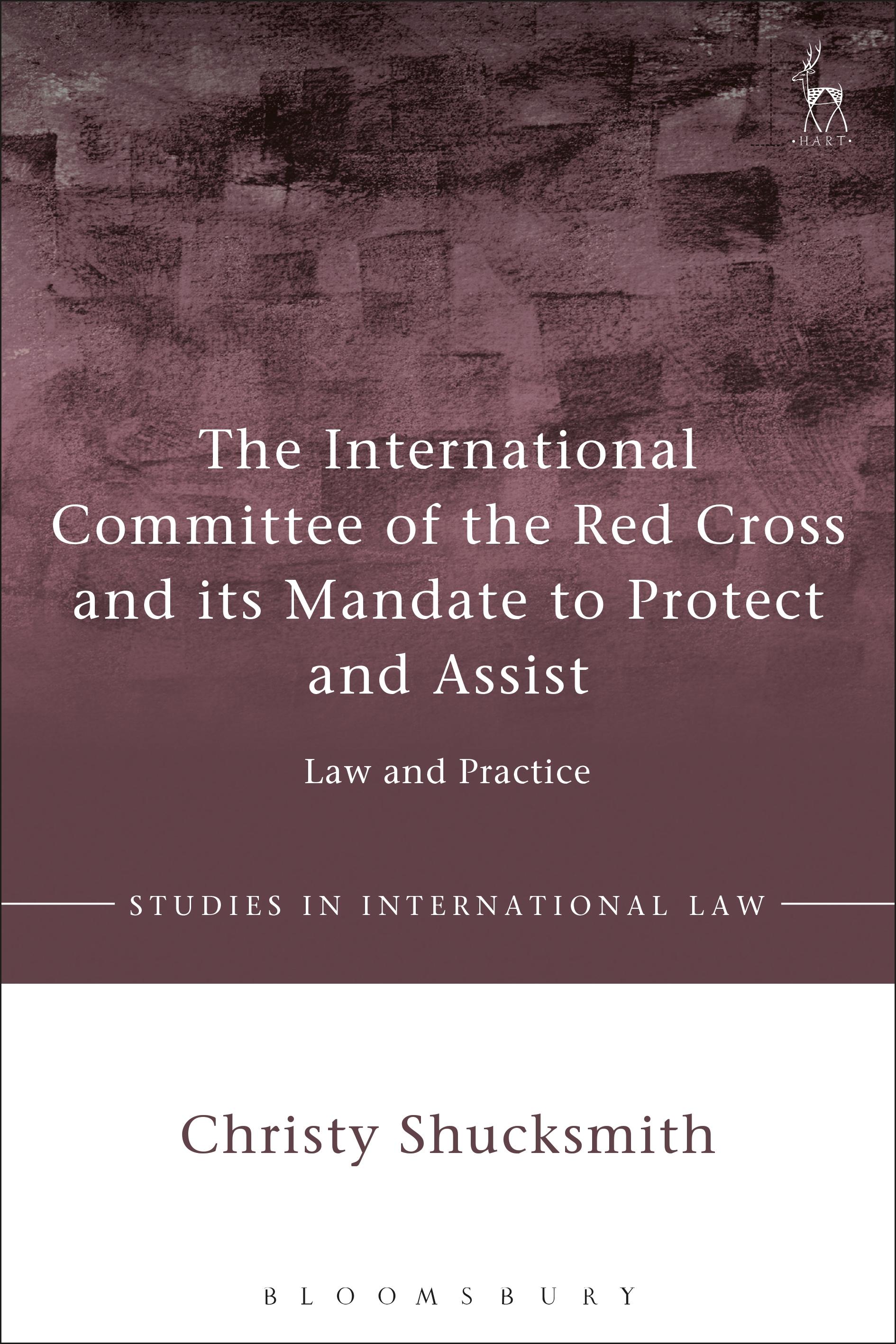
The purpose of this book is to consider the legality of the changing practice of the International Committee of the Red Cross (ICRC). It provides extensive legal analysis of the ICRC as an organisation, legal person, and humanitarian actor. It draws on the law of organisations, International Humanitarian Law, International Human Rights Law, and other relevant branches of international law in order to critically assess the mandate and practice of the ICRC on the ground. The book also draws on more abstract human-centric concepts, including sovereignty as responsibility and human security, in order to assess the development of the concept of humanity for the mandate and practice of the ICRC. Critically this book uses semi- structured interviews with ICRC delegates to test the theoretical and doctrinal conclusions. The book provides a unique insight into the work of the ICRC. It also includes a case study of the work of the ICRC in the Democratic Republic of Congo.
Ultimately the book concludes that the ICRC is no longer restricted to the provision of humanitarian assistance on the battlefield. It is increasingly drawn into long-term and extremely complicated conflicts, in which, civilians, soldiers and non-State actors intermingle. In order to remain useful for the people on the ground, therefore, the ICRC is progressively developing its mandate. This book questions whether, on occasion, this could threaten its promise to remain neutral, impartial and independent. Finally, however, it should be said that this author finds that the work of the ICRC is unparalleled on the international stage and its humanitarian mandate is a vital component for those embroiled in the undertaking of and recovery from conflict.
Ultimately the book concludes that the ICRC is no longer restricted to the provision of humanitarian assistance on the battlefield. It is increasingly drawn into long-term and extremely complicated conflicts, in which, civilians, soldiers and non-State actors intermingle. In order to remain useful for the people on the ground, therefore, the ICRC is progressively developing its mandate. This book questions whether, on occasion, this could threaten its promise to remain neutral, impartial and independent. Finally, however, it should be said that this author finds that the work of the ICRC is unparalleled on the international stage and its humanitarian mandate is a vital component for those embroiled in the undertaking of and recovery from conflict.
Payez facilement par carte, Klarna, Apple Pay ou Google Pay. Pas satisfait ? Vous avez toujours une garantie de remboursement de 14 jours. En savoir plus dans nos conditions. Si vous avez des questions, envoyez-nous un e-mail à hello@memmo.org.
Memmo facilite tes études, où que tu sois dans le monde. On rassemble tes manuels de cours et des outils d'étude intelligents au même endroit : résumés, quiz, podcasts et flashcards. Et il y a Ted, ton compagnon d'étude qui répond à toutes tes questions. Plus de 50 000 étudiants étudient déjà ici – conçu pour t'aider à apprendre plus vite et à moins stresser.