
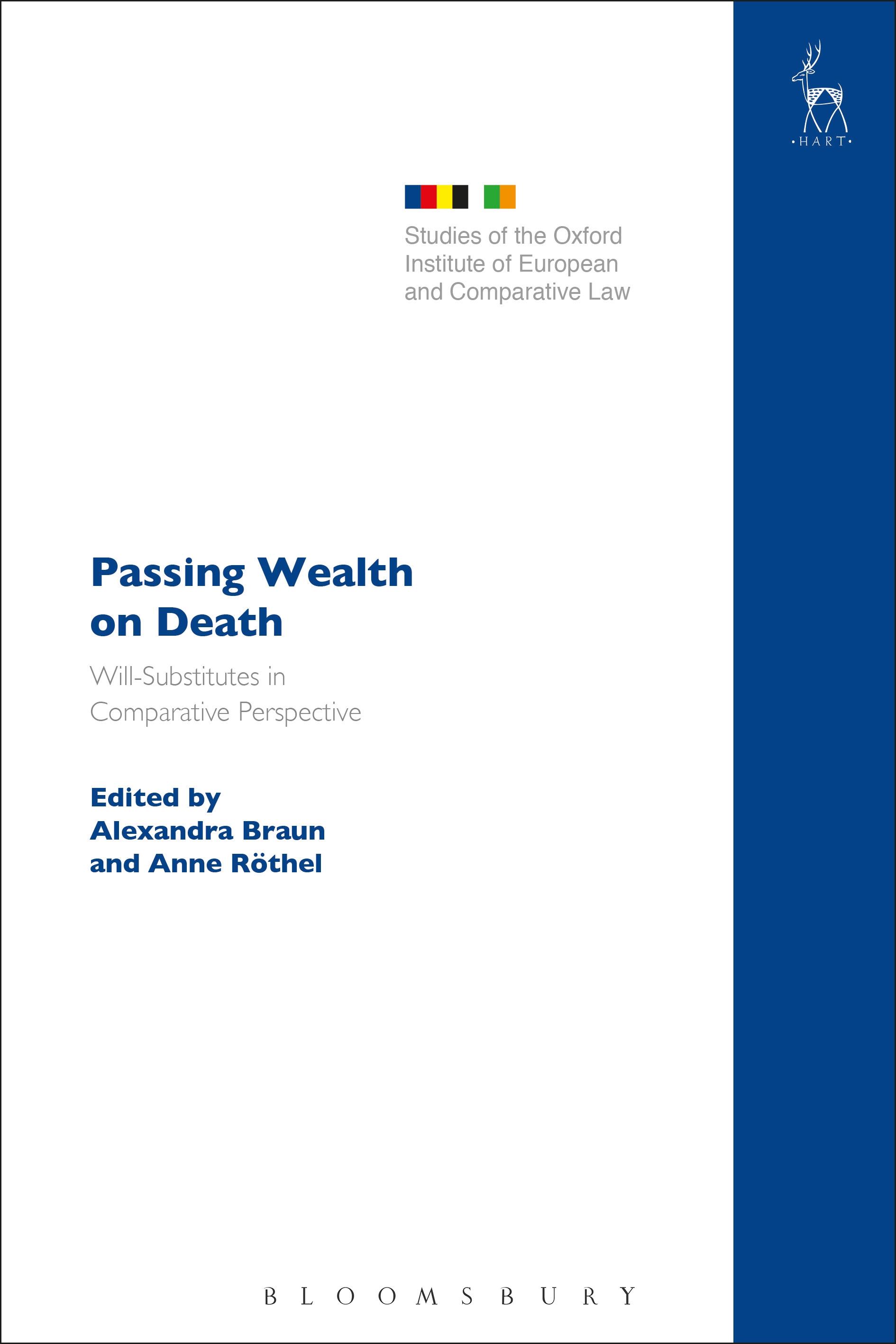
Wealth can be transferred on death in a number of different ways, most commonly by will. Yet a person can also use a variety of other means to benefit someone on death. Examples include donationes mortis causa, joint tenancies, trusts, life-insurance contracts and nominations in pension and retirement plans. In the US, these modes of transfer are grouped under the category of 'will-substitutes' and are generally treated as testamentary dispositions.
Much has been written about the effect of the use of will-substitutes in the US, but little is generally known about developments in other jurisdictions. For the first time, this collection of contributions looks at will-substitutes from a comparative perspective. It examines mechanisms that pass wealth on death across a number of common law, civil law and mixed legal jurisdictions, and explores the rationale behind their use. It analyses them from different viewpoints, including those of owners of businesses, investors, as well as creditors, family members and dependants. The aims of the volume are to show the complexity and dynamics of wealth transfers on death across jurisdictions, to identify patterns between jurisdictions, and to report the attitudes towards the different modes of transfer in light of their utility and the potential frictions they give rise to with policies and principles underpinning current laws.
Much has been written about the effect of the use of will-substitutes in the US, but little is generally known about developments in other jurisdictions. For the first time, this collection of contributions looks at will-substitutes from a comparative perspective. It examines mechanisms that pass wealth on death across a number of common law, civil law and mixed legal jurisdictions, and explores the rationale behind their use. It analyses them from different viewpoints, including those of owners of businesses, investors, as well as creditors, family members and dependants. The aims of the volume are to show the complexity and dynamics of wealth transfers on death across jurisdictions, to identify patterns between jurisdictions, and to report the attitudes towards the different modes of transfer in light of their utility and the potential frictions they give rise to with policies and principles underpinning current laws.
Payez facilement par carte, Klarna, Apple Pay ou Google Pay. Pas satisfait ? Vous avez toujours une garantie de remboursement de 14 jours. En savoir plus dans nos conditions. Si vous avez des questions, envoyez-nous un e-mail à hello@memmo.org.
Memmo facilite tes études, où que tu sois dans le monde. On rassemble tes manuels de cours et des outils d'étude intelligents au même endroit : résumés, quiz, podcasts et flashcards. Et il y a Ted, ton compagnon d'étude qui répond à toutes tes questions. Plus de 50 000 étudiants étudient déjà ici – conçu pour t'aider à apprendre plus vite et à moins stresser.