
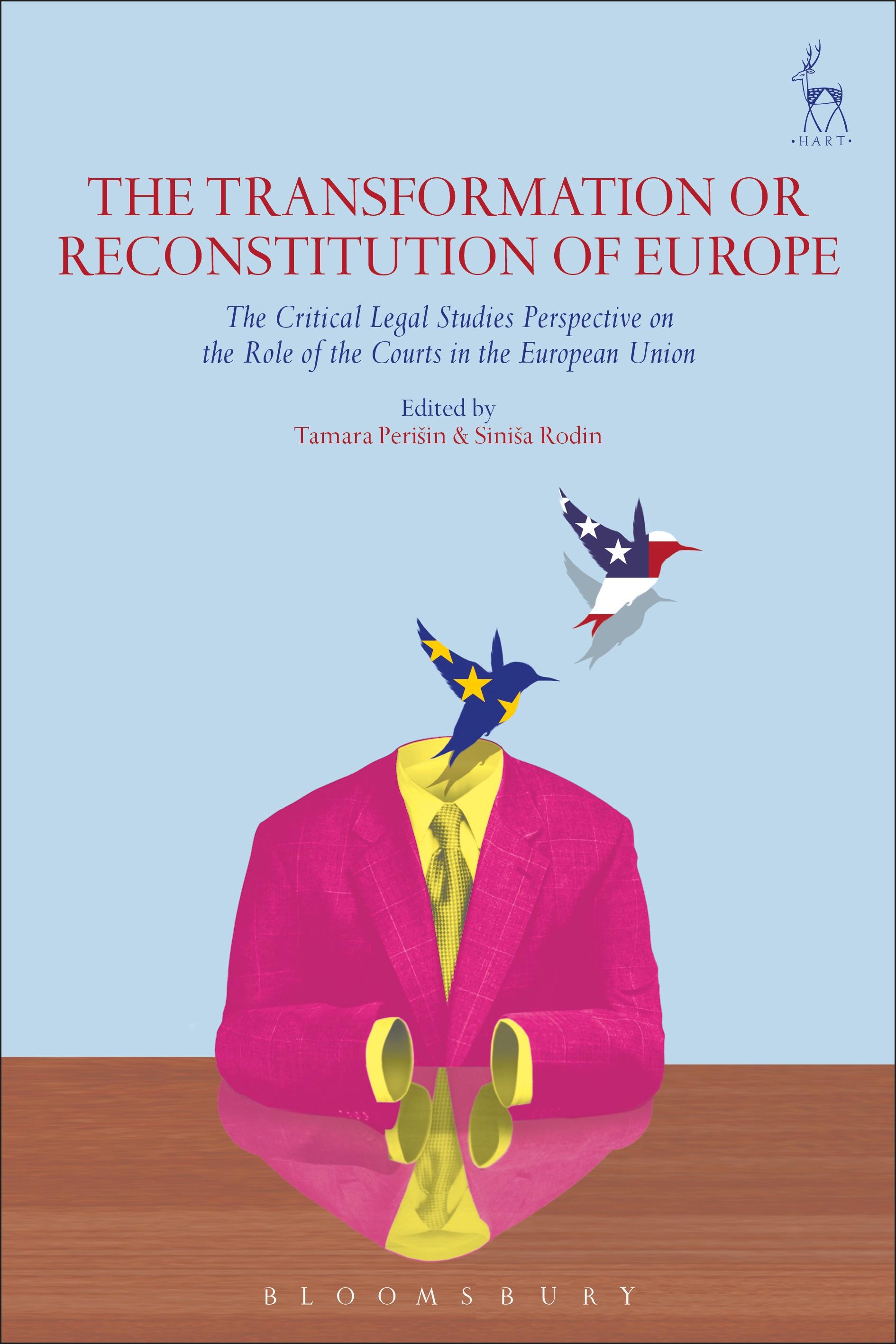
It is generally understood that EU law as interpreted by the ECJ has not merely reconstituted the national legal matrix at the supranational level, but has also transformed Europe and shaken the well-established, often formalist, ways of thinking about law in the Member States. This innovative new study seeks to examine such a narrative through the lens of the American critical legal studies (CLS) perspective.
The introduction explains how the editors understand CLS and why its methodology is relevant in the European context. Part II examines whether and how judges embed policy choices or even ideologies in their decisions, and how to detect them. Part III assesses how the ECJ acts to ensure the legitimacy of its decisions, whether it resists implementing political ideologies, what the ideology of European integration is, and how the selection of judges influences these issues. Part IV uses the critical perspective to examine some substantive parts of EU law, rules on internal and external movement, and the European arrest warrant. It seeks to determine whether the role of the ECJ has really been transformative and whether that transformation is reversible. Part V considers the role of academics in shaping the narratives of EU integration.
The introduction explains how the editors understand CLS and why its methodology is relevant in the European context. Part II examines whether and how judges embed policy choices or even ideologies in their decisions, and how to detect them. Part III assesses how the ECJ acts to ensure the legitimacy of its decisions, whether it resists implementing political ideologies, what the ideology of European integration is, and how the selection of judges influences these issues. Part IV uses the critical perspective to examine some substantive parts of EU law, rules on internal and external movement, and the European arrest warrant. It seeks to determine whether the role of the ECJ has really been transformative and whether that transformation is reversible. Part V considers the role of academics in shaping the narratives of EU integration.
Payez facilement par carte, Klarna, Apple Pay ou Google Pay. Pas satisfait ? Vous avez toujours une garantie de remboursement de 14 jours. En savoir plus dans nos conditions. Si vous avez des questions, envoyez-nous un e-mail à hello@memmo.org.
Memmo facilite tes études, où que tu sois dans le monde. On rassemble tes manuels de cours et des outils d'étude intelligents au même endroit : résumés, quiz, podcasts et flashcards. Et il y a Ted, ton compagnon d'étude qui répond à toutes tes questions. Plus de 50 000 étudiants étudient déjà ici – conçu pour t'aider à apprendre plus vite et à moins stresser.