
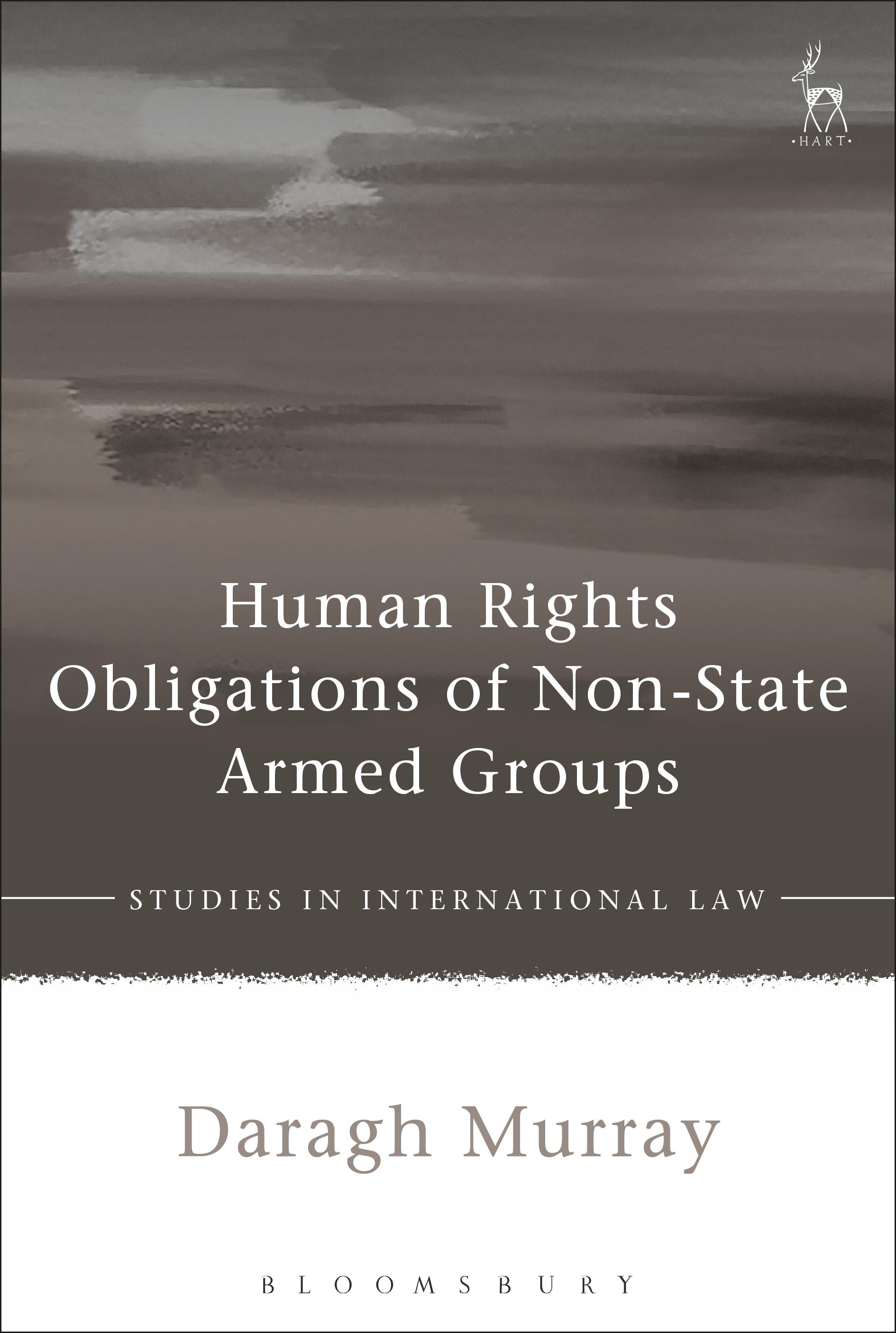
This book is concerned with the international regulation of non-state armed groups. Specifically, it examines the possibility of subjecting armed groups to international human rights law obligations.
First addressed is the means by which armed groups may be bound by international law. Of particular interest is the de facto control theory and the possibility that international law may be applied in the absence of direct treaty regulation. Application of this theory is dependent upon an armed group's establishment of an independent existence, as demonstrated by the displacement of state authority. This means that armed groups are treated as a vertical authority, thereby maintaining the established hierarchy of international regulation. At issue therefore is not a radical approach to the regulation of non-state actors, but rather a modification of the traditional means of application in response to the reality of the situation.
The attribution of international human rights law obligations to armed groups is then addressed in light of potential ratione personae restrictions. International human rights law treaties are interpreted in light of the contemporary international context, on the basis that an international instrument has to be applied within the framework of the entire legal system prevailing at the time of interpretation. Armed groups' status as vertical authorities facilitates the vertical application of international human rights law in a manner consistent with both the object and purpose of the law and its foundation in human dignity.
Finally, if international human rights law is to be applied to armed groups, its application must be effective in practice. A context-dependent division of responsibility between the territorial state and the armed group is proposed. The respect, protect, fulfil framework is adapted to facilitate the application of human rights obligations in a manner consistent with the control exerted by both the state and the armed group.
''Daragh Murray's book analyses the practical and theoretical difficulties associated with the topic of the international human rights obligations of non-state armed groups by considering the latest developments in this field and suggesting ways forward. His proposals are realistic and carefully argued; this book should be essential reading for anyone grappling with this subject.''
Andrew Clapham, Professor of International Law at the Graduate Institute of International and Development Studies.
First addressed is the means by which armed groups may be bound by international law. Of particular interest is the de facto control theory and the possibility that international law may be applied in the absence of direct treaty regulation. Application of this theory is dependent upon an armed group's establishment of an independent existence, as demonstrated by the displacement of state authority. This means that armed groups are treated as a vertical authority, thereby maintaining the established hierarchy of international regulation. At issue therefore is not a radical approach to the regulation of non-state actors, but rather a modification of the traditional means of application in response to the reality of the situation.
The attribution of international human rights law obligations to armed groups is then addressed in light of potential ratione personae restrictions. International human rights law treaties are interpreted in light of the contemporary international context, on the basis that an international instrument has to be applied within the framework of the entire legal system prevailing at the time of interpretation. Armed groups' status as vertical authorities facilitates the vertical application of international human rights law in a manner consistent with both the object and purpose of the law and its foundation in human dignity.
Finally, if international human rights law is to be applied to armed groups, its application must be effective in practice. A context-dependent division of responsibility between the territorial state and the armed group is proposed. The respect, protect, fulfil framework is adapted to facilitate the application of human rights obligations in a manner consistent with the control exerted by both the state and the armed group.
''Daragh Murray's book analyses the practical and theoretical difficulties associated with the topic of the international human rights obligations of non-state armed groups by considering the latest developments in this field and suggesting ways forward. His proposals are realistic and carefully argued; this book should be essential reading for anyone grappling with this subject.''
Andrew Clapham, Professor of International Law at the Graduate Institute of International and Development Studies.
Payez facilement par carte, Klarna, Apple Pay ou Google Pay. Pas satisfait ? Vous avez toujours une garantie de remboursement de 14 jours. En savoir plus dans nos conditions. Si vous avez des questions, envoyez-nous un e-mail à hello@memmo.org.
Memmo facilite tes études, où que tu sois dans le monde. On rassemble tes manuels de cours et des outils d'étude intelligents au même endroit : résumés, quiz, podcasts et flashcards. Et il y a Ted, ton compagnon d'étude qui répond à toutes tes questions. Plus de 50 000 étudiants étudient déjà ici – conçu pour t'aider à apprendre plus vite et à moins stresser.