
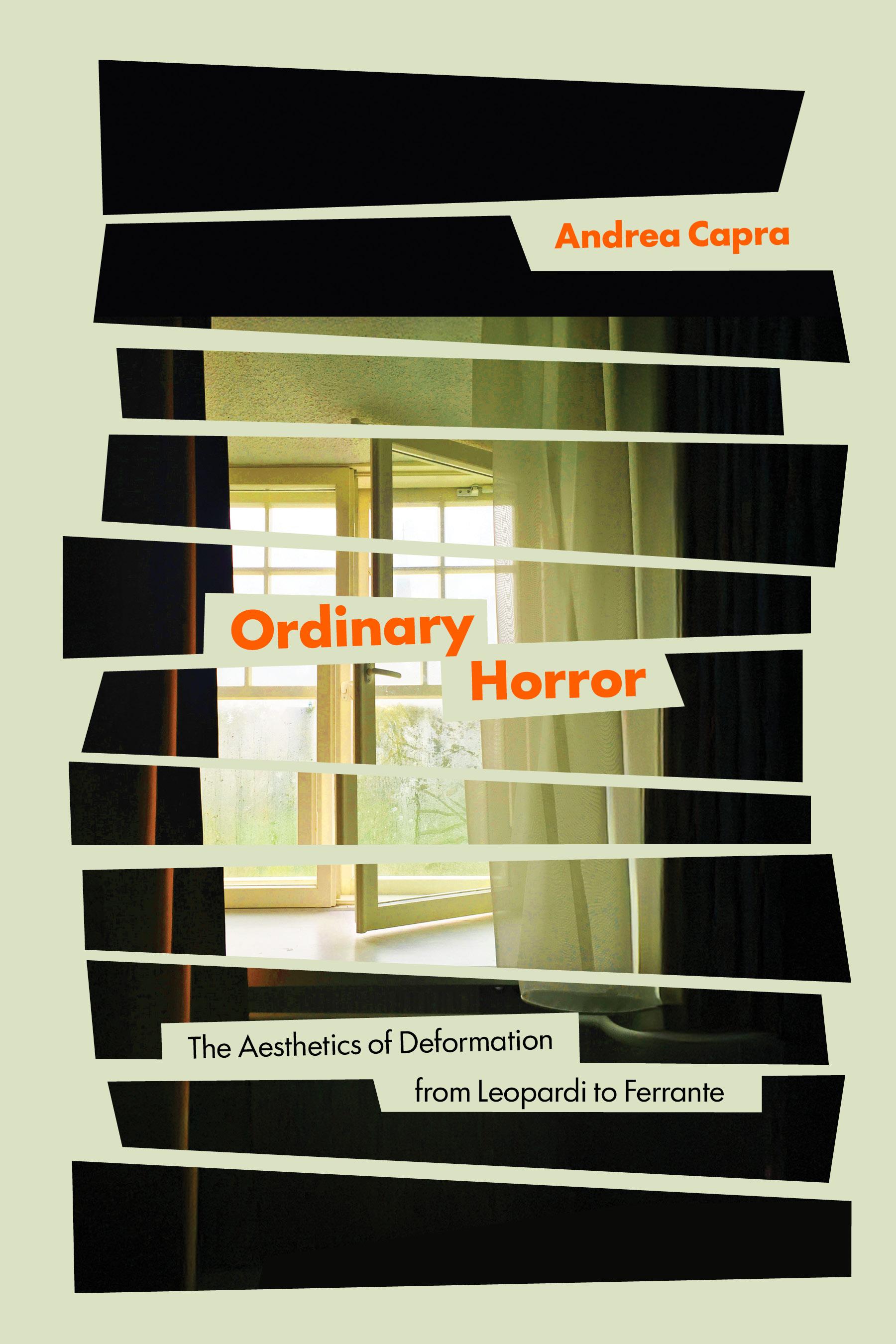
What is horror? Setting aside the implausible circumstances typical of the horror genre, Capra investigates what he terms "ordinary horror"—the horror that haunts our world, and that we may encounter firsthand. Drawing from ordinary language philosophy and phenomenology, he reframes horror as a common human experience tied to a sense of forced powerlessness—the shattering moment when our control over a given situation, and our very sense of reality, unravels. By tracing this experience across texts beyond the horror genre, Capra reveals its significance for our time.
Centering on modern Italian literature, Ordinary Horror shows a tradition not typically associated with horror to be rife with it. To this end, Capra emphasizes the centrality of the experience in canonical authors, as seen, for instance, in Giacomo Leopardi's pages on existential suffering, Primo Levi's writings on Auschwitz, and Elena Ferrante's descriptions of sexual violence. Literature, Capra argues, can convey horror's experiential magnitude through what he calls the "aesthetics of deformation"—scenes when otherwise realistic texts depart from verisimilitude and embrace a more disquieting style. Weaving together aesthetics and phenomenology, Capra shows that just as horror may rupture the fabric of everyday life, so too may it rupture the fabric of a literary text.
Payez facilement par carte, Klarna, Apple Pay ou Google Pay. Pas satisfait ? Vous avez toujours une garantie de remboursement de 14 jours. En savoir plus dans nos conditions. Si vous avez des questions, envoyez-nous un e-mail à hello@memmo.org.
Memmo facilite tes études, où que tu sois dans le monde. On rassemble tes manuels de cours et des outils d'étude intelligents au même endroit : résumés, quiz, podcasts et flashcards. Et il y a Ted, ton compagnon d'étude qui répond à toutes tes questions. Plus de 50 000 étudiants étudient déjà ici – conçu pour t'aider à apprendre plus vite et à moins stresser.