
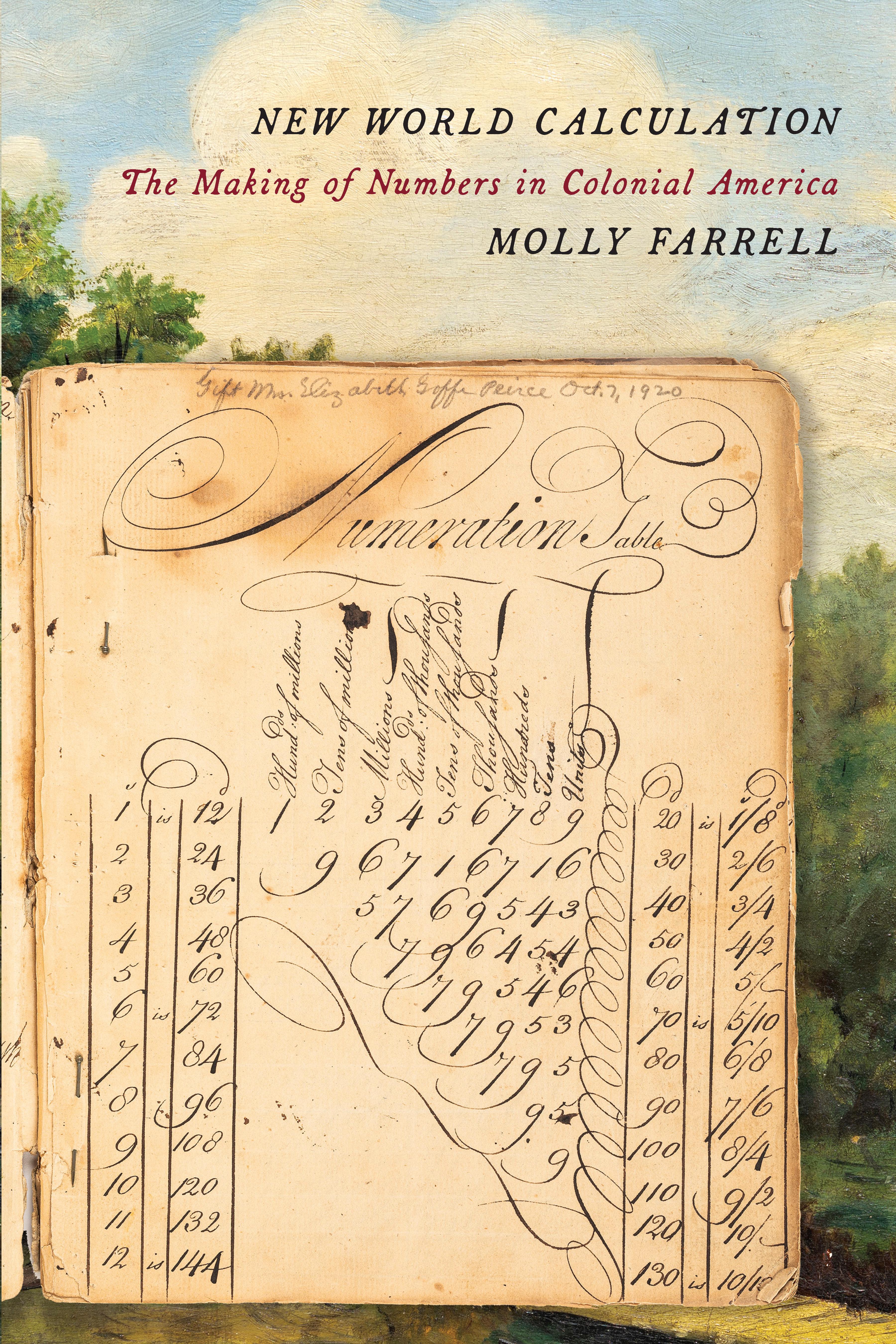
Molly Farrell tells the story of colonial America as a testing ground for new ways of conceptualizing numbers, uncovering overlooked forms of numerical thinking to argue that colonialism and the rise of racial capitalism incited a struggle about what exactly a number is and what it can do.
When English settlers began colonizing Indigenous lands, they confronted groups of people with very different beliefs about numbers. Meanwhile, Atlantic colonialism required tremendous accounting work, especially to support the trade in enslaved Africans. Numeracy, then, seems to be deeply complicit with the colonial project. Farrell, however, follows the circulation of arithmetic primers, cipher books, and other material traces to show how everyday people repurposed numeracy to serve their own ends—ranging from making a living as a fugitive from enslavement to measuring medicine for at-home abortion.
Drawing on book history and Black feminist science and technology studies, New World Calculation argues that we need to restore the math book into its social space in order to disentangle the relationship between quantification and oppression in America's cultural history.
Payez facilement par carte, Klarna, Apple Pay ou Google Pay. Pas satisfait ? Vous avez toujours une garantie de remboursement de 14 jours. En savoir plus dans nos conditions. Si vous avez des questions, envoyez-nous un e-mail à hello@memmo.org.
Memmo facilite tes études, où que tu sois dans le monde. On rassemble tes manuels de cours et des outils d'étude intelligents au même endroit : résumés, quiz, podcasts et flashcards. Et il y a Ted, ton compagnon d'étude qui répond à toutes tes questions. Plus de 50 000 étudiants étudient déjà ici – conçu pour t'aider à apprendre plus vite et à moins stresser.