
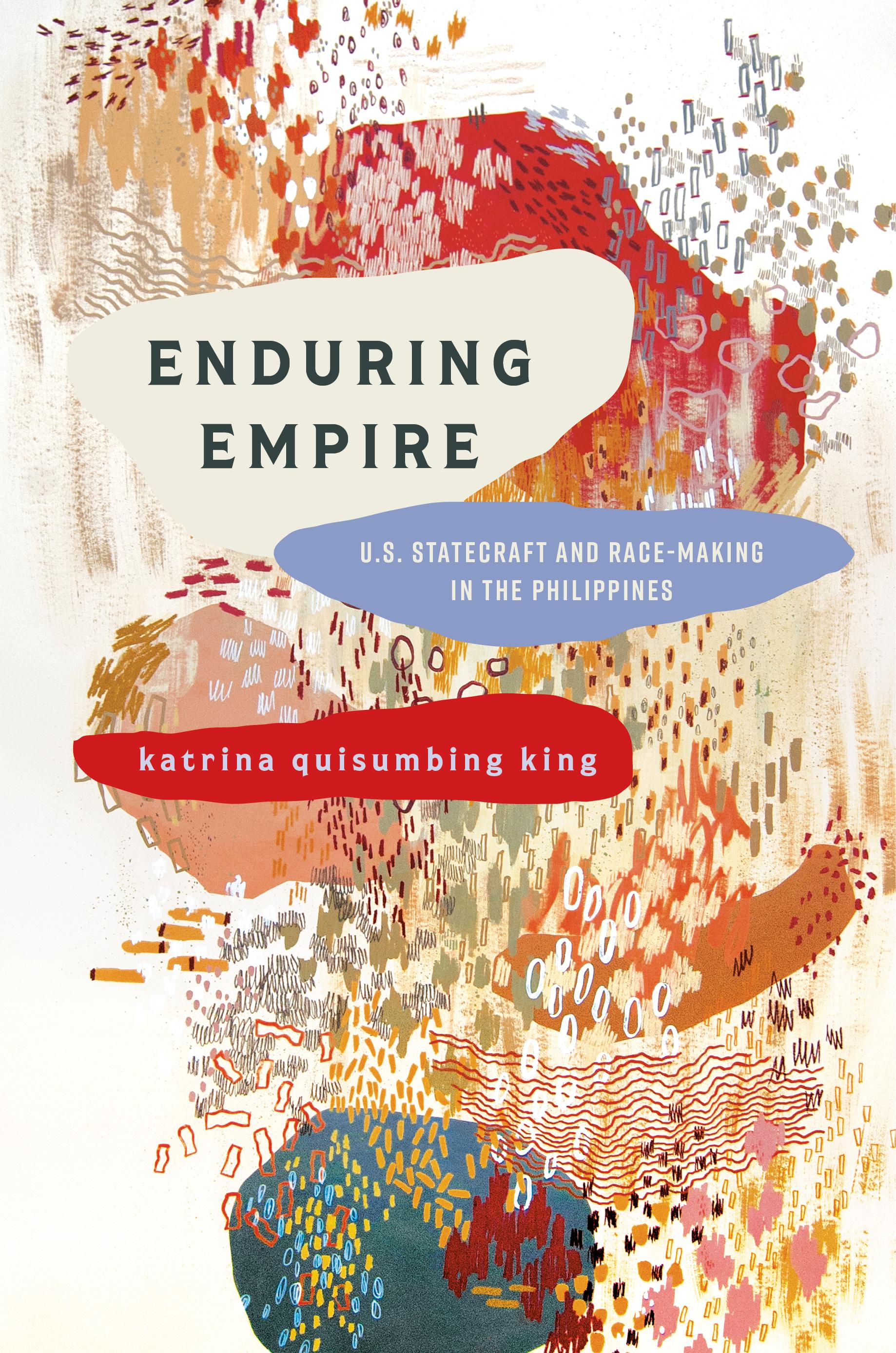
In 1898 the United States became a formal overseas empire and claimed sovereignty over the Philippine islands, justifying its rule in explicitly racial terms. Less than fifty years later, in 1946, Philippine independence was recognized by the United States, even as it continued to exert influence over the domestic and foreign affairs of the newly decolonized Republic. Despite some differences, U.S. control remained racial and imperial.
Enduring Empire shows how U.S. federal state actors translated their ideas of race into state structures. Through innovating constitutional law, bureaucratic administration, and legislation, state actors built a durable and flexible system of racial-imperial rule that not only lasted beyond the period of formal empire but continues to this day. katrina quisumbing king traces debates among U.S. presidents, federal legislators, administrators, and justices about what kind of state the United States should be, the place of nonwhite people in the polity, and the best way to maintain U.S. white hegemony. In charting how state actors' positions—some nativist, isolationist, and protectionist and others expansionist, interventionist, and imperialist—evolved, quisumbing king identifies key moments when they cemented racial ideas into law and reshaped the terms of U.S. racial-imperial formation.
Payez facilement par carte, Klarna, Apple Pay ou Google Pay. Pas satisfait ? Vous avez toujours une garantie de remboursement de 14 jours. En savoir plus dans nos conditions. Si vous avez des questions, envoyez-nous un e-mail à hello@memmo.org.
Memmo facilite tes études, où que tu sois dans le monde. On rassemble tes manuels de cours et des outils d'étude intelligents au même endroit : résumés, quiz, podcasts et flashcards. Et il y a Ted, ton compagnon d'étude qui répond à toutes tes questions. Plus de 50 000 étudiants étudient déjà ici – conçu pour t'aider à apprendre plus vite et à moins stresser.