
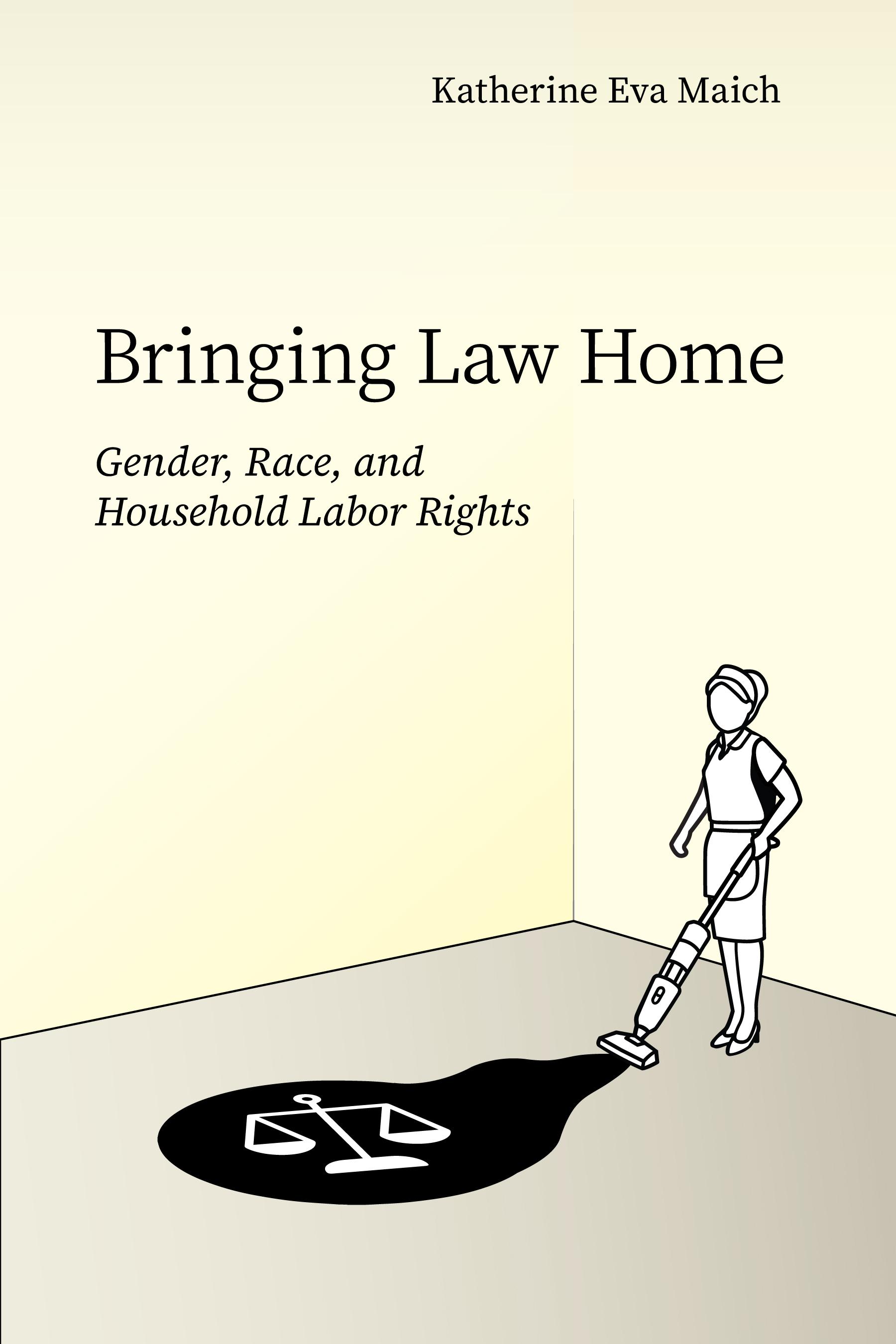
The personal nature of domestic labor, and its location in the privacy of the employer's home, means that domestic workers have long struggled for equitable and consistent labor rights. The dominant discourse regards the home as separate from work, so envisioning what its legal regulation would look like is remarkably challenging. In Bringing Law Home, Katherine Eva Maich offers a uniquely comparative and historical study of labor struggles for domestic workers in New York City and Lima, Peru. She argues that if the home is to be a place of work then it must also be captured in the legal infrastructures that regulate work. Yet, even progressive labor laws for domestic workers in each city are stifled by historically entrenched patterns of gendered racialization and labor informality. Peruvian law extends to household workers only half of the labor protections afforded to other occupations. In New York City, the law grants negligible protections and deliberately eschews language around immigration. Maich finds that coloniality is deeply embedded in contemporary relations of service, revealing important distinctions in how we understand power, domination, and inequality in the home and the workplace.
Payez facilement par carte, Klarna, Apple Pay ou Google Pay. Pas satisfait ? Vous avez toujours une garantie de remboursement de 14 jours. En savoir plus dans nos conditions. Si vous avez des questions, envoyez-nous un e-mail à hello@memmo.org.
Memmo facilite tes études, où que tu sois dans le monde. On rassemble tes manuels de cours et des outils d'étude intelligents au même endroit : résumés, quiz, podcasts et flashcards. Et il y a Ted, ton compagnon d'étude qui répond à toutes tes questions. Plus de 50 000 étudiants étudient déjà ici – conçu pour t'aider à apprendre plus vite et à moins stresser.