
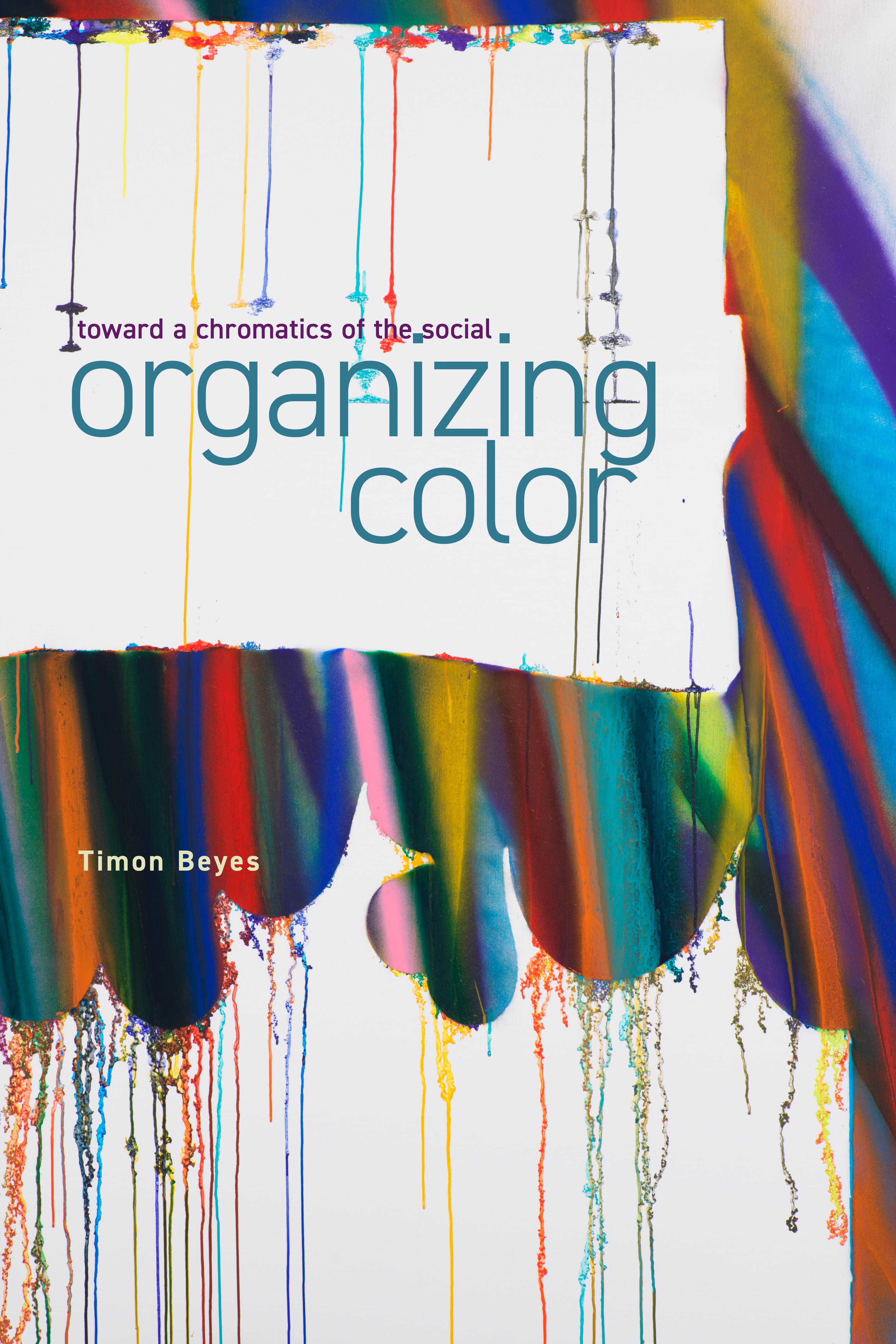
We live in a world that is saturated with color, but how should we make sense of color's force and capacities? This book develops a theory of color as fundamental medium of the social.
Constructed as a montage of scenes from the past two hundred years, Organizing Color demonstrates how the interests of capital, management, governance, science, and the arts have wrestled with color's allure and flux. Beyes takes readers from Goethe's chocolate experiments in search of chromatic transformation to nineteenth-century Scottish cotton mills designed to modulate workers' moods and productivity, from the colonial production of indigo in India to globalized categories of skin colorism and their disavowal. Tracing the consumption, control and excess of industrial and digital color, other chapters stage encounters with the literary chromatics of Pynchon's Gravity's Rainbow processing the machinery of the chemical industries, the red of political revolt in Godard's films, and the blur of education and critique in Steyerl's Adorno's Grey.
Contributing to a more general reconsideration of aesthetic capitalism and the role of sensory media, this book seeks to pioneer a theory of social organization—a "chromatics of organizing"—that is attuned to the protean and world-making capacity of color.
Payez facilement par carte, Klarna, Apple Pay ou Google Pay. Pas satisfait ? Vous avez toujours une garantie de remboursement de 14 jours. En savoir plus dans nos conditions. Si vous avez des questions, envoyez-nous un e-mail à hello@memmo.org.
Memmo facilite tes études, où que tu sois dans le monde. On rassemble tes manuels de cours et des outils d'étude intelligents au même endroit : résumés, quiz, podcasts et flashcards. Et il y a Ted, ton compagnon d'étude qui répond à toutes tes questions. Plus de 50 000 étudiants étudient déjà ici – conçu pour t'aider à apprendre plus vite et à moins stresser.