
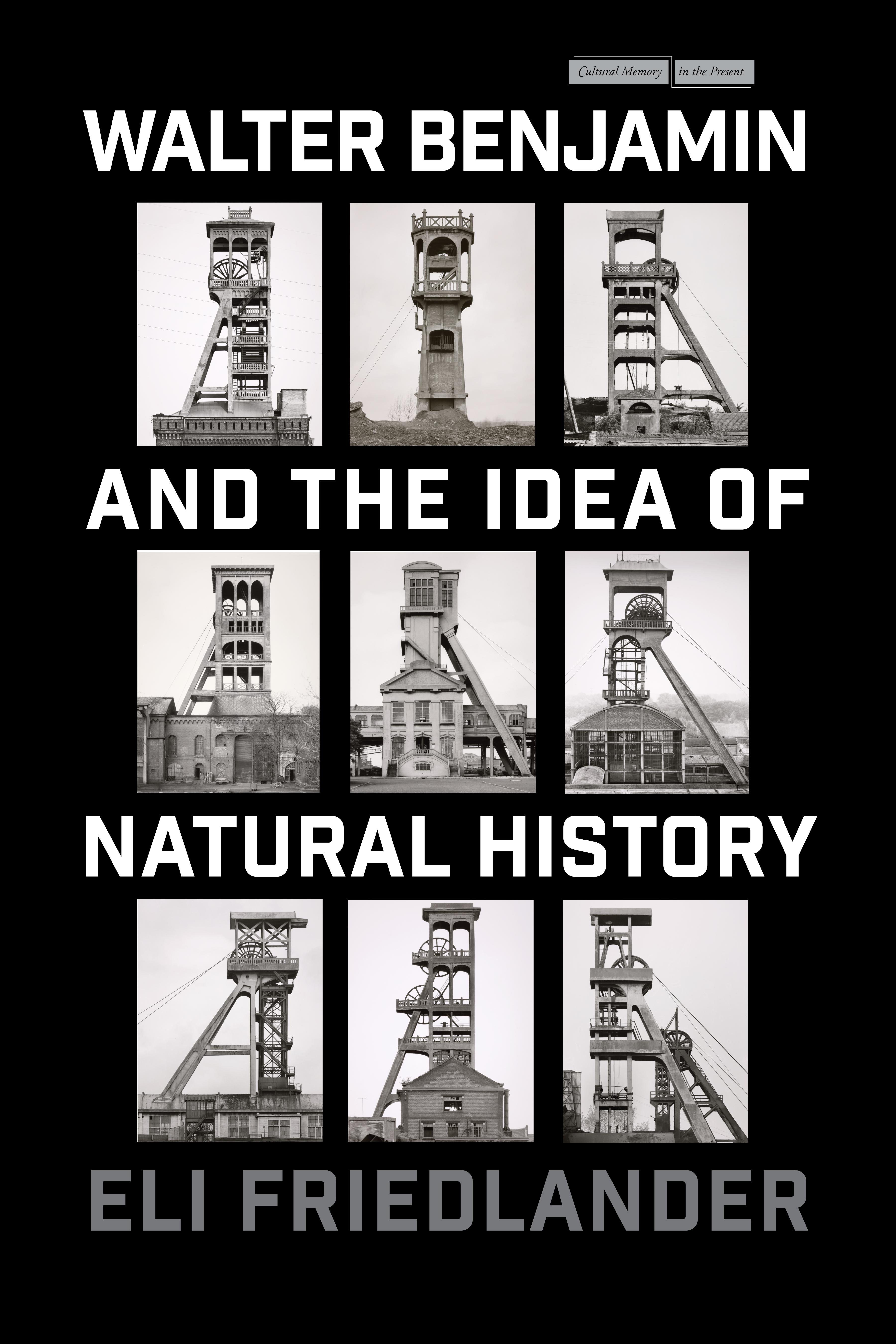
In this incisive new work, Eli Friedlander demonstrates that Walter Benjamin's entire corpus, from early to late, comprises a rigorous and sustained philosophical questioning of how human beings belong to nature.
Across seemingly heterogeneous writings, Friedlander argues, Benjamin consistently explores what the natural in the human comes to, that is, how nature is transformed, actualized, redeemed, and overcome in human existence. The book progresses gradually from Benjamin's philosophically fundamental writings on language and nature to his Goethean empiricism, from the presentation of ideas to the primal history of the Paris arcades. Friedlander's careful analysis brings out how the idea of natural history inflects Benjamin's conception of the work of art and its critique, his diagnosis of the mythical violence of the legal order, his account of the body and of action, of material culture and technology, as well as his unique vision of historical materialism.
Featuring revelatory new readings of Benjamin's major works that differ, sometimes dramatically, from prevailing interpretations, this book reveals the internal coherence and philosophical force of Benjamin's thought.
Payez facilement par carte, Klarna, Apple Pay ou Google Pay. Pas satisfait ? Vous avez toujours une garantie de remboursement de 14 jours. En savoir plus dans nos conditions. Si vous avez des questions, envoyez-nous un e-mail à hello@memmo.org.
Memmo facilite tes études, où que tu sois dans le monde. On rassemble tes manuels de cours et des outils d'étude intelligents au même endroit : résumés, quiz, podcasts et flashcards. Et il y a Ted, ton compagnon d'étude qui répond à toutes tes questions. Plus de 50 000 étudiants étudient déjà ici – conçu pour t'aider à apprendre plus vite et à moins stresser.