
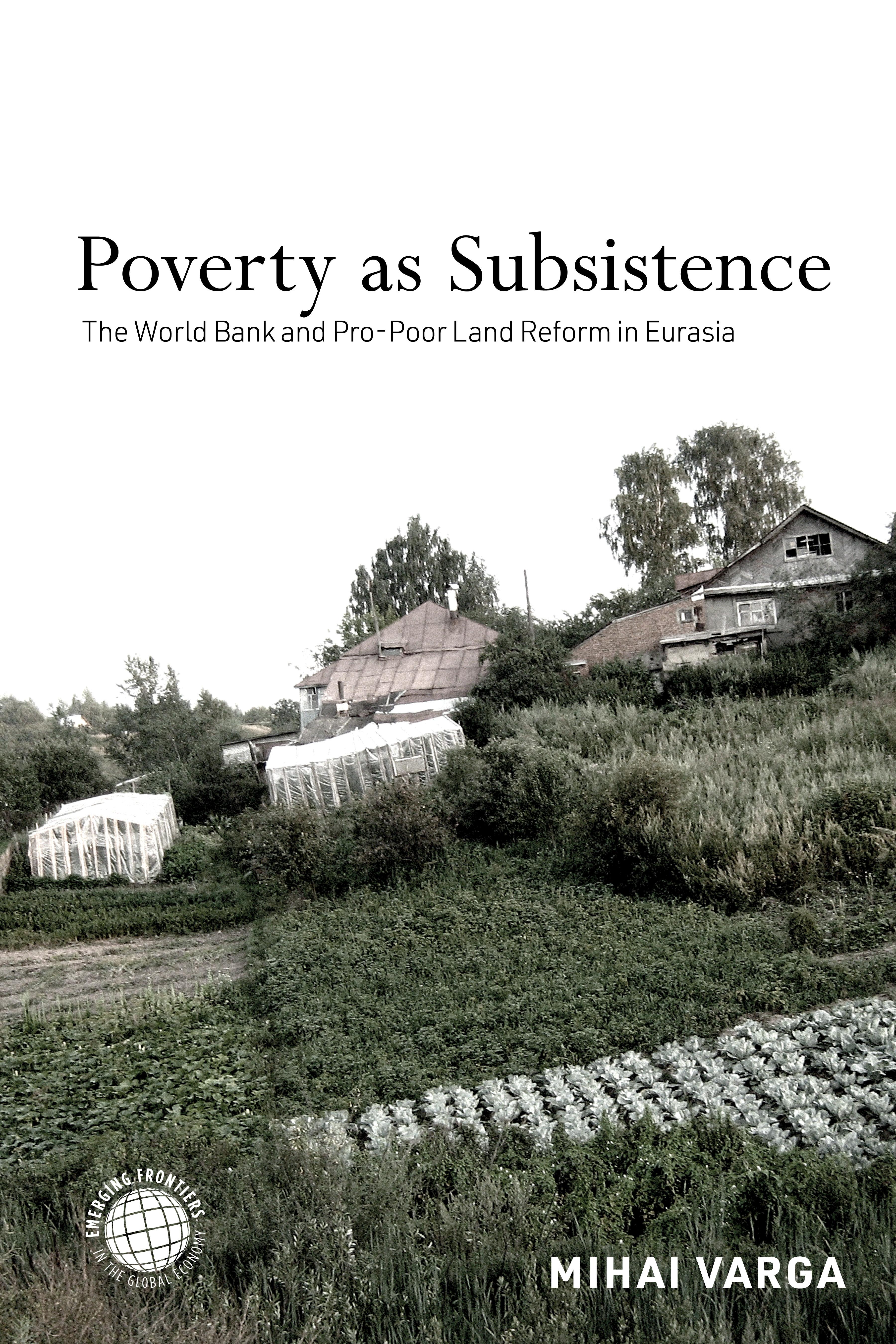
Poverty as Subsistence explores the "propertizing" land reform policy that the World Bank advocated throughout the transitioning countries of Eurasia, expecting poverty reduction to result from distributing property titles over agricultural land to local (rural) populations. China's early 1980s land reform offered support for this expectation, but while the spread of propertizing reform to post-communist Eurasia created numerous "subsistence" smallholders, it failed to stimulate entrepreneurship or market-based production among the rural poor. Varga argues that the World Bank advocated a simplified version of China's land reform that ignored a key element of successful reforms: the smallholders' immediate environment, the structure of actors and institutions determining whether smallholders survive and grow in their communities. With concrete insights from analysis of the land reform program throughout post-communist Eurasia and multisited fieldwork in Romania and Ukraine, this book details how and why land reform led to subsistence and the mechanisms underpinning informal commercialization.
Payez facilement par carte, Klarna, Apple Pay ou Google Pay. Pas satisfait ? Vous avez toujours une garantie de remboursement de 14 jours. En savoir plus dans nos conditions. Si vous avez des questions, envoyez-nous un e-mail à hello@memmo.org.
Memmo facilite tes études, où que tu sois dans le monde. On rassemble tes manuels de cours et des outils d'étude intelligents au même endroit : résumés, quiz, podcasts et flashcards. Et il y a Ted, ton compagnon d'étude qui répond à toutes tes questions. Plus de 50 000 étudiants étudient déjà ici – conçu pour t'aider à apprendre plus vite et à moins stresser.