
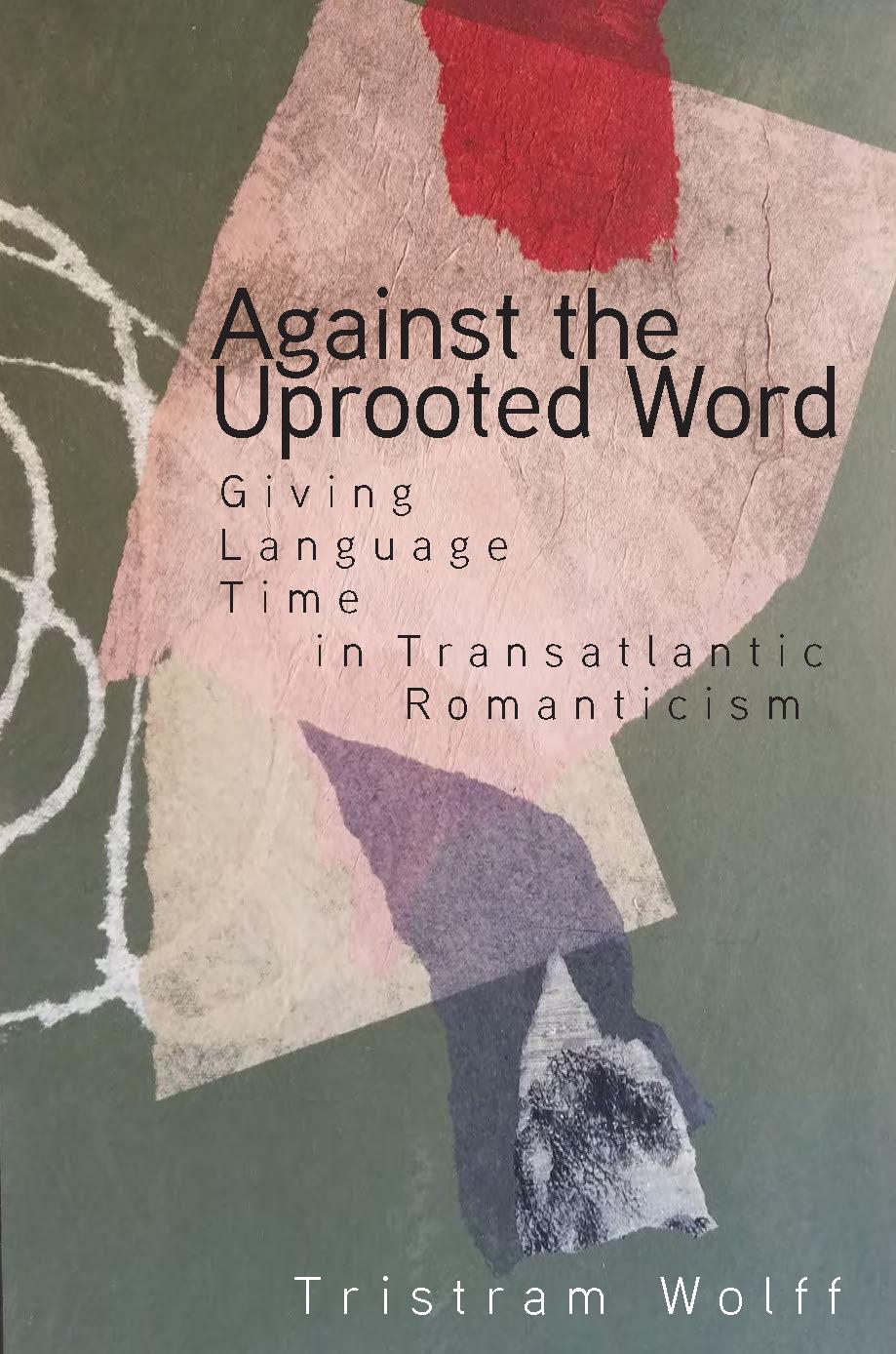
In this revisionist account of romantic-era poetry and language philosophy, Tristram Wolff recovers vibrant ways of thinking language and nature together.
Wolff argues that well-known writers including Phillis Wheatley Peters, William Blake, William Wordsworth, and Henry David Thoreau offer a radical chronopolitics in reaction to the "uprooted word," or the formal analytic used to classify languages in progressive time according to a primitivist timeline of history and a hierarchy of civilization. Before the bad naturalisms of nineteenth-century race science could harden language into place as a metric of social difference, poets and thinkers try to soften, thicken, deepen, and dissolve it. This naturalizing tendency makes language more difficult to uproot from its active formation in the lives of its speakers. And its "gray romanticism" simultaneously gives language different kinds of time—most strikingly, the deep time of geologic form—to forestall the hardening of time into progress.
Reorienting romantic studies to consider colonialism's pervasive effects on theories of language origin, Wolff shows us the ambivalent position of romantics in this history. His reparative reading makes visible language's ability to reimagine social forms.
Payez facilement par carte, Klarna, Apple Pay ou Google Pay. Pas satisfait ? Vous avez toujours une garantie de remboursement de 14 jours. En savoir plus dans nos conditions. Si vous avez des questions, envoyez-nous un e-mail à hello@memmo.org.
Memmo facilite tes études, où que tu sois dans le monde. On rassemble tes manuels de cours et des outils d'étude intelligents au même endroit : résumés, quiz, podcasts et flashcards. Et il y a Ted, ton compagnon d'étude qui répond à toutes tes questions. Plus de 50 000 étudiants étudient déjà ici – conçu pour t'aider à apprendre plus vite et à moins stresser.