
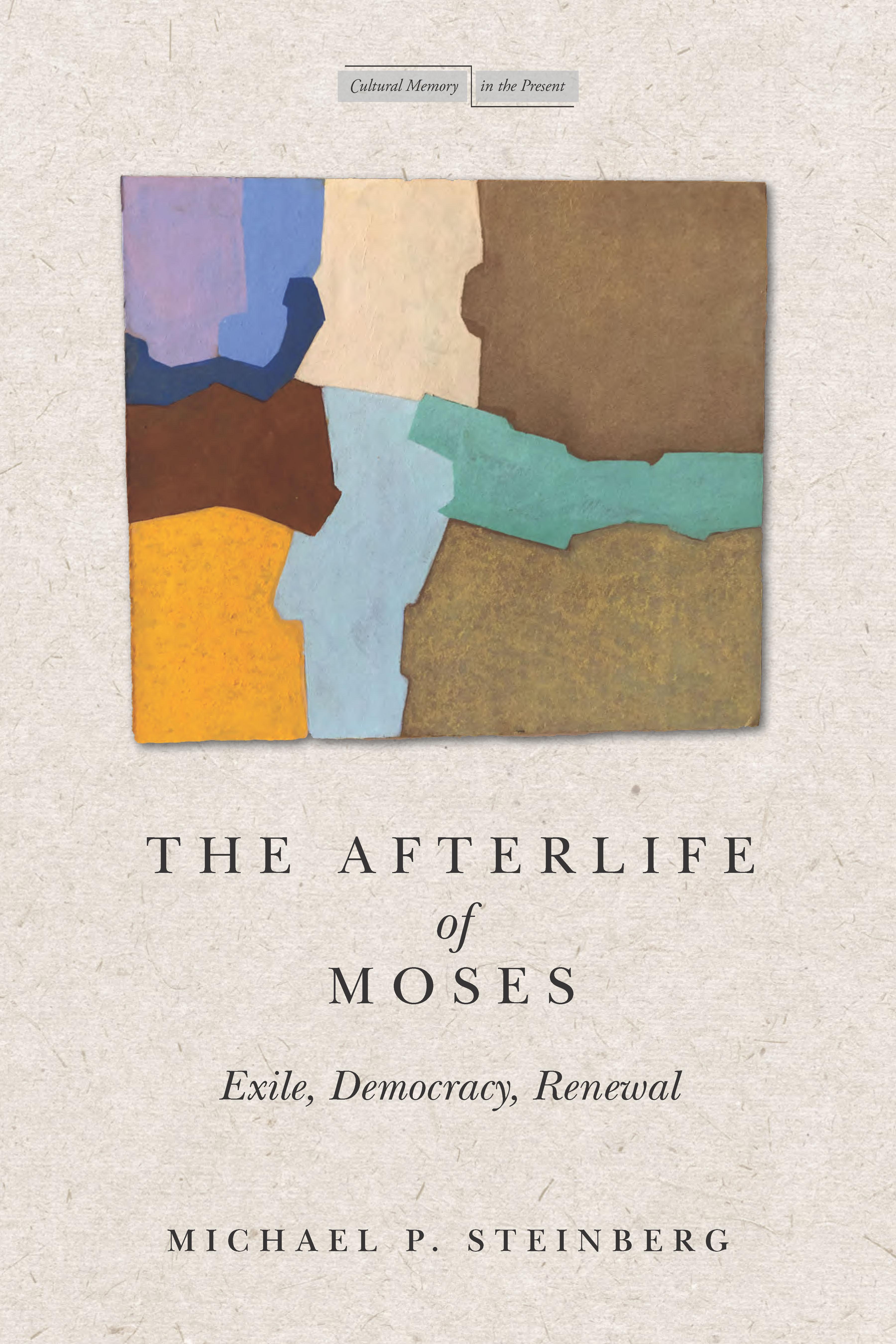
In this elegant and personal new work, Michael P. Steinberg reflects on the story of Moses and the Exodus as a foundational myth of politics—of the formation not of a nation but of a political community grounded in universal law.
Modern renderings of the story of Moses, from Michelangelo to Spinoza to Freud to Schoenberg to Derrida, have seized on the story's ambivalences, its critical and self-critical power. These literal returns form the first level of the afterlife of Moses. They spin a persistent critical and self-critical thread of European and transatlantic art and argument. And they enable the second strand of Steinberg's argument, namely the depersonalization of the Moses and Exodus story, its evolving abstraction and modulation into a varied modern history of political beginnings. Beginnings, as distinct from origins, are human and historical, writes Steinberg. Political constitutions, as a form of beginning, imply the eventuality of their own renewals and their own reconstitutions.
Motivated in part by recent reactionary insurgencies in the US, Europe, and Israel, this astute work of intellectual history posits the critique of myths of origin as a key principle of democratic government, affect, and citizenship, of their endurance as well as their fragility.
Payez facilement par carte, Klarna, Apple Pay ou Google Pay. Pas satisfait ? Vous avez toujours une garantie de remboursement de 14 jours. En savoir plus dans nos conditions. Si vous avez des questions, envoyez-nous un e-mail à hello@memmo.org.
Memmo facilite tes études, où que tu sois dans le monde. On rassemble tes manuels de cours et des outils d'étude intelligents au même endroit : résumés, quiz, podcasts et flashcards. Et il y a Ted, ton compagnon d'étude qui répond à toutes tes questions. Plus de 50 000 étudiants étudient déjà ici – conçu pour t'aider à apprendre plus vite et à moins stresser.