
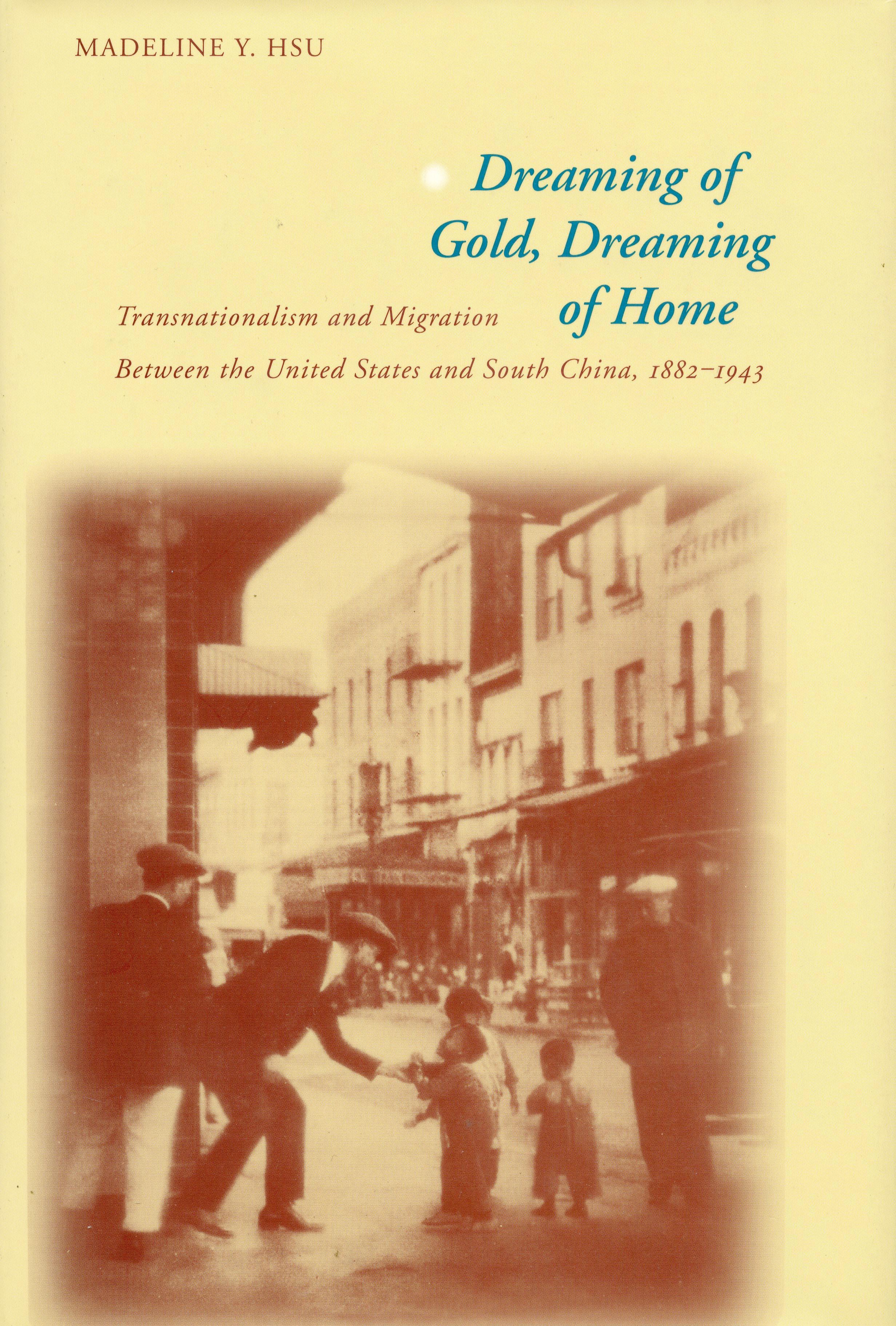
This book is a highly original study of transnationalism among immigrants from Taishan, a populous coastal county in south China from which, until 1965, the majority of Chinese in the United States originated. Drawing creatively on Chinese-language sources such as gazetteers, newspapers, and magazines, supplemented by fieldwork and interviews as well as recent scholarship in Chinese social history, the author presents a much richer depiction than we have had heretofore of the continuing ties between Taishanese remaining in China and their kinsmen seeking their fortune in “Gold Mountain.”
Long after the gold in California ran out and prejudice confined them to dismal Chinatowns, generations of Chinese—mostly men from rural areas of southern China—continued to migrate to the United States in hopes of bettering the family’s lot by remitting much of the meager sums they earned as laundrymen, cooks, domestic workers, and Chinatown merchants.
Economic hardships and U.S. Exclusion laws extended the immigrants’ separation from their families for decades, “sojourns” that in many cases ended only in death. Men lived as bachelors and their wives as widows, parents passed away, and children grew up without ever seeing their fathers’ faces. Families and village communities had to adapt to survive the stress of long-term, long-distance separation from their primary wage-earners.
At the same time, men raised in the rural communities of a faltering imperial China had to negotiate encounters with an industrializing, Western-dominated, often hostile world. This history explores the resiliency and flexibility of rural Chinese, qualities that enabled them to preserve their families by living apart from them and to survive the intertwining of their rural world with global systems of race, labor, and capital. The author demonstrates that through migration to dank and narrow enclaves, they came to live, and even to flourish, in a transnational community that persisted despite decades of separation and an ocean’s width of distance.
Payez facilement par carte, Klarna, Apple Pay ou Google Pay. Pas satisfait ? Vous avez toujours une garantie de remboursement de 14 jours. En savoir plus dans nos conditions. Si vous avez des questions, envoyez-nous un e-mail à hello@memmo.org.
Memmo facilite tes études, où que tu sois dans le monde. On rassemble tes manuels de cours et des outils d'étude intelligents au même endroit : résumés, quiz, podcasts et flashcards. Et il y a Ted, ton compagnon d'étude qui répond à toutes tes questions. Plus de 50 000 étudiants étudient déjà ici – conçu pour t'aider à apprendre plus vite et à moins stresser.