
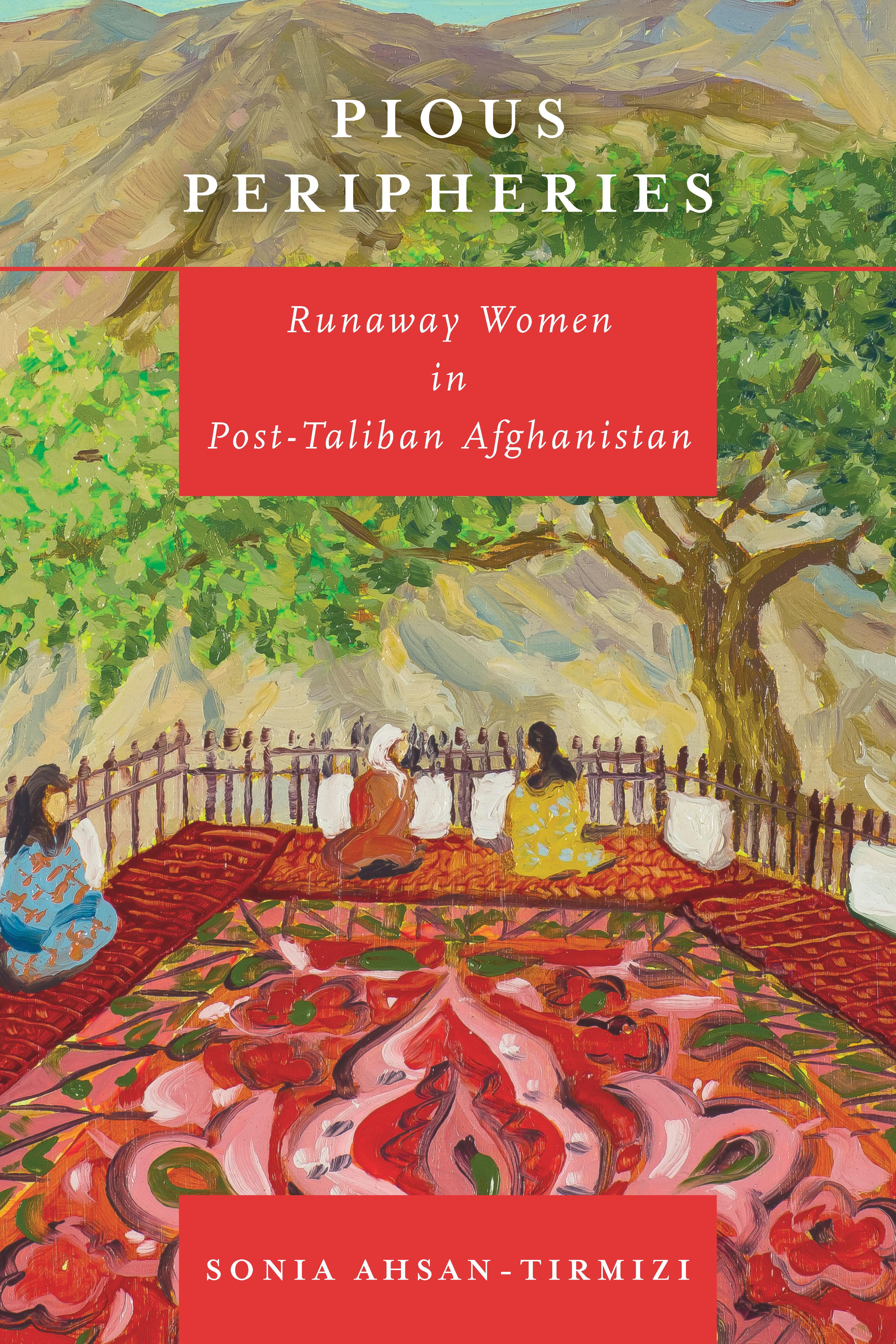
The Taliban made piety a business of the state, and thereby intervened in the daily lives and social interactions of Afghan women. Pious Peripheries examines women's resistance through groundbreaking fieldwork at a women's shelter in Kabul, home to runaway wives, daughters, mothers, and sisters of the Taliban. Whether running to seek marriage or divorce, enduring or escaping abuse, or even accused of singing sexually explicit songs in public, "promiscuous" women challenge the status quo—and once marked as promiscuous, women have few resources. This book provides a window into the everyday struggles of Afghan women as they develop new ways to challenge historical patriarchal practices.
Sonia Ahsan-Tirmizi explores how women negotiate gendered power mechanisms, notably those of Islam and Pashtunwali. Sometimes defined as an honor code, Pashtunwali is a discursive and material practice that women embody through praying, fasting, oral and written poetry, and participation in rituals of hospitality and refuge. In taking ownership of Pashtunwali and Islamic knowledge, in both textual and oral forms, women create a new supportive community, finding friendship and solidarity in the margins of Afghan society. So doing, these women redefine the meanings of equality, honor, piety, and promiscuity in Afghanistan.
Payez facilement par carte, Klarna, Apple Pay ou Google Pay. Pas satisfait ? Vous avez toujours une garantie de remboursement de 14 jours. En savoir plus dans nos conditions. Si vous avez des questions, envoyez-nous un e-mail à hello@memmo.org.
Memmo facilite tes études, où que tu sois dans le monde. On rassemble tes manuels de cours et des outils d'étude intelligents au même endroit : résumés, quiz, podcasts et flashcards. Et il y a Ted, ton compagnon d'étude qui répond à toutes tes questions. Plus de 50 000 étudiants étudient déjà ici – conçu pour t'aider à apprendre plus vite et à moins stresser.