
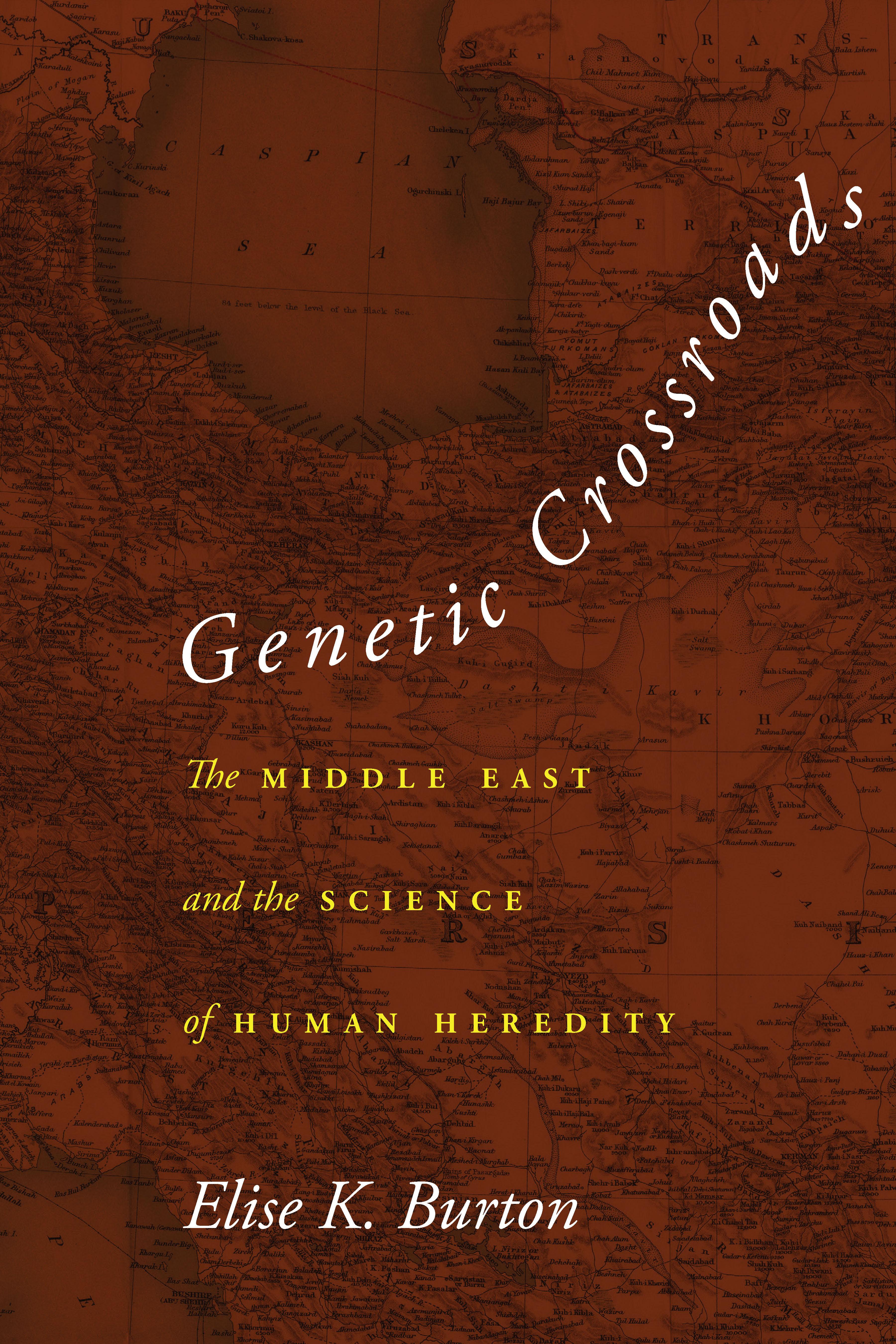
The Middle East plays a major role in the history of genetic science. Early in the twentieth century, technological breakthroughs in human genetics coincided with the birth of modern Middle Eastern nation-states, who proclaimed that the region's ancient history—as a cradle of civilizations and crossroads of humankind—was preserved in the bones and blood of their citizens. Using letters and publications from the 1920s to the present, Elise K. Burton follows the field expeditions and hospital surveys that scrutinized the bodies of tribal nomads and religious minorities. These studies, geneticists claim, not only detect the living descendants of biblical civilizations but also reveal the deeper past of human evolution.
Genetic Crossroads is an unprecedented history of human genetics in the Middle East, from its roots in colonial anthropology and medicine to recent genome sequencing projects. It illuminates how scientists from Turkey to Yemen, Egypt to Iran, transformed genetic data into territorial claims and national origin myths. Burton shows why such nationalist appropriations of genetics are not local or temporary aberrations, but rather the enduring foundations of international scientific interest in Middle Eastern populations to this day.
Payez facilement par carte, Klarna, Apple Pay ou Google Pay. Pas satisfait ? Vous avez toujours une garantie de remboursement de 14 jours. En savoir plus dans nos conditions. Si vous avez des questions, envoyez-nous un e-mail à hello@memmo.org.
Memmo facilite tes études, où que tu sois dans le monde. On rassemble tes manuels de cours et des outils d'étude intelligents au même endroit : résumés, quiz, podcasts et flashcards. Et il y a Ted, ton compagnon d'étude qui répond à toutes tes questions. Plus de 50 000 étudiants étudient déjà ici – conçu pour t'aider à apprendre plus vite et à moins stresser.