
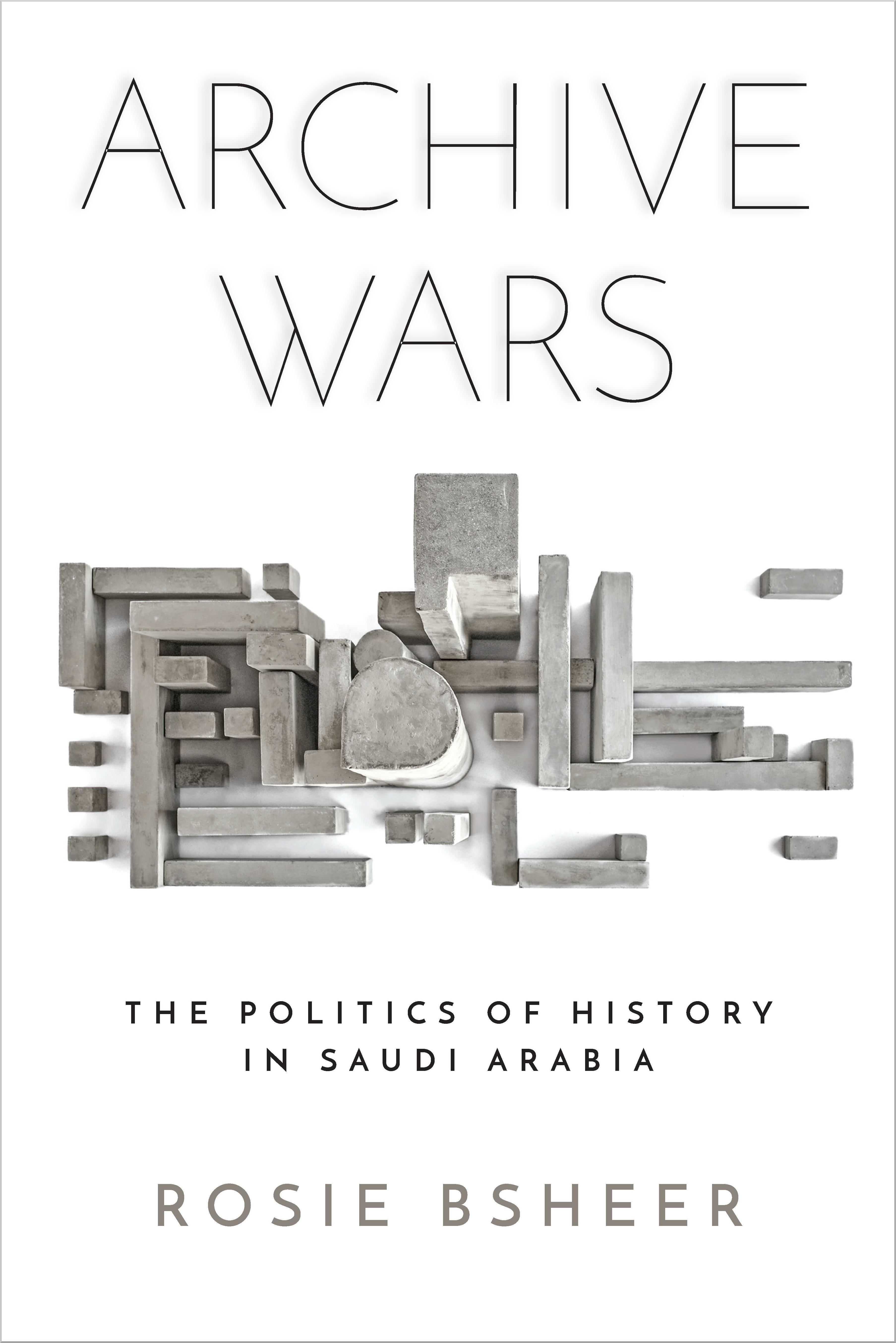
The production of history is premised on the selective erasure of certain pasts and the artifacts that stand witness to them. From the elision of archival documents to the demolition of sacred and secular spaces, each act of destruction is also an act of state building. Following the 1991 Gulf War, political elites in Saudi Arabia pursued these dual projects of historical commemoration and state formation with greater fervor to enforce their postwar vision for state, nation, and economy. Seeing Islamist movements as the leading threat to state power, they sought to de-center religion from educational, cultural, and spatial policies.
With this book, Rosie Bsheer explores the increasing secularization of the postwar Saudi state and how it manifested in assembling a national archive and reordering urban space in Riyadh and Mecca. The elites' project was rife with ironies: in Riyadh, they employed world-renowned experts to fashion an imagined history, while at the same time in Mecca they were overseeing the obliteration of a thousand-year-old topography and its replacement with commercial megaprojects. Archive Wars shows how the Saudi state's response to the challenges of the Gulf War served to historicize a national space, territorialize a national history, and ultimately refract both through new modes of capital accumulation.
Payez facilement par carte, Klarna, Apple Pay ou Google Pay. Pas satisfait ? Vous avez toujours une garantie de remboursement de 14 jours. En savoir plus dans nos conditions. Si vous avez des questions, envoyez-nous un e-mail à hello@memmo.org.
Memmo facilite tes études, où que tu sois dans le monde. On rassemble tes manuels de cours et des outils d'étude intelligents au même endroit : résumés, quiz, podcasts et flashcards. Et il y a Ted, ton compagnon d'étude qui répond à toutes tes questions. Plus de 50 000 étudiants étudient déjà ici – conçu pour t'aider à apprendre plus vite et à moins stresser.