
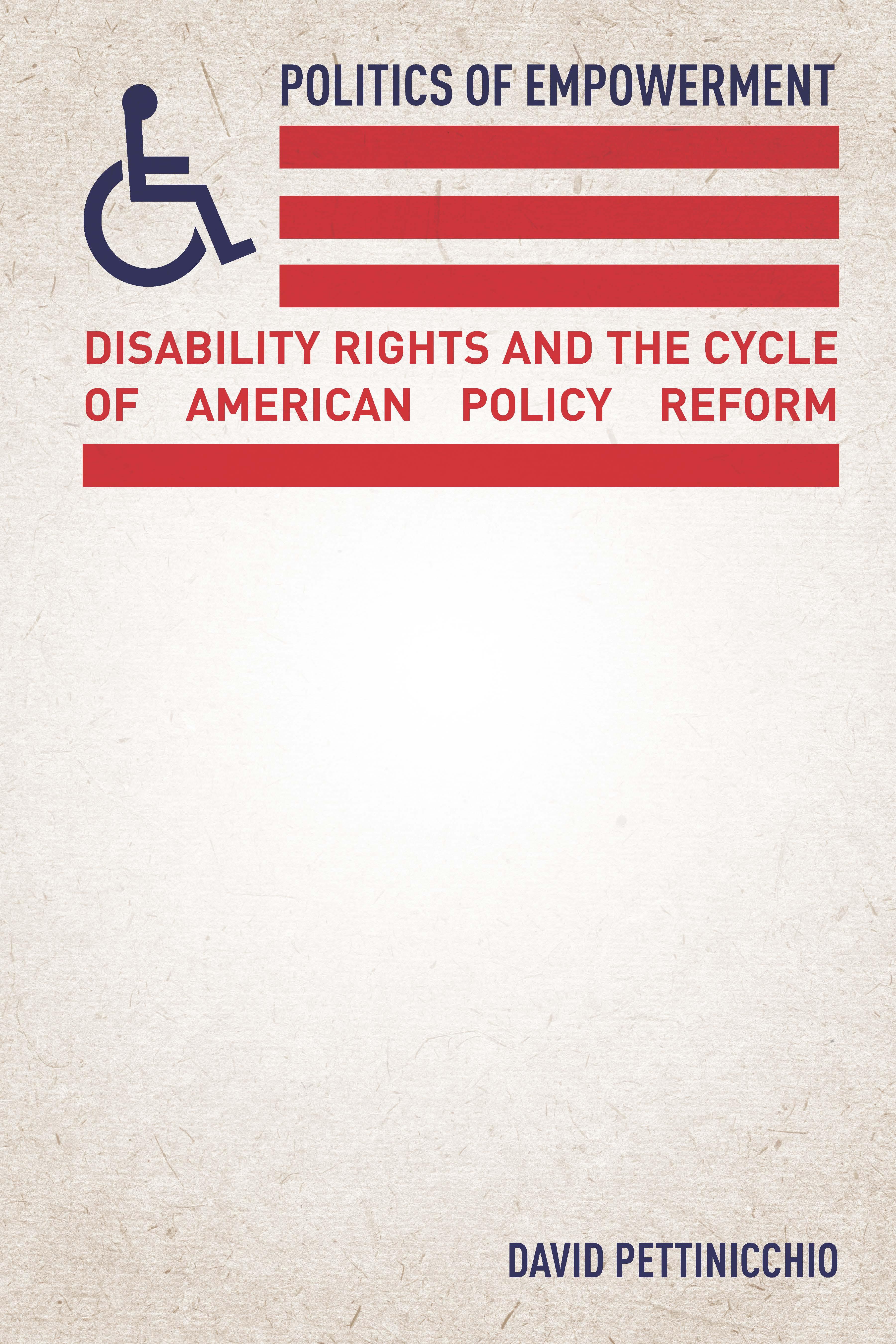
Despite the progress of decades-old disability rights policy, including the landmark Americans with Disabilities Act, threats continue to undermine the wellbeing of this population. The U.S. is, thus, a policy innovator and laggard in this regard. In Politics of Empowerment, David Pettinicchio offers a historically grounded analysis of the singular case of U.S. disability policy, countering long-held views of progress that privilege public demand as its primary driver.
By the 1970s, a group of legislators and bureaucrats came to act as "political entrepreneurs." Motivated by personal and professional commitments, they were seen as experts leading a movement within the government. But as they increasingly faced obstacles to their legislative intentions, nascent disability advocacy and protest groups took the cause to the American people forming the basis of the contemporary disability rights movement. Drawing on extensive archival material, Pettinicchio redefines the relationship between grassroots advocacy and institutional politics, revealing a cycle of progress and backlash embedded in the American political system.
Payez facilement par carte, Klarna, Apple Pay ou Google Pay. Pas satisfait ? Vous avez toujours une garantie de remboursement de 14 jours. En savoir plus dans nos conditions. Si vous avez des questions, envoyez-nous un e-mail à hello@memmo.org.
Memmo facilite tes études, où que tu sois dans le monde. On rassemble tes manuels de cours et des outils d'étude intelligents au même endroit : résumés, quiz, podcasts et flashcards. Et il y a Ted, ton compagnon d'étude qui répond à toutes tes questions. Plus de 50 000 étudiants étudient déjà ici – conçu pour t'aider à apprendre plus vite et à moins stresser.