
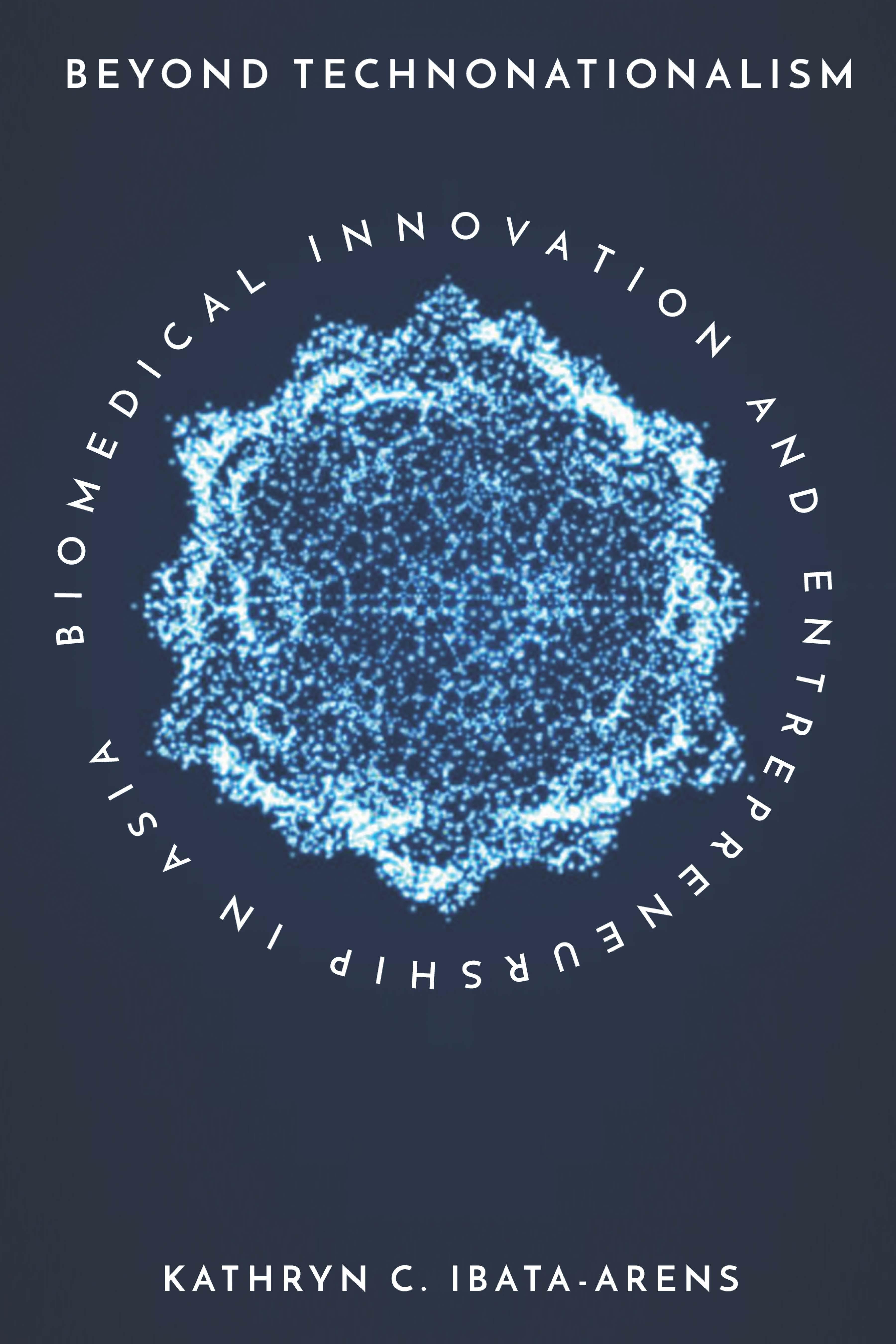
The biomedical industry, which includes biopharmaceuticals, genomics and stem cell therapies, and medical devices, is among the fastest growing worldwide. While it has been an economic development target of many national governments, Asia is currently on track to reach the epicenter of this growth. What accounts for the rapid and sustained economic growth of biomedicals in Asia?
To answer this question, Kathryn Ibata-Arens integrates global and national data with original fieldwork to present a conceptual framework that considers how national governments have managed key factors, like innovative capacity, government policy, and firm-level strategies. Taking China, India, Japan, and Singapore in turn, she compares each country's underlying competitive advantages. What emerges is an argument that countries pursuing networked technonationalism (NTN) effectively upgrade their capacity for innovation and encourage entrepreneurial activity in targeted industries. In contrast to countries that engage in classic technonationalism—like Japan's developmental state approach—networked technonationalists are global minded to outside markets, while remaining nationalistic within the domestic economy.
By bringing together aggregate data at the global and national level with original fieldwork and drawing on rich cases, Ibata-Arens telegraphs implications for innovation policy and entrepreneurship strategy in Asia—and beyond.
Payez facilement par carte, Klarna, Apple Pay ou Google Pay. Pas satisfait ? Vous avez toujours une garantie de remboursement de 14 jours. En savoir plus dans nos conditions. Si vous avez des questions, envoyez-nous un e-mail à hello@memmo.org.
Memmo facilite tes études, où que tu sois dans le monde. On rassemble tes manuels de cours et des outils d'étude intelligents au même endroit : résumés, quiz, podcasts et flashcards. Et il y a Ted, ton compagnon d'étude qui répond à toutes tes questions. Plus de 50 000 étudiants étudient déjà ici – conçu pour t'aider à apprendre plus vite et à moins stresser.