
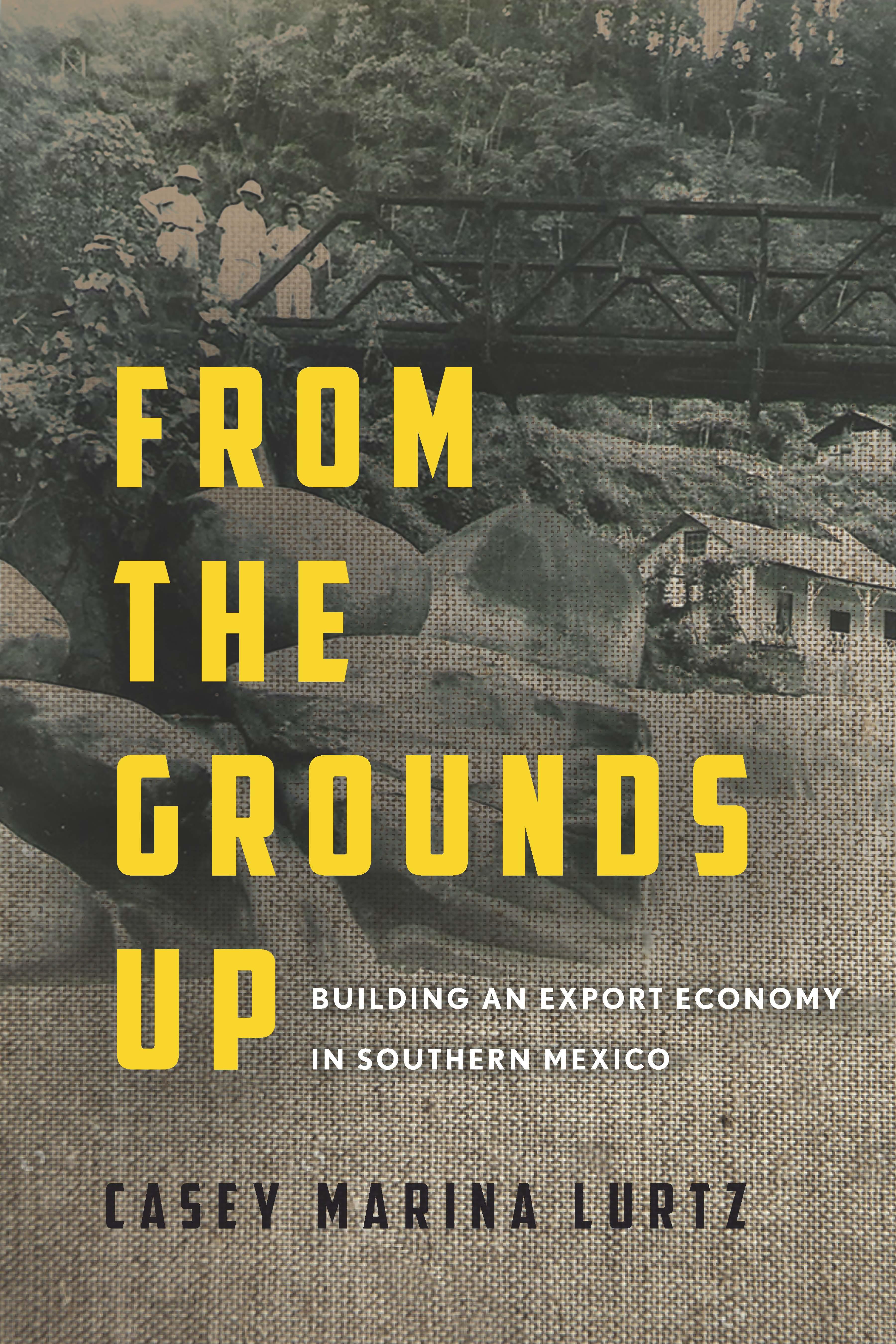
In the late nineteenth century, Latin American exports boomed. From Chihuahua to Patagonia, producers sent industrial fibers, tropical fruits, and staple goods across oceans to satisfy the ever-increasing demand from foreign markets. In southern Mexico's Soconusco district, the coffee trade would transform rural life. A regional history of the Soconusco as well as a study in commodity capitalism, From the Grounds Up places indigenous and mestizo villagers, migrant workers, and local politicians at the center of our understanding of the export boom.
An isolated, impoverished backwater for most of the nineteenth century, by 1920, the Soconusco had transformed into a small but vibrant node in the web of global commerce. Alongside plantation owners and foreign investors, a dense but little-explored web of small-time producers, shopowners, and laborers played key roles in the rapid expansion of export production. Their deep engagement with rural development challenges the standard top-down narrative of market integration led by economic elites allied with a strong state. Here, Casey Marina Lurtz argues that the export boom owed its success to a diverse body of players whose choices had profound impacts on Latin America's export-driven economy during the first era of globalization.
Payez facilement par carte, Klarna, Apple Pay ou Google Pay. Pas satisfait ? Vous avez toujours une garantie de remboursement de 14 jours. En savoir plus dans nos conditions. Si vous avez des questions, envoyez-nous un e-mail à hello@memmo.org.
Memmo facilite tes études, où que tu sois dans le monde. On rassemble tes manuels de cours et des outils d'étude intelligents au même endroit : résumés, quiz, podcasts et flashcards. Et il y a Ted, ton compagnon d'étude qui répond à toutes tes questions. Plus de 50 000 étudiants étudient déjà ici – conçu pour t'aider à apprendre plus vite et à moins stresser.