
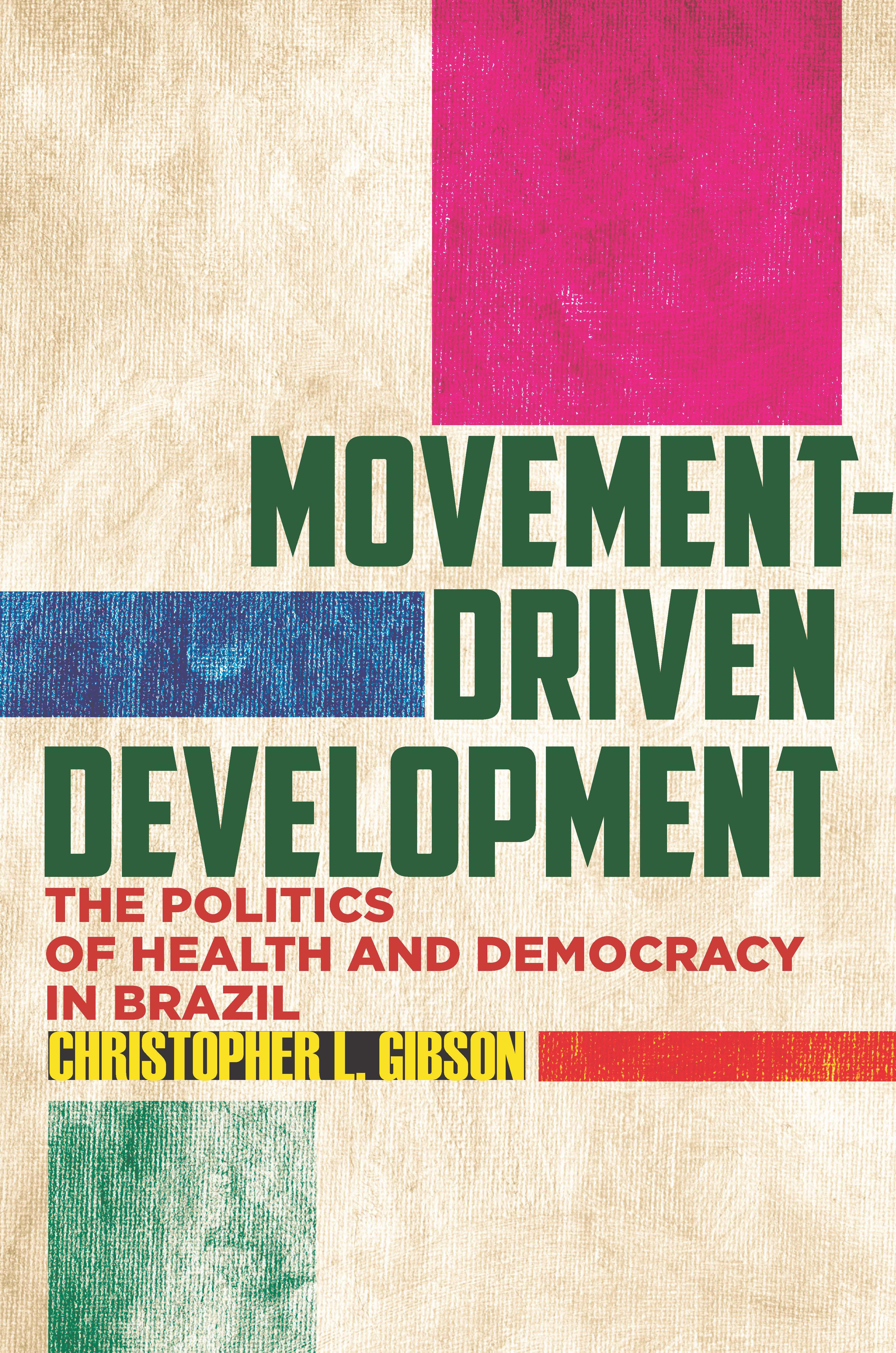
In the late twentieth and early twenty-first centuries, Brazil improved the health and well-being of its populace more than any other large democracy in the world. Long infamous for its severe inequality, rampant infant mortality, and clientelist politics, the country ushered in an unprecedented twenty-five-year transformation in its public health institutions and social development outcomes, declaring a striking seventy percent reduction in infant mortality rates.
Thus far, the underlying causes for this dramatic shift have been poorly understood. In Movement-Driven Development, Christopher L. Gibson combines rigorous statistical methodology with rich case studies to argue that this transformation is the result of a subnationally-rooted process driven by civil society actors, namely the Sanitarist Movement. He argues that their ability to leverage state-level political positions to launch a gradual but persistent attack on health policy implementation enabled them to infuse their social welfare ideology into the practice of Brazil's democracy. In so doing, Gibson illustrates how local activists can advance progressive social change more than predicted, and how in large democracies like Brazil, activists can both deepen the quality of local democracy and improve human development outcomes previously thought beyond their control.
Payez facilement par carte, Klarna, Apple Pay ou Google Pay. Pas satisfait ? Vous avez toujours une garantie de remboursement de 14 jours. En savoir plus dans nos conditions. Si vous avez des questions, envoyez-nous un e-mail à hello@memmo.org.
Memmo facilite tes études, où que tu sois dans le monde. On rassemble tes manuels de cours et des outils d'étude intelligents au même endroit : résumés, quiz, podcasts et flashcards. Et il y a Ted, ton compagnon d'étude qui répond à toutes tes questions. Plus de 50 000 étudiants étudient déjà ici – conçu pour t'aider à apprendre plus vite et à moins stresser.