
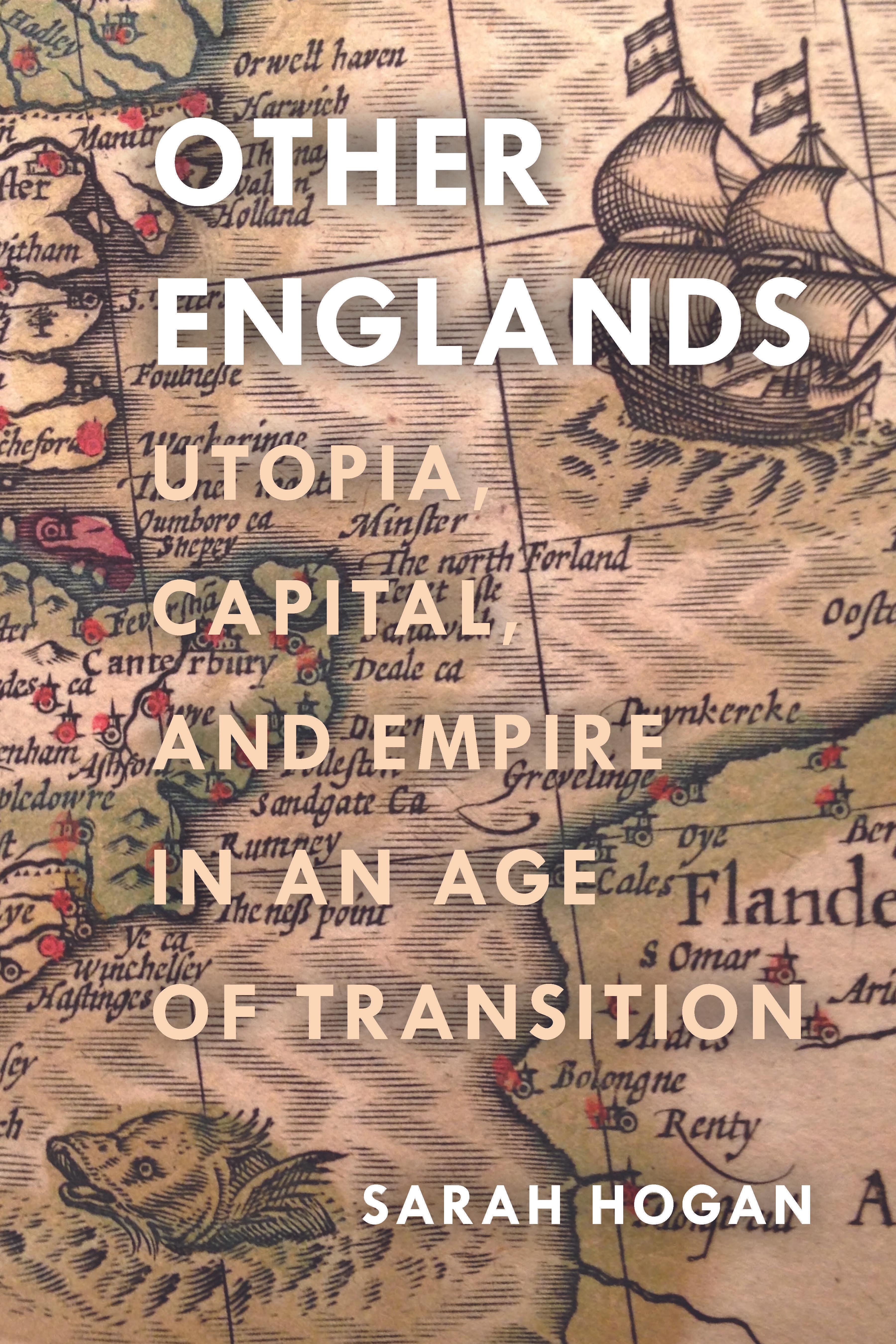
Other Englands examines the rise of the early English utopia in the context of emergent capitalism. Above all, it asserts that this literary genre was always already an expression of social crisis and economic transition, a context refracted in the origin stories and imagined geographies common to its early modern form. Beginning with the paradigmatic popular utopias of Thomas More and Francis Bacon but attentive to non-canonical examples from the margins of the tradition, the study charts a shifting and, by the time of the English Revolution, self-critical effort to think communities in dynamic socio-spatial forms.
Arguing that early utopias have been widely misunderstood and maligned as static, finished polities, Sarah Hogan makes the case that utopian literature offered readers and writers a transformational and transitional social imaginary. She shows how a genre associated with imagining systemic alternatives both contested and contributed to the ideological construction of capitalist imperialism. In the early English utopia, she finds both a precursor to the Enlightenment discourse of political economy and another historical perspective on the beginnings and enduring conflicts of global capital.
Payez facilement par carte, Klarna, Apple Pay ou Google Pay. Pas satisfait ? Vous avez toujours une garantie de remboursement de 14 jours. En savoir plus dans nos conditions. Si vous avez des questions, envoyez-nous un e-mail à hello@memmo.org.
Memmo facilite tes études, où que tu sois dans le monde. On rassemble tes manuels de cours et des outils d'étude intelligents au même endroit : résumés, quiz, podcasts et flashcards. Et il y a Ted, ton compagnon d'étude qui répond à toutes tes questions. Plus de 50 000 étudiants étudient déjà ici – conçu pour t'aider à apprendre plus vite et à moins stresser.