
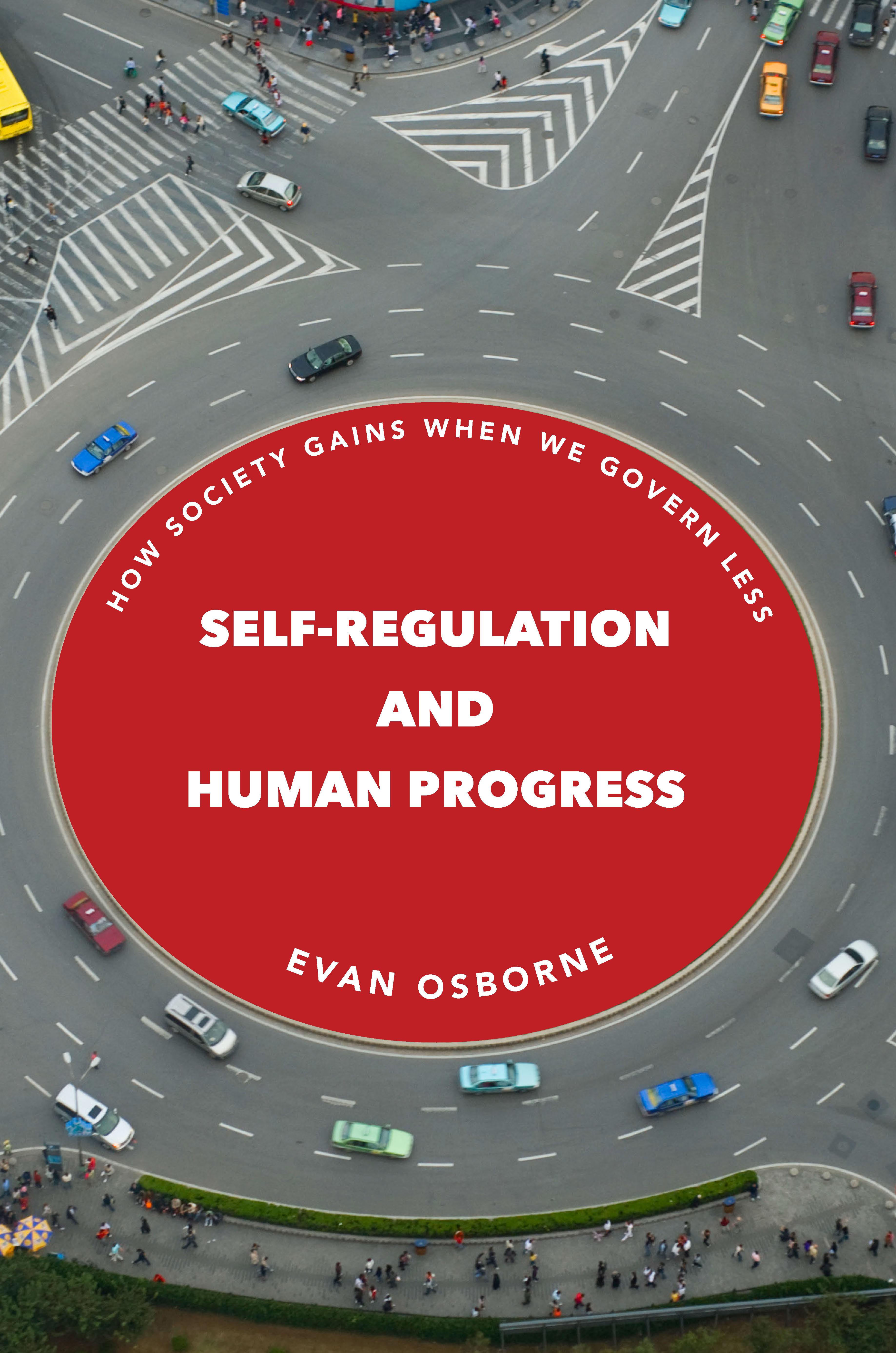
Most of us are familiar with free-market competition: the idea that society and the economy benefit when people are left to self-regulate, testing new ideas in pursuit of profit. Less known is the fact that this theory arose after arguments for the scientific method and freedom of speech had gone mainstream—and that all three share a common basis.
Proponents of self-regulation in the realm of free speech have argued that unhindered public expression causes true ideas to gain strength through scrutiny. Similarly, scientific inquiry has been regarded as a self-correcting system, one in which competing hypotheses are verified by multiple independent researchers. It was long thought that society was better left to organize itself through free markets as opposed to political institutions. But, over the twentieth century, we became less confident in the notion of a self-regulating socioeconomy. Evan Osborne traces the rise and fall of this once-popular concept. He argues that—as society becomes more complex—self-regulation becomes more efficient and can once again serve our economy well.
Payez facilement par carte, Klarna, Apple Pay ou Google Pay. Pas satisfait ? Vous avez toujours une garantie de remboursement de 14 jours. En savoir plus dans nos conditions. Si vous avez des questions, envoyez-nous un e-mail à hello@memmo.org.
Memmo facilite tes études, où que tu sois dans le monde. On rassemble tes manuels de cours et des outils d'étude intelligents au même endroit : résumés, quiz, podcasts et flashcards. Et il y a Ted, ton compagnon d'étude qui répond à toutes tes questions. Plus de 50 000 étudiants étudient déjà ici – conçu pour t'aider à apprendre plus vite et à moins stresser.